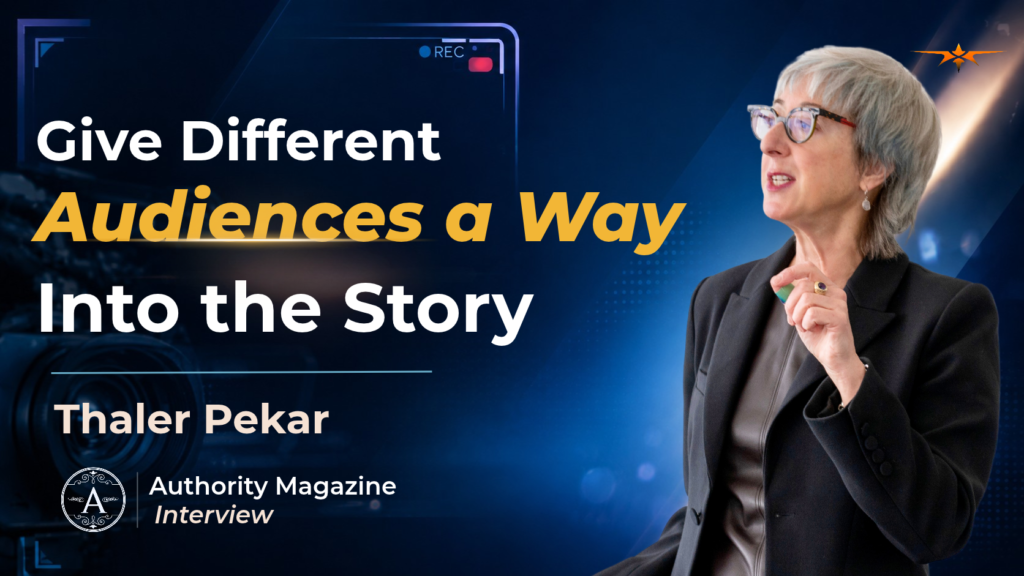
How Thaler Pekar’s Listening Principles Apply to Business Video
Give Different Audiences a Way Into the Story
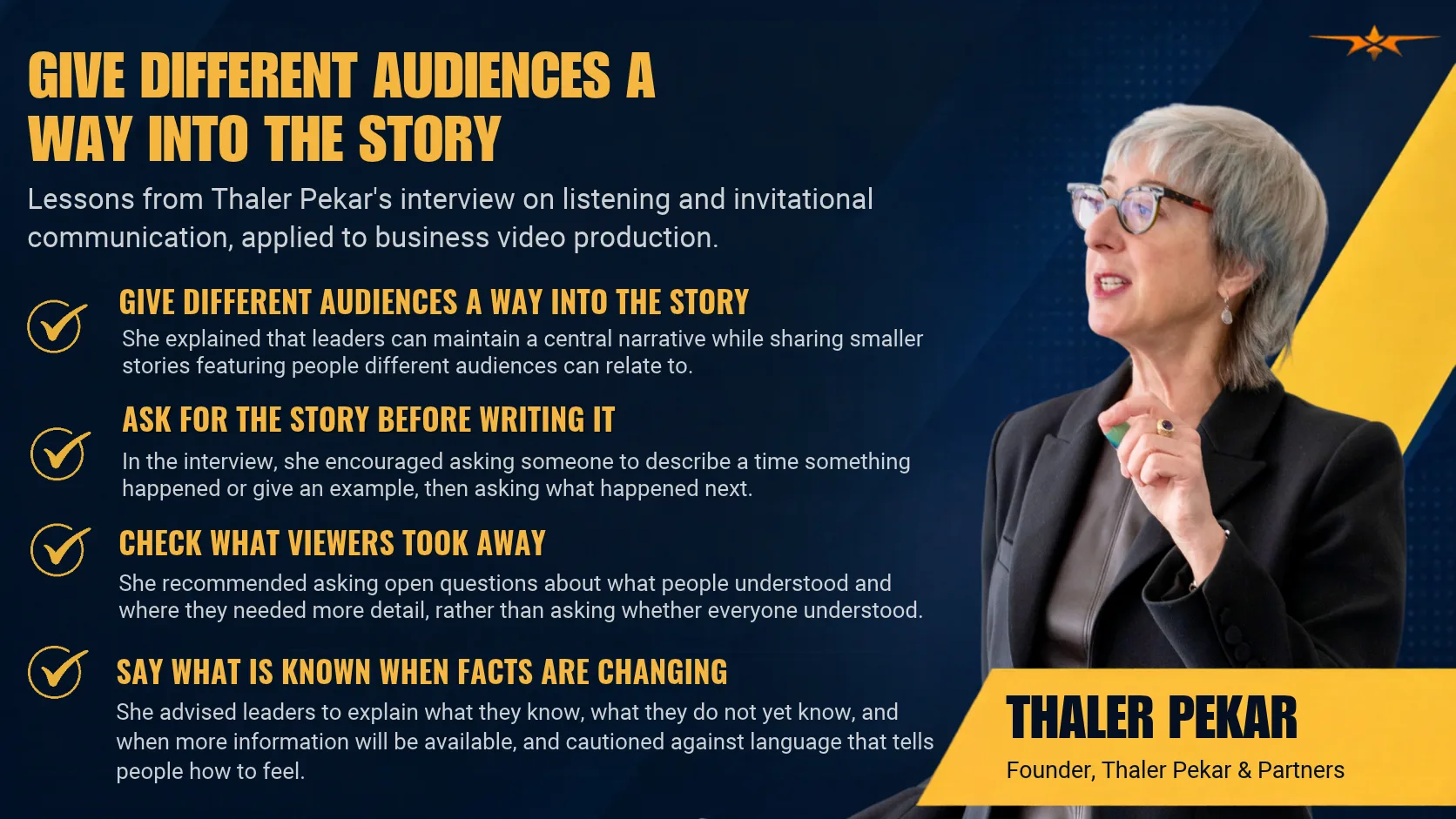
Pekar explained that leaders can maintain a central narrative while sharing smaller stories featuring people different audiences can relate to. These stories provide multiple ways for stakeholders to understand the same underlying message.
For a video serving several groups, establish the shared facts and choose examples that address each audience. An employee may need to see how a change affects the workday, while a partner may need an explanation of responsibilities or timing. The production may need separate edits or speakers while preserving the central message.
Ask for the Story Before Writing It
Check What Viewers Took Away
Pekar described coaching a senior leader at a Fortune 50 company whose scientific team was interpreting his message in different ways. His habit of asking whether everyone understood did not reveal what team members actually took away. Pekar recommended asking open questions about their understanding and where they needed more detail.
A producer can apply that lesson before and after release. Show a rough cut to a small group that includes intended viewers, where practical, and ask what they understood, which questions remain, and whether anything seemed unclear. If their interpretation differs from the brief, revisit the explanation. After publication, collect questions; view counts do not show what people understood.
Say What Is Known When Facts Are Changing
During rapid change, Pekar advised leaders to explain what they know, what they do not yet know, and when more information will be available. She cautioned against language that tells people how to feel about an uncertain situation. Pekar also urged leaders to hear from people close to the work.
For a leadership update, confirm what the organization can say now, what remains uncertain, and when viewers can expect more information. Use those distinctions to prepare the interview outline and check that the final edit does not imply unresolved decisions have already been made. If employees appear, ask about their experiences without prompting agreement. Preserve the context that makes their words accurate.
Practical Application: Plan for Listening at Every Stage
Begin with the core message and a list of audiences who will see the video. Ask people familiar with those audiences what questions they will bring. Use that input to choose speakers and prepare open interview prompts that elicit specific examples. If an answer reveals a concern the brief missed, allow time for a follow-up question.
Before publication, review the cut with stakeholders who can check facts and with people able to flag unclear language. Decide who will answer viewers’ later questions. If the video addresses a changing situation, confirm that any dates, plans, and contact details remain current immediately before release.
Team Beverly Boy’s Takeaway
Pekar’s interview reinforces that a well-prepared message may still be understood differently by its audience. For our team, that means treating the brief as a starting point and paying attention to what interviews and early reviews reveal.
We would ask questions before choosing a story, give participants room to explain their experiences, and check whether the edit communicates what the organization intended. When feedback reveals confusion or missing context, we would revisit the relevant section rather than assume the message is already clear.

Conclusion
Thaler Pekar’s communication principles offer a practical approach to business video: define the core message, find examples people recognize, and check how the result is received. They also encourage honesty about what remains unknown.
A producer can build those habits into preproduction, interviews, editing, and the plan for what happens after viewers press play.
This article is based on an interview originally published by AuthorityMagazine. Read the full interview here.