
What Video Teams Can Learn from Richard Alderton About Communicating Change
Richard Alderton, founder of High Performance Change, spoke with Authority Magazine about leading organizations through uncertainty, keeping teams aligned, and communicating difficult news. He emphasized preparing important messages carefully and making sure people understand what leaders are telling them.
For leadership videos about change, his advice raises practical production questions. The applications here are Team Beverly Boy’s interpretation of Alderton’s leadership ideas, not recommendations he made about filming.
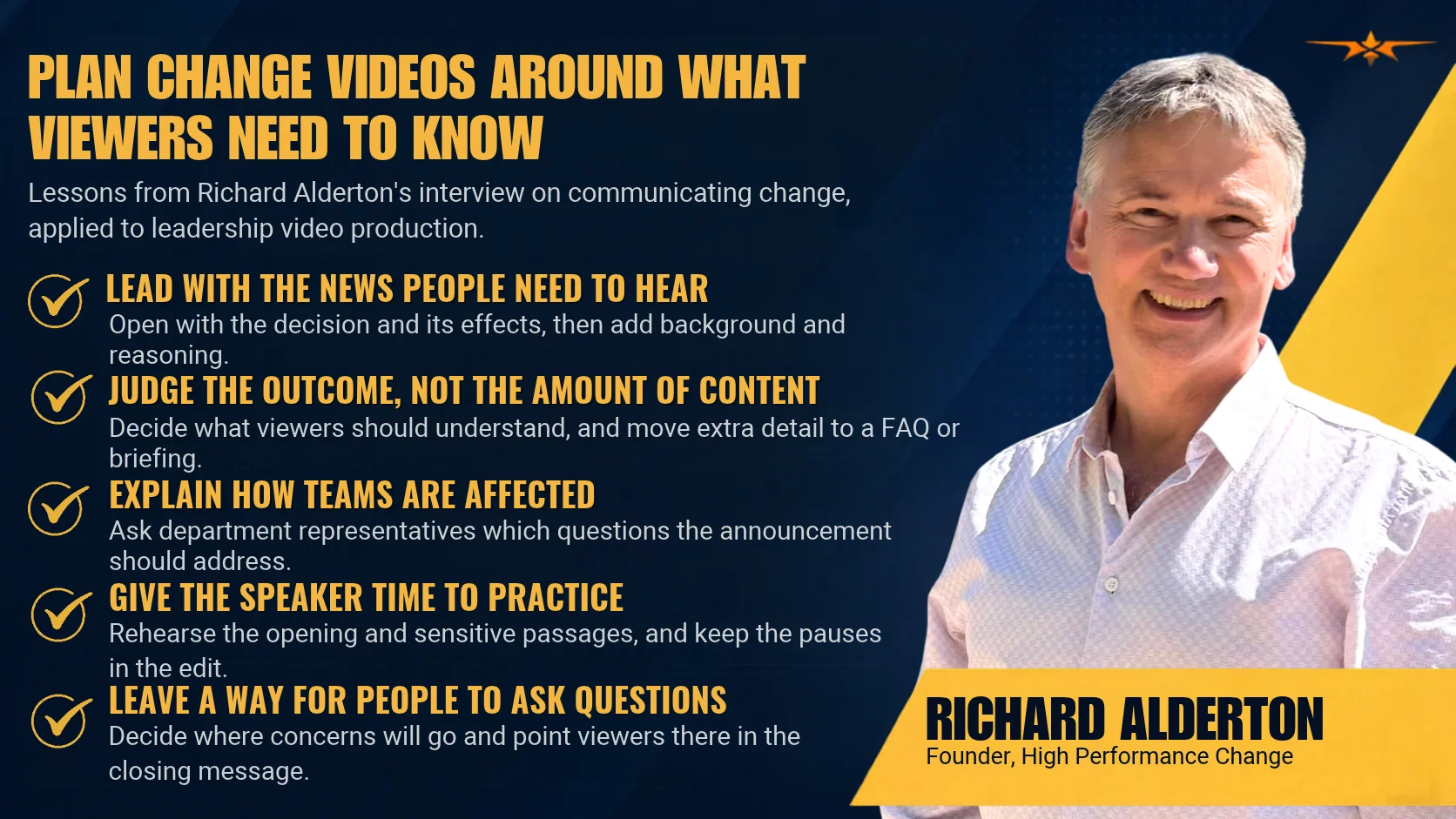
Lead With the News People Need to Hear
Alderton advised leaders to prepare difficult communications with the care they would give a board presentation. He said to begin with the bad news because an anxious audience may not absorb a long preamble. He also urged leaders to consider employees’ likely reactions, speak slowly, and leave room for questions.
For a recorded announcement, a producer can help the leader open with the decision and its immediate effects. Background and reasoning can follow. Before filming, confirm which facts the company can share, what remains undecided, and when people will learn more. This gives the speaker a clear route without implying every question is settled.
Judge the Outcome, Not the Amount of Content
Early in his leadership career, Alderton introduced a fourth production batch at a factory that normally completed three per shift. Although the team finished the additional batch, there was not enough time to clean the equipment properly, leaving the factory unprepared for the next day. He said the mistake taught him to distinguish output from the outcome the internal customer needed.
A change video can make a similar mistake if success means including every talking point. Ask what employees or customers should understand after viewing and which actions they may need to take. Some details may work better in a written FAQ or a separate briefing. The producer can use that purpose to decide what the recording needs to cover.
Explain How Teams Are Affected
During a period of rising demand at a dairy equipment company, Alderton described tension between sales and supply chain teams. He recalled that both teams eventually acknowledged they did not fully understand each other’s operating pressures. Asking what each side needed helped them identify practical adjustments rather than continue assigning blame. The groups agreed on longer lead times for increased volumes and identified suppliers whose added capacity would matter most.
Before filming an organization-wide announcement, check its effects across departments. A leader may explain the overall decision, while different teams need details about their own work. Ask department representatives which questions the announcement should address. If those representatives appear on camera, their answers should reflect what they know and what they are responsible for.
Give the Speaker Time to Practice
Alderton recalled filming himself delivering a team briefing as a young leader and hearing how flat his voice sounded. Hearing his own delivery made him recognize how much improvement was needed. He later emphasized that presenting is a skill leaders need to practice rather than something they should expect to do well without preparation. When delivering difficult news, he recommended a slower pace and pauses.
On a shoot, rehearse the opening and the most sensitive passages before recording a full take. This reveals difficult wording or points that need more space. During editing, preserve the qualifications and pauses that help viewers follow the explanation rather than tightening the delivery until it sounds rushed.
Leave a Way for People to Ask Questions
Alderton recommended a question-and-answer session after difficult news and another opportunity later, once people have processed it. He also emphasized regular one-to-one conversations that begin by asking how a person is doing.
A recorded announcement can deliver the same information to a broad audience, but it cannot respond to individual concerns as they arise. Before release, decide where concerns will go and who can respond. The closing message can direct viewers to those channels.
Practical Application: Build Around Viewer Questions
Gather the approved facts, likely questions from affected teams, and next steps the organization can confirm. Prepare prompts that ask the leader to state the news, explain its effects, and acknowledge what remains unknown. Assign other concerns to a meeting or direct conversation.
During filming, let the leader speak in their own words while checking that essential qualifications are included. In the edit, ask whether a viewer can tell what is changing, when, and where to get answers. Confirm dates, names, and contact details before release.
Team Beverly Boy’s Takeaway
Alderton’s interview reinforces that communicating change involves more than delivering an announcement. For our team, the production challenge is helping a leader explain what is happening while considering how the message will be received by the people affected.
We would focus on a clear opening, accurate details, and a delivery that gives viewers time to understand the information. We would also work with the client to identify where employees or customers can ask questions after watching. The video should support the broader communication process rather than replace the conversations that may still be needed.

Conclusion
Richard Alderton’s interview emphasizes preparation, empathy, alignment, and ongoing conversation during uncertainty. Those ideas can guide the brief, shoot, and edit of a leadership video about change.
A recording can explain the news to a broad audience. The organization also needs people ready to answer the questions that follow.
This article is based on an interview originally published by Authority Magazine. Read the full interview here.