What Video Teams Can Learn from Steve Michelson About Impact Storytelling
Steve Michelson, executive director of the Fund for Sustainable Tomorrows, spoke with Authority Magazine about his career in documentary production and distribution, including projects addressing healthcare, environmental issues, and social change. He described pairing documentaries with campaigns and screenings that brought subjects and audiences into conversation.
His interview raises practical questions for businesses documenting a cause or community program. The production applications below are Team Beverly Boy’s interpretation of his experience, with particular attention to how a film will be used.
Decide What the Film Is Meant to Do
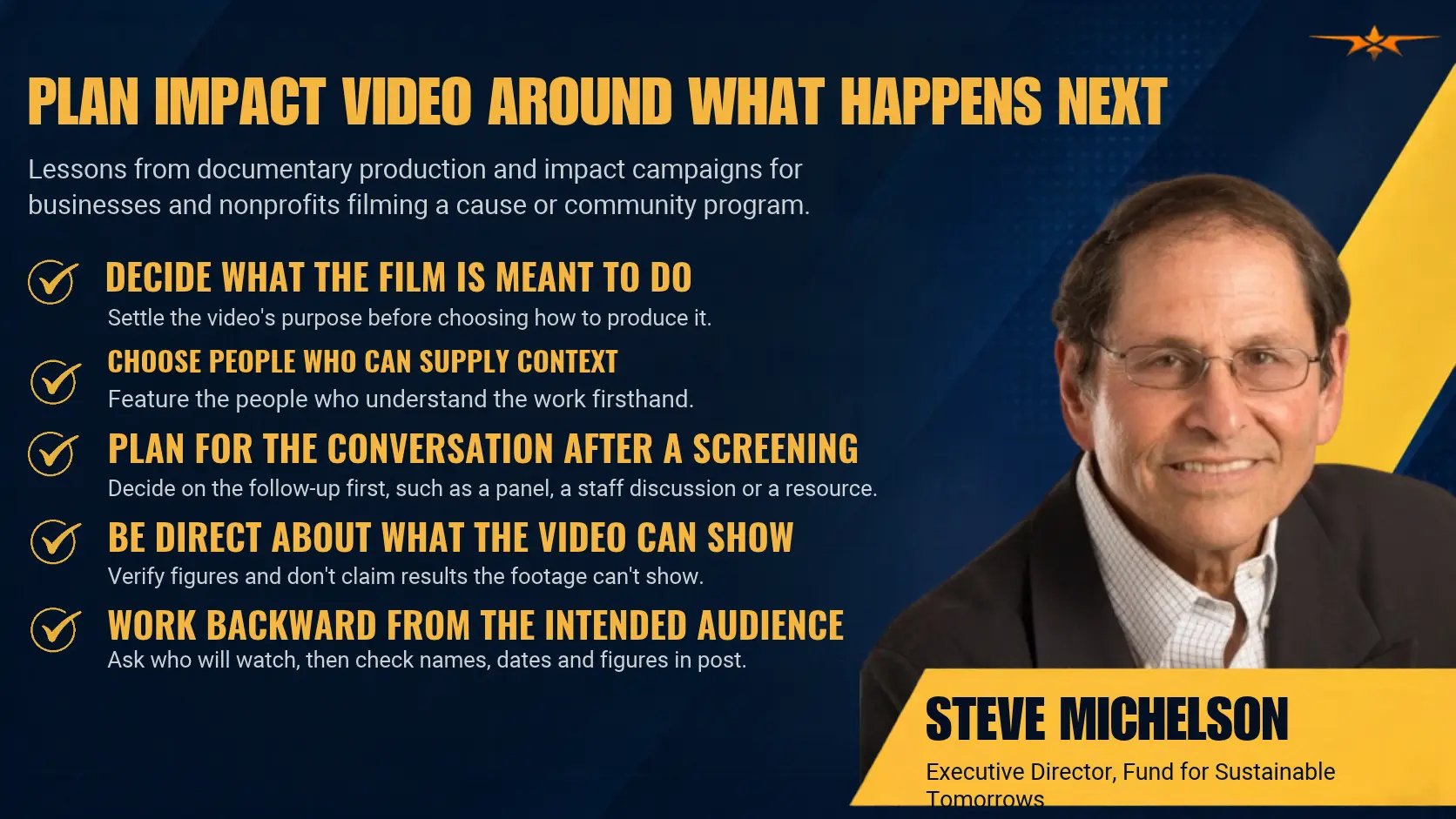
Michelson described a long interest in creating media that matters. For a business or nonprofit, that suggests identifying the video’s purpose before deciding how to produce it. Is the goal to explain a community initiative, introduce the people behind a program, or prepare viewers for a discussion? The producer can use that decision to develop interview questions, choose supporting footage, and plan where the finished video will be shown.
Before developing a treatment, identify what the intended audience should understand afterward and what the organization can actually show.
Choose People Who Can Supply Context
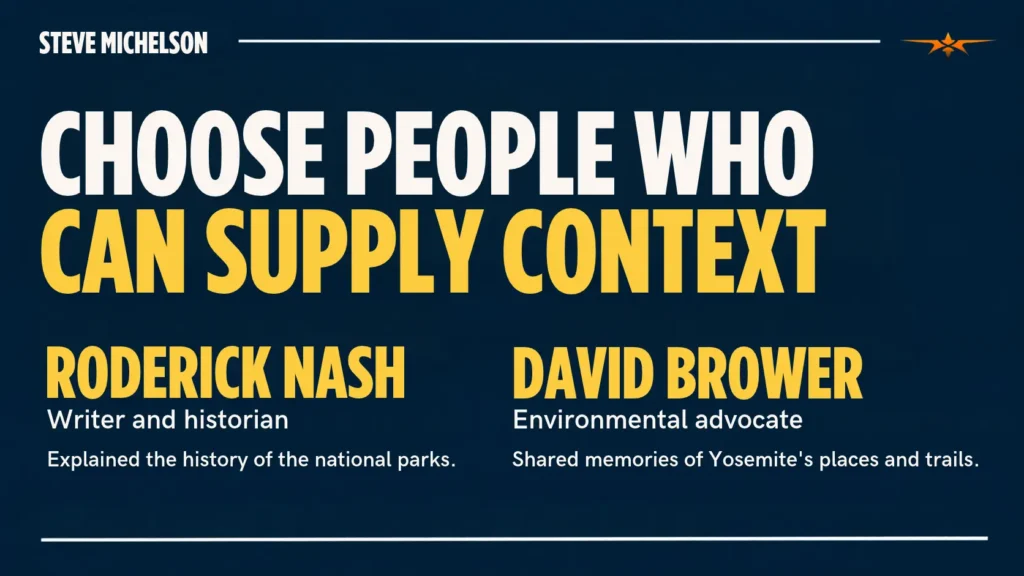
Michelson produced a national parks series for the Disney Channel hosted by writer and historian Roderick Nash, who helped explain the history of places such as the Grand Canyon, Yellowstone, and Yosemite. He also recalled filming environmental advocate David Brower in Yosemite Valley, where Brower recalled historic destinations and trails that no longer existed. Both brought firsthand knowledge of the places being filmed.
When a company documents a social initiative, the producer should ask who understands the work firsthand. An executive can explain the commitment; a program lead or partner can describe the work. Ask for concrete examples and identify claims a subject expert should check before the edit is approved. Film the work being discussed without implying results the footage cannot establish.
Plan for the Conversation After a Screening
Michelson described how the Fund took on distribution and an impact campaign for the short documentary Phil’s Camino in 2019, including screenings that allowed audiences to meet the film’s subject. At Cedars-Sinai in Los Angeles, the film’s subject, Phil Volker, spoke with doctors, nurses, and administrators and answered their questions. The screenings were part of an impact campaign.
A business or nonprofit can likewise plan its audience and follow-up. Before production, ask whether the video will introduce a panel, support a staff discussion, or lead viewers to a resource. That affects the edit’s length, closing information, and who can answer questions afterward. The producer can also leave room for the film’s subject or program team to address details the video cannot cover.
Be Direct About What the Video Can Show
Reflecting on his career, Michelson emphasized being direct about expectations and possible outcomes. Although he was discussing professional opportunities rather than documentary claims, the same consideration is relevant when producing videos about an organization’s social impact. He acknowledged the value of vision and expectation while urging clarity about possible outcomes. That distinction matters in a video about an organization’s work.
In an impact film, the edit can show what a program does and let participants describe their experiences. Be careful with claims about results when footage covers only a few people or places. Verify figures and research with the organization and include the context viewers need to interpret them. A moving personal account can remain powerful without being presented as proof that everyone will have the same experience.
Practical Application: Work Backward From the Intended Audience
Ask what initiative the video covers, who will watch, and what happens afterward. Talk with people doing the work and confirm who will participate. Create an interview outline that separates personal experience from statements about the program’s wider results. This helps a speaker tell their own story without being asked to represent every participant.
Film the activities accurately and let interviewees explain them. In postproduction, check names, dates, figures, and the context around each account. Prepare the versions and supporting information the distribution plan requires, such as captions, an event introduction, or links to further details.
Team Beverly Boy’s Takeaway
Michelson’s documentary experiences highlight the importance of thinking beyond the finished film. For our team, the production process would begin with understanding the initiative, identifying the people closest to the work, and determining what viewers need to learn from their experiences.
We would also plan how the video will be presented and what resources or conversations should follow. An impact video does not need to claim that it changed every viewer’s thinking. It should accurately represent the initiative and give the intended audience enough context to understand the work being discussed.
Conclusion
Steve Michelson’s interview is rooted in documentary filmmaking and social impact campaigns. Organizations can apply his approach by defining a purpose, featuring informed people, and planning how audiences will engage.
The aim is a film that represents the work accurately and has a clear place in the organization’s broader communication.
This article is based on an interview originally published by Authority Magazine. Read the full interview here.