How Valerie Fenchel’s Client-Focused Approach Applies to Service Videos
Valerie Fenchel, founding attorney of Fenchel Family Law, spoke with Authority Magazine about building a business around the needs of its clients and employees. Her experiences include an early branding mistake, changes to the firm’s approach to client service, and lessons about communicating as a founder.
Her experience raises a question for service videos: do they reflect what clients actually encounter? The applications here are Team Beverly Boy’s interpretation, not video advice Fenchel gave.
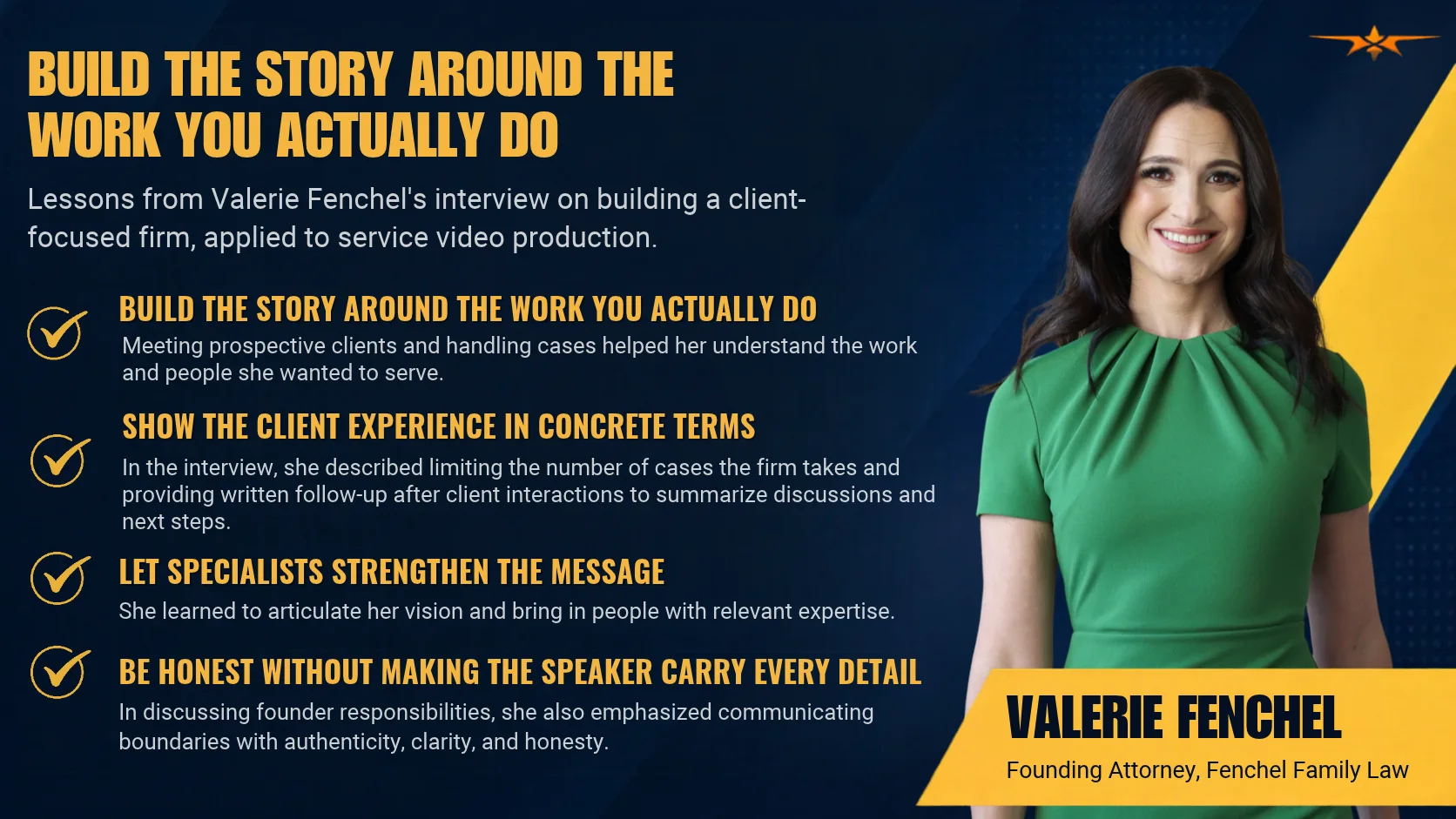
Build the Story Around the Work You Actually Do
When Fenchel started her firm, she initially planned to focus on divorce cases for women and developed a website around that positioning. As she met prospective clients and handled cases, she realized the branding did not reflect the kind of practice she wanted to build. Meeting prospective clients and handling cases helped her understand the work and people she wanted to serve.
A service video can run into the same problem if the concept is built around an imagined audience. Before scripting, ask whom the business serves, what clients ask, and what employees can explain firsthand. Use the answers to choose speakers and examples that accurately represent the service.
Show the Client Experience in Concrete Terms
Fenchel explained that she wanted to build a firm where people, systems and workflows supported a better experience for both attorneys and clients. In the interview, she described limiting the number of cases the firm takes and providing written follow-up after client interactions to summarize discussions and next steps.
A client-facing video could explain these practices after the firm reviews the wording. For any service business, a producer can ask what happens after an inquiry, who handles each step, and how clients know what comes next. Film staff explaining the verified process, with footage or graphics where helpful. Viewers can then understand the process without being promised an outcome.
Let Specialists Strengthen the Message
Fenchel said her first attempt to build a website herself taught her the limits of doing every job as a founder. She learned to articulate her vision and bring in people with relevant expertise. That approach is relevant when developing a business video with a founder or executive. The leader can communicate the organization’s purpose, while employees with direct knowledge can explain how the service operates. A producer can involve those specialists in reviewing interview questions and verifying claims before filming.
That approach is useful when planning video with a founder or executive. The leader can explain the organization’s purpose; the service team can check the script’s accuracy. Develop interview questions with specialists and identify claims needing formal review. On a sensitive topic such as family law, that review should also cover privacy, client examples, and language that might sound like a promised outcome.
Be Honest Without Making the Speaker Carry Every Detail
The same attention to communication matters when a business records an internal leadership message. A producer can help the speaker explain a confirmed decision without turning the video into an account of every personal concern. Preparing questions about what changed, what employees should expect, and what remains undecided gives the message a clear purpose. In discussing founder responsibilities, she also emphasized setting boundaries and communicating with authenticity, clarity, and honesty.
For an internal video, help the leader separate confirmed facts from personal reactions. Prepare questions about what changed, what the team should expect, and which decisions are still being made. A measured delivery can state what is known and direct employees to someone who can answer further questions.
Practical Application: Verify the Promise Before Filming
Begin with the founder, service team, and client communications lead. Agree on the audience’s main questions and identify practices the business can show or explain accurately. Confirm which details require approval before scripting.
Ask speakers for examples without requesting confidential client details. Capture process footage only where it represents current practice. In the edit, check that each claim matches the approved facts and that graphics or testimonials do not imply a result the business cannot support. Include someone responsible for the service in the final review.
Team Beverly Boy’s Takeaway

Fenchel’s experience illustrates why a business should understand its own services before deciding how to present them. For our team, that means learning how the organization works rather than beginning with a polished message that has not yet been verified.
We would speak with the people responsible for delivering the service, identify what can be shown accurately, and establish which details need review before publication. The finished video should give prospective clients useful information while leaving room for conversations about their individual circumstances.
Conclusion
Valerie Fenchel’s account of founding her firm is grounded in learning from clients and adjusting how the business serves them. Video teams can show verified practices and let informed people explain their roles.
The result should help viewers understand the service and its next steps without asking one video to promise an individual outcome.
This article is based on an interview originally published by Authority Magazine. Read the full interview here.