What Video Teams Can Learn from Cindy Gordon About Video Strategy
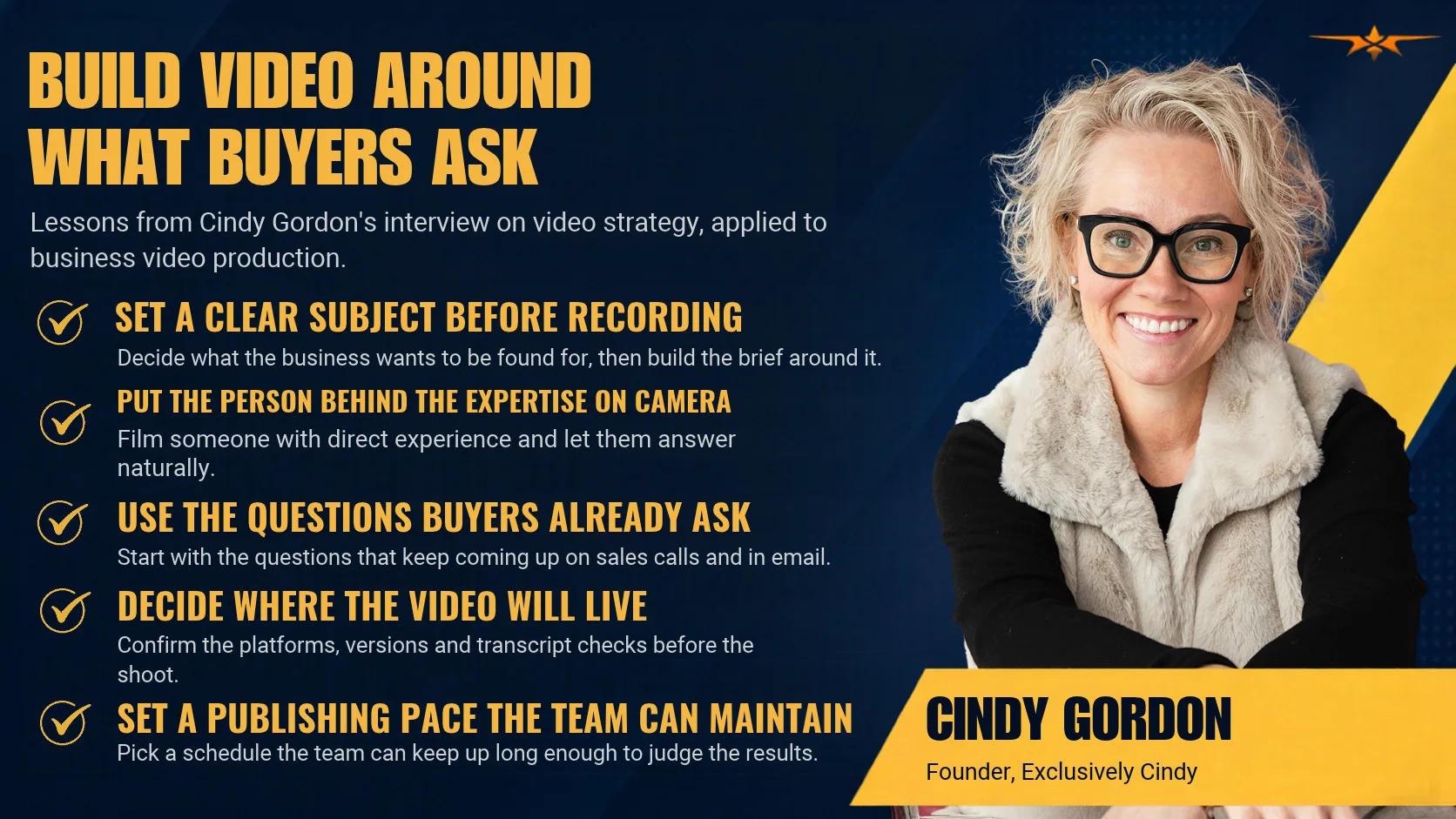
Set a Clear Subject Before Recording
Put the Person Behind the Expertise on Camera
Use the Questions Buyers Already Ask
When clients say they do not know what to say on video, Gordon suggests starting with questions they repeatedly answer on sales calls or in email. She also advises using buyers’ words for their problems, which may differ from industry terms.
Before an interview, ask sales and service staff which questions come up most often. A video about a complicated service can open with a buyer’s question, then let an informed employee answer in plain language. If an internal term is necessary, ask the speaker to explain it as they would to a customer.
Decide Where the Video Will Live
Set a Publishing Pace the Team Can Maintain
Gordon recommends choosing a realistic publishing schedule and maintaining it long enough to evaluate results. She suggested testing a channel consistently for 90 days rather than judging its performance after only a few weeks. She described reducing her video podcast schedule from five days a week to two while downloads remained the same.
For a series, agree on how many topics the team can prepare, record, review, and publish reliably. One shoot can cover related questions if speakers and facts are ready. After publication, examine relevant inquiries and questions from prospects alongside views and engagement. Those responses can inform the next shoot.
Practical Application: Build the Series From Real Questions
Start with three to five questions buyers ask repeatedly. For each, identify a knowledgeable speaker, an answer the business can verify, and any footage that would help explain it. Confirm the intended platforms and transcript needs before filming.
Ask speakers to answer as they would in a client conversation. Capture enough context for each answer to work as a separate video, then edit for clarity while preserving its meaning. After publication, compare the questions viewers raise with those the team expected and use the findings to plan later topics.
Team Beverly Boy’s Takeaway
Gordon’s interview connects video strategy to the words a business uses, the person delivering them, and where viewers encounter the work. For our team, the starting point is a brief grounded in real buyer questions.
We would also consider how the videos will work together once they are published. A single recording might answer an important question, but a planned series gives the business an organized way to address related topics over time. Our responsibility is to prepare footage that supports those uses while allowing the client’s team to evaluate what audiences actually find helpful.

Conclusion
Cindy Gordon’s approach encourages businesses to make their expertise clear and recognizable through video. Her advice on topics, speakers, language, distribution, and consistency can inform production decisions.
The finished videos should answer the intended audience’s questions and give the business a basis for deciding what to make next.
This article is based on an interview originally published by Authority Magazine. Read the full interview here.