
What Video Producers Can Learn from Daniel Leger About Executive Communication
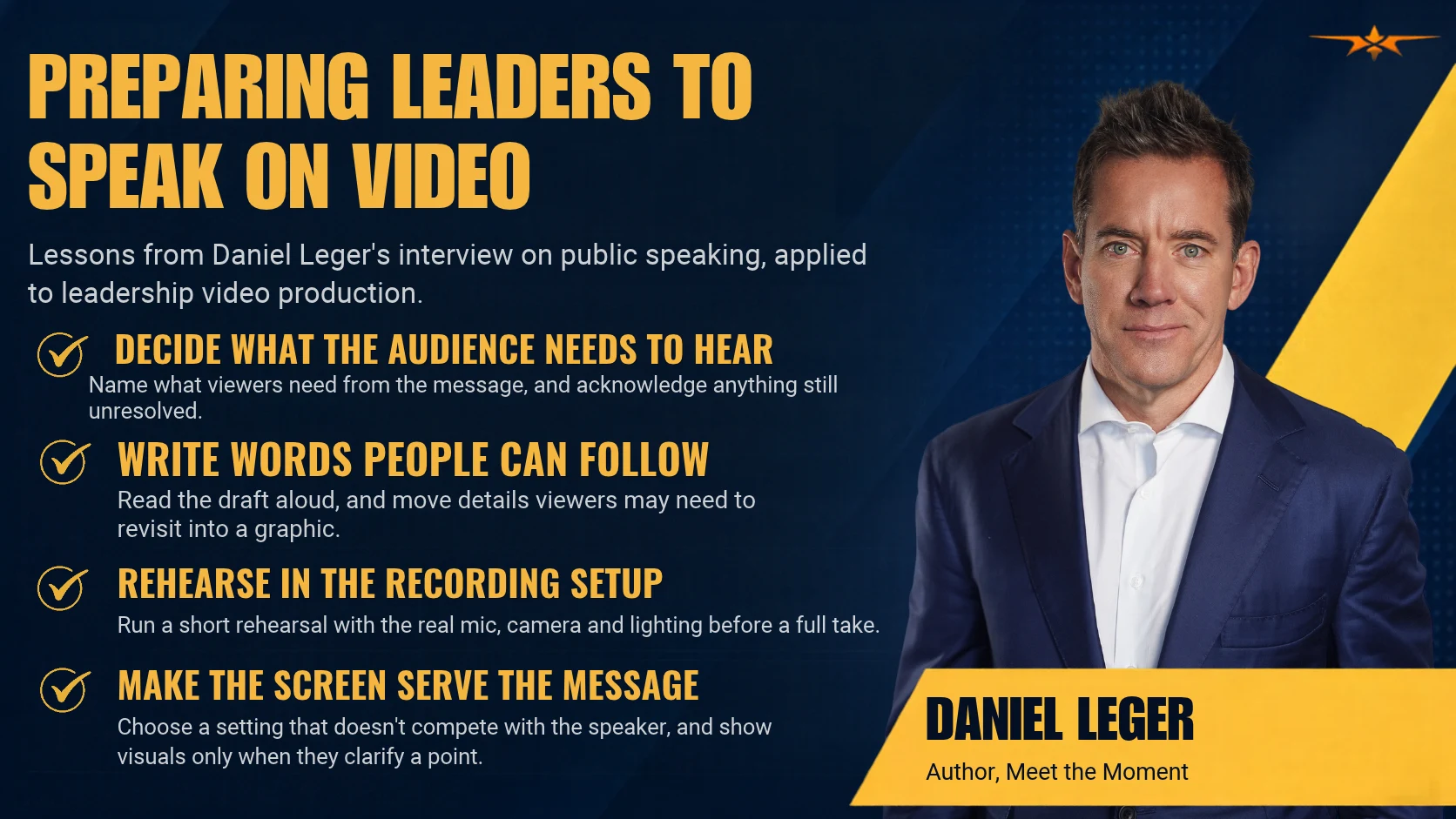
Daniel Leger, author of Meet the Moment, spoke with Authority Magazine about public speaking after 25 years in asset management and hundreds of speeches. He discussed how executives prepare a message, rehearse its delivery, and adapt when speaking through a screen.
His speaking principles offer practical considerations for leadership videos, including internal updates and customer messages. The production recommendations below are Beverly Boy’s interpretation of his ideas, not instructions he gave specifically about corporate video production.
Decide What the Audience Needs to Hear
Leger recalled preparing to speak at his firm’s thirtieth-anniversary investor conference. He recalled that hundreds of clients attending the conference needed more than information. They also needed confidence and clarity about the firm’s future. When addressing a large group with different priorities, he advised leaders to acknowledge significant challenges and focus on shared goals.
For an employee announcement, an executive may need to explain a decision and its immediate effects. A customer update may call for a timeline and a place to ask questions. A producer can identify those needs with the communications team and prepare questions about what is known. If an important issue remains unresolved, the video should acknowledge that rather than imply a decision has been made.
Write Words People Can Follow

Leger said speakers often give audiences too much information. His rule of three recommends organizing a speech into three parts and concentrating on three main points that listeners can remember. He also favors everyday words that sound natural when spoken and considers the speaker’s credibility, reasoning, and emotional connection with listeners.
For a recorded message, that suggests reading the draft aloud before approving it. Long sentences, internal terms, and lists of figures may look manageable on a page but be difficult to follow when heard once. A producer can ask the speaker to explain a complex point in their own words and put details viewers may need to revisit in a graphic or separate resource.
Rehearse in the Recording Setup
Leger emphasized rehearsing repeatedly under realistic conditions. He noted that lighting, sound, technology, and the physical setting introduce variables that can interrupt even an experienced speaker’s delivery. Preparation extends beyond learning the words.
On a video shoot, a short rehearsal can reveal where a speaker loses their place, rushes through an important point, or sounds uncomfortable with a scripted phrase. The production team can check the microphone, camera position, lighting, and any display or notes while the speaker practices. The producer can then adjust the setup or wording before a full take, particularly when an update requires precise qualifications.
Make the Screen Serve the Message
Asked about virtual town halls, video calls, and recorded messages, Leger noted the importance of lighting, background, and clothing on screen. He said notes can help with delivery and that images or video can support a presentation. He also cautioned that video calls can make it difficult to maintain an audience’s attention because viewers face distractions on their computers. In his view, those limitations generally make virtual speaking less effective than addressing an audience in person.
For a recorded leadership video, the production team can use visual elements with purpose. Choose a setting that does not compete with the speaker. Show a process, location, or graphic when it clarifies a point. If viewers need to act, make the next step easy to find. These choices can help them follow the message.
Practical Application: Plan the Message and the Shoot Together
List the audience’s likely questions, verify the facts the executive can address, and decide whether someone else should explain technical details. Draft interview prompts or speaking notes in language the executive can deliver comfortably.
Before recording, run through the opening and the most consequential passages in the planned setup. Let the speaker restate a point that sounds overly formal or leaves out a qualification. During editing, check that graphics support the spoken explanation and that cuts do not change its meaning. Review the result against the audience’s questions.
Team Beverly Boy’s Takeaway
Leger’s interview treats delivery as part of communication. For our team, that means understanding the audience and hearing the message spoken aloud before filming. With a difficult announcement, we would also ask whether one executive can answer the likely questions or whether another speaker is needed.
For our team, the goal would be to prepare the executive without making the delivery feel overly rehearsed. We would focus on the passages that need precision, give the speaker room to use familiar language, and check whether the finished video remains clear to someone who was not involved in preparing the message.
Conclusion
Daniel Leger’s speaking advice offers a useful starting point for leadership video production: consider the audience, simplify the spoken message, and prepare the speaker for the conditions in which they will deliver it. His concerns about distractions on video calls also give producers a reason to consider carefully what appears on screen.
The producer can carry those choices through the brief, shoot, and edit while preserving the leader’s meaning.
This article is based on an interview originally published by Authority Magazine. Read the full interview here.