How Susan Johnston’s Storytelling Approach Applies to Video Production and Distribution
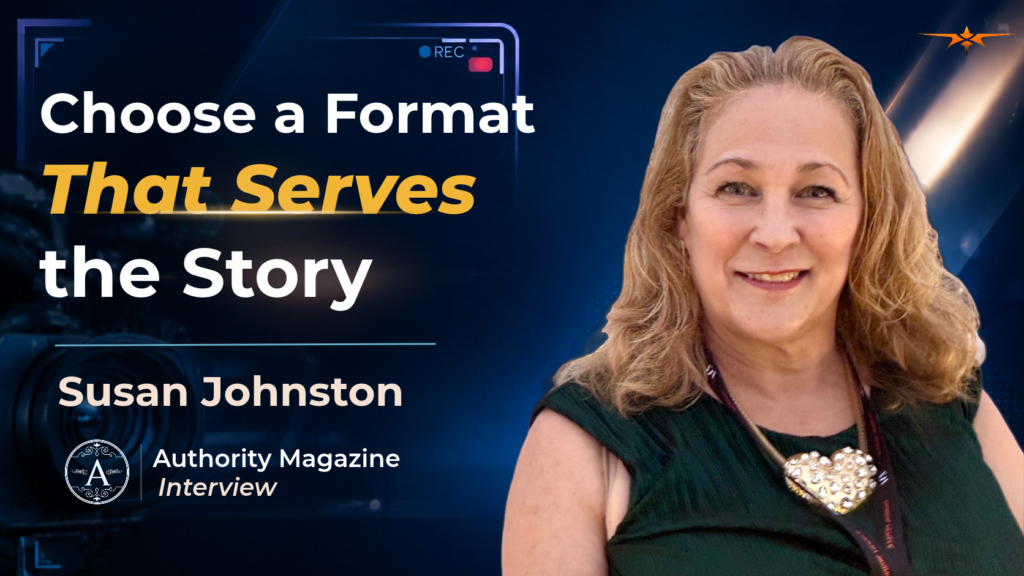
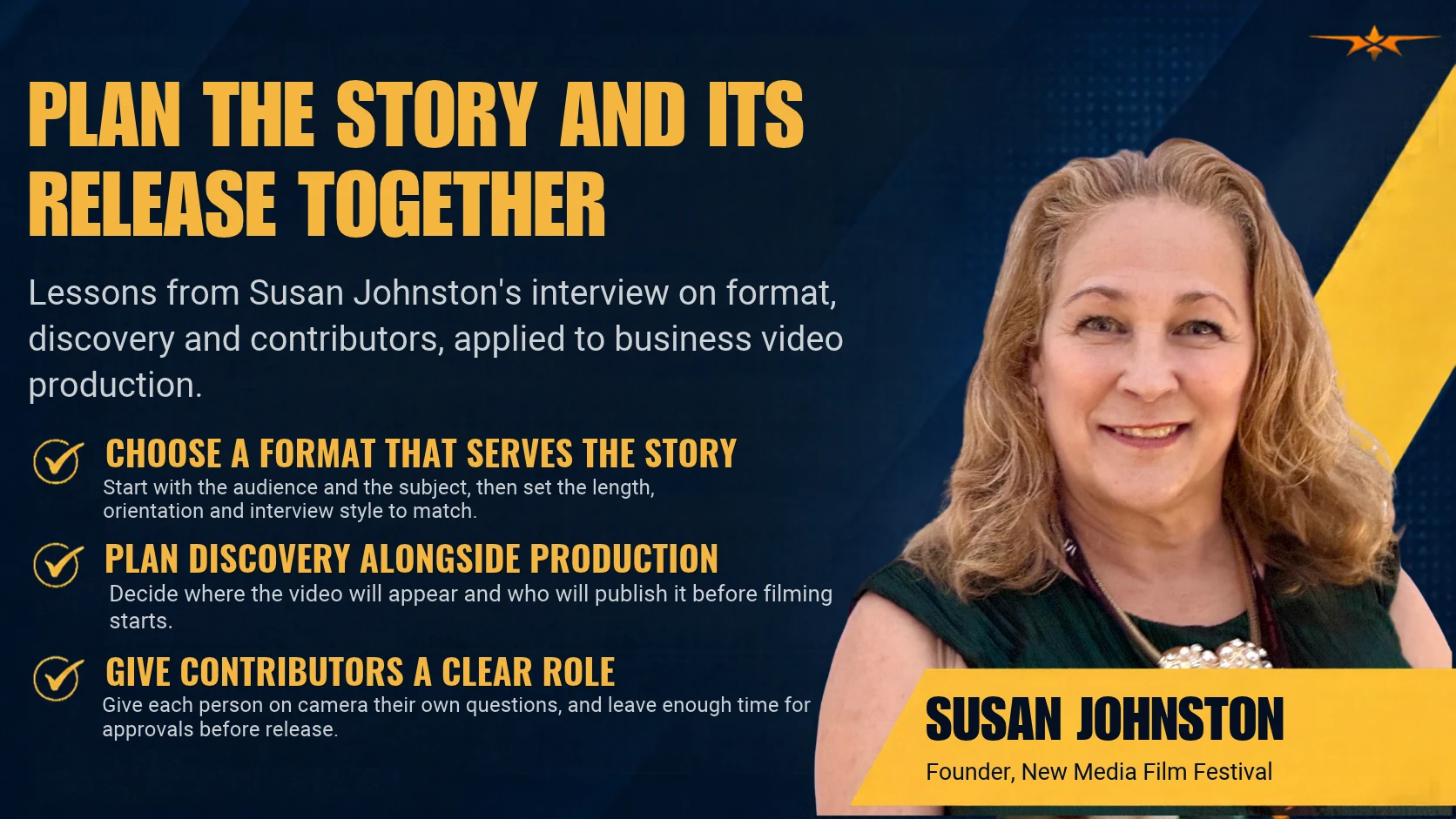
Susan Johnston, founder of the New Media Film Festival, spoke with Authority Magazine about supporting creators working in emerging formats. She said the festival grew from seeing new kinds of storytelling without a central place to recognize them. She also described plans for curated interviews, distribution pathways, and a refreshed YouTube channel to help audiences discover new voices.
For businesses commissioning video production, Johnston’s perspective raises practical questions about format, distribution, and contributors. Where will the video appear, how will audiences encounter it, and whose experience should help tell the story? The recommendations below are Beverly Boy’s applications of Johnston’s interview, not instructions she gave about corporate video.
Choose a Format That Serves the Story
Johnston said she would like the entertainment industry to be more open to emerging formats and meet creators where they are. She founded the New Media Film Festival to recognize emerging storytelling formats and provide a platform for creators working in them. She also named curiosity and a willingness to pivot among the things she wishes she had understood when starting out.
A producer can begin with the audience and the subject: does the viewer need to watch a process, hear a participant explain a decision, or see a place and the people in it? Those answers help determine the length, orientation, interview style, and supporting footage. If a short social cut and a longer website piece are both needed, plan the framing and questions for both during the shoot.
Plan Discovery Alongside Production
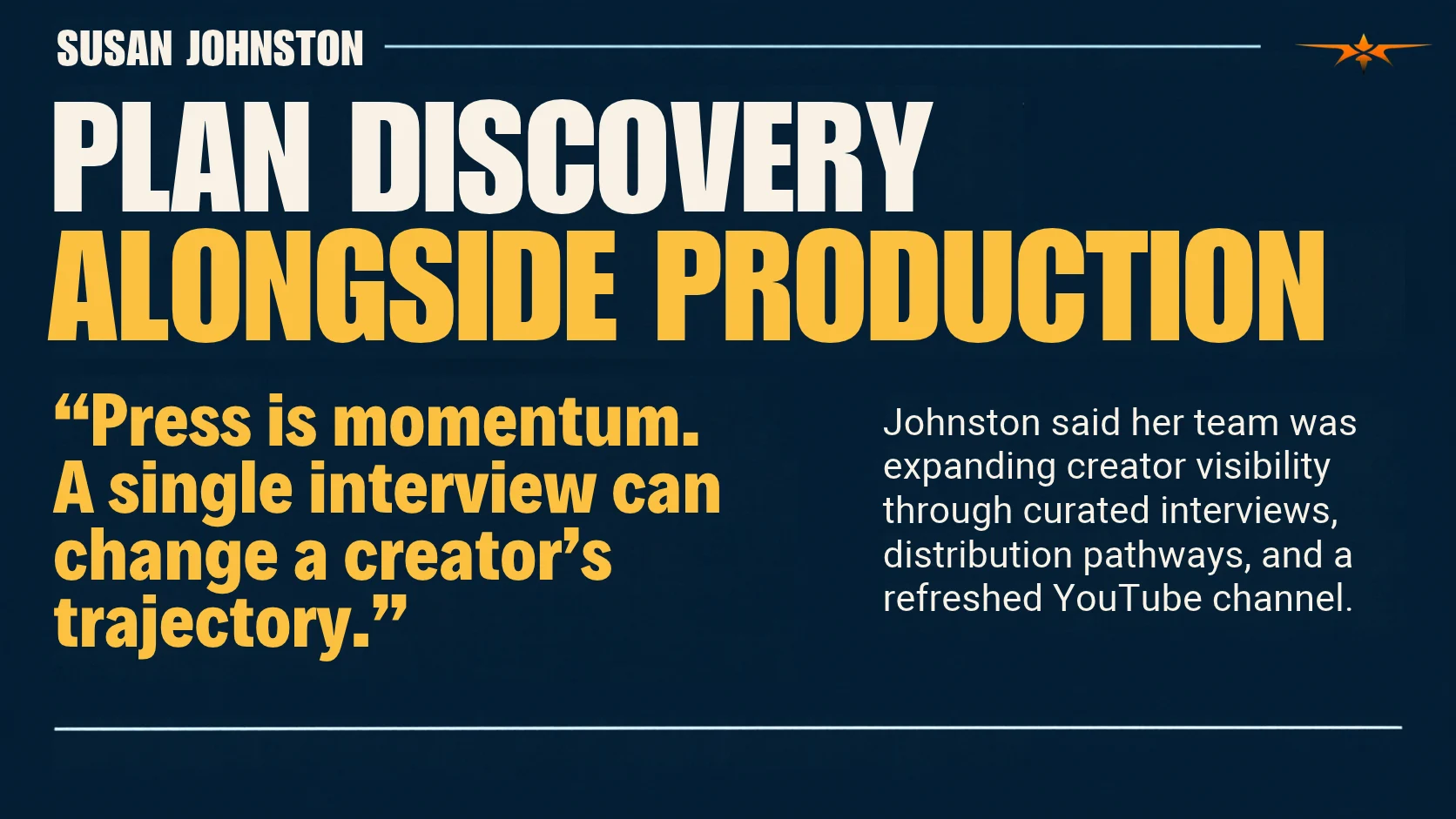
Johnston said her team was expanding creator visibility through curated interviews, distribution pathways, and a refreshed YouTube channel. In her list of five things she wishes she had known, she described press as a source of momentum and said an interview can affect a creator’s trajectory. Her comments emphasize creating opportunities for people to discover work, rather than treating production and publication as the same task.
For a business video, the practical question is who will put the finished work in front of the intended viewer. Before filming, identify the website page, sales conversation, event, or social channel where the video will appear. Decide who will publish it and what else that placement needs, such as a short excerpt, captions, a description, or a still image. Confirm permission to use the footage and make sure partners and interviewees know how their contributions will be shared.
Give Contributors a Clear Role
Johnston credited creators who trusted her with their work in the festival’s early days and said they helped shape its identity. She also recalled trying to manage every detail herself before learning the value of collaboration. She also emphasized the importance of representing different perspectives in film and television.
A company story may involve a founder, employee, customer, or partner, each with a different reason to be on camera. A producer should establish who can speak firsthand about the subject and what each person is comfortable contributing. Plan separate questions for their roles rather than asking everyone to repeat a brand message. Give the people responsible for approvals enough time to check names, context, and factual claims before release.
Practical Application: Work Backward From the Release
At the kickoff, ask what the video must help its audience understand and where that audience will encounter it. Build a release list: primary version, any shorter edits, captions, thumbnail or stills, page copy, publication owner, and target date. Use it to identify footage, interview answers, and permissions needed while the crew is still on location.
During editing, check whether each version has enough context to stand alone in its assigned place. A short excerpt from a longer interview may need a different opening or an identifying title. Review every cut for accuracy, then hand the publishing team the agreed materials and a description of their intended use. The production plan should include this handoff.
Team Beverly Boy’s Takeaway
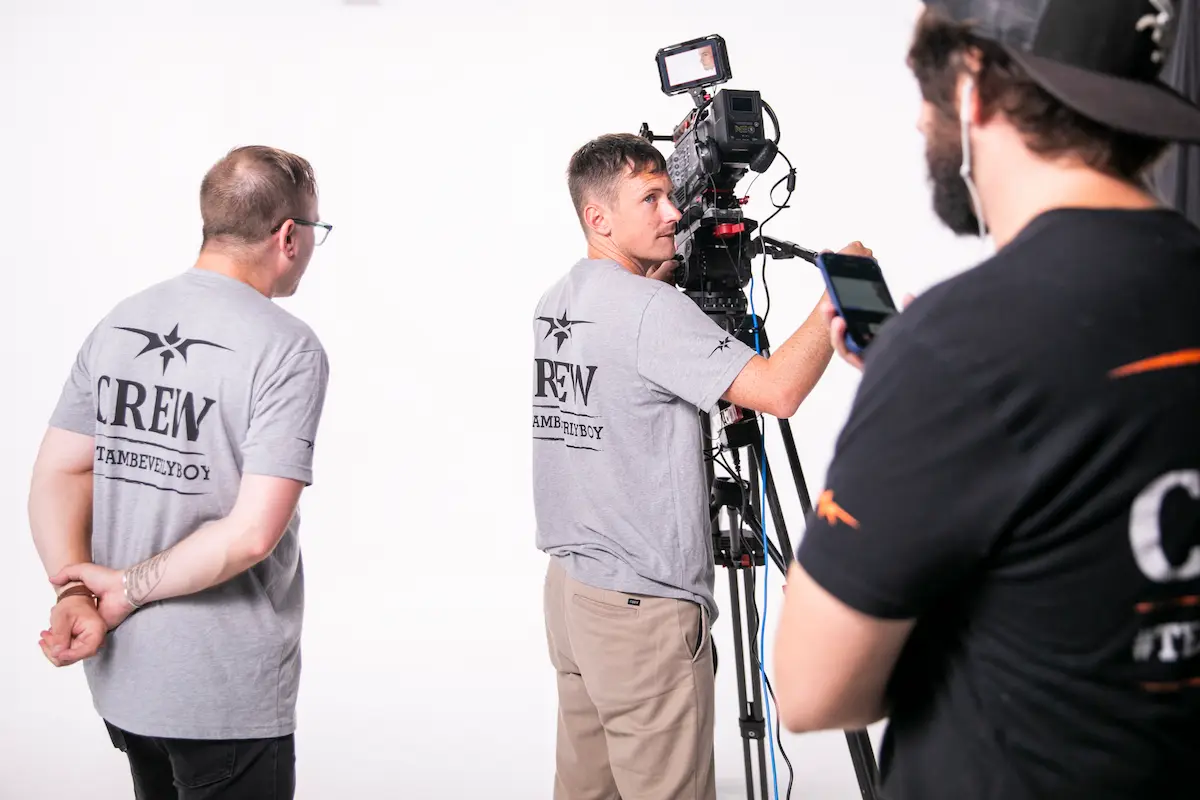
Johnston’s interview reinforces the value of considering distribution while planning production. We would identify where the video will appear before deciding which versions, framing, and supporting footage the shoot needs to capture. That allows the producer to collect the right footage and keep the subject’s point of view intact across edits.
We would also distinguish a distribution opportunity from a promised result. An interview or a new channel provides a place for a story; reaching the intended audience also depends on how it is shared. Our job is to deliver a clear, usable piece and the materials the team needs to publish it.
Conclusion
Johnston’s work connects new formats with support for the people making and sharing stories. For business video production, the useful application is to plan the format, contributors, and release together. A video has a clearer purpose when the team knows both what it needs to communicate and how the intended audience will find it.
This article is based on an interview originally published by Authority Magazine. Read the full interview here.