How Amy Perez’s Views on Human Judgment Apply to AI Product Videos
Amy Perez, founder and CEO of myDream, spoke with Authority Magazine about her public service career and the thinking behind an app for reflecting on dreams. She described a product that lets users record dreams by voice or text, explore emotions and symbols, and notice patterns over time. Perez said the aim is to help people ask questions about their experiences, not hand them a definitive interpretation.
For businesses producing AI product videos, her approach raises a practical question: how can a demonstration explain what a tool does without overstating its capabilities or the decisions it makes? The video applications below are Beverly Boy’s interpretation of Perez’s product philosophy, not advice she gave about filmmaking.
Show Where the User Makes the Judgment
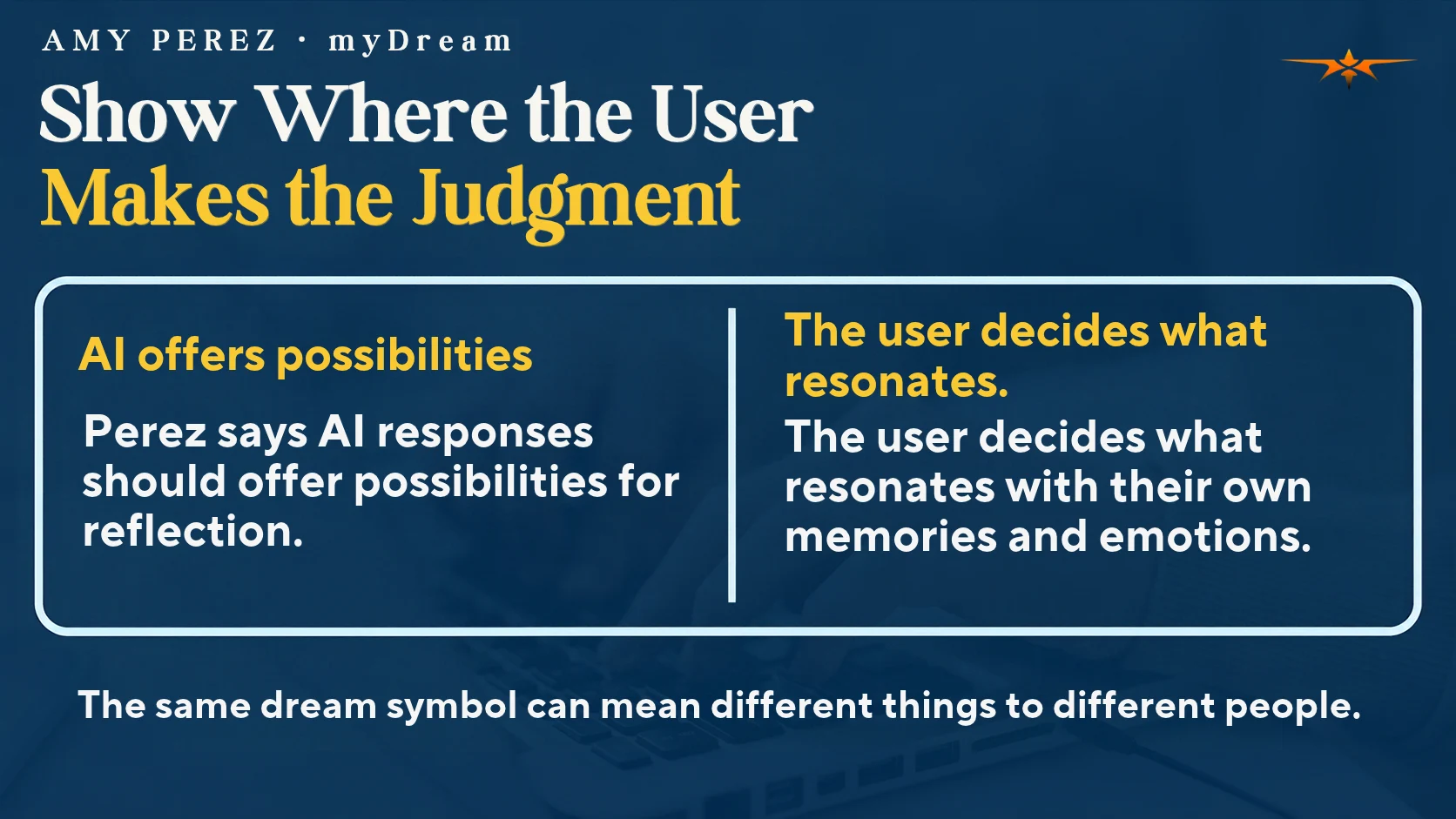
Perez said she did not want myDream to tell people who they are. In her view, an AI response should offer possibilities for reflection while the user decides what resonates. She noted that the same dream symbol can mean different things to different people because of their memories and emotions.
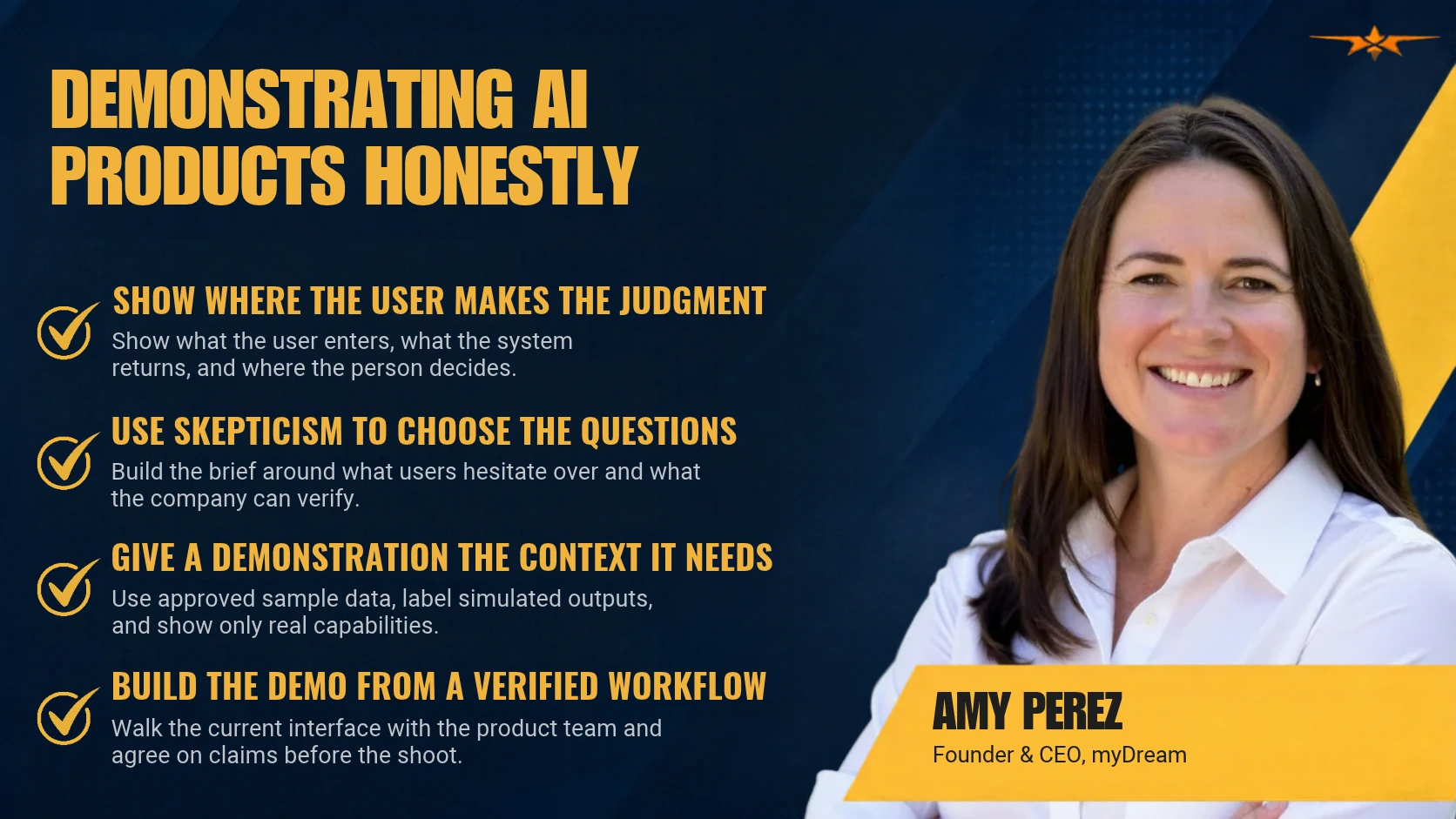
An AI product video should show that division of roles if it is central to the product. A producer can record the sequence: what the user enters, what the system returns, and where the person reviews or acts on the result. Script the voiceover to match the interface and the company’s approved explanation. For example, describing myDream as revealing the definitive meaning of a dream would conflict with Perez’s emphasis on personal interpretation.
Use Skepticism to Choose the Questions
Perez described facing doubts about leaving an established career and building something new. Developing myDream also raised questions about privacy, personalization, and how much authority users might give an AI-generated interpretation. Questions about AI interpreting personal material, privacy, generic responses, and user dependence helped her team refine its approach. She characterized skepticism as a design constraint rather than a verdict.
Those questions can also guide a product video brief. Before drafting a feature sequence, ask the product and support teams what prospective users hesitate over and which answers the company can verify. Some concerns may be addressed by showing a real control or step in the interface; others may need an explanation from a product lead. The video should not claim that a question has been resolved just because it has been raised.
Give a Demonstration the Context It Needs
A dog or an ocean in a dream can carry different associations for different people, so Perez said myDream was designed to consider context, emotions, symbols, and patterns. She also described dream data as deeply personal and said the company does not sell it.
A producer planning an AI demonstration needs to decide what example can be shown responsibly. Use an approved sample rather than a person’s private information unless that person has agreed to its use. Identify simulated inputs or outputs as such, and show only capabilities that the current product actually has. If the video makes a privacy claim, check the wording with the team responsible for the product and its data practices before recording it.
Practical Application: Build the Demo From a Verified Workflow
Start with one user question that the video can answer, such as what happens after a person enters information and receives a response. Have the product team walk the producer through the current interface and mark the steps that matter to the viewer. Agree on the sample data, the wording of claims, and who will check the recording against the product before the shoot.
During production, capture the full workflow before cutting it into a shorter explanation. An interview with a product lead can explain why the design offers a choice to the user; screen footage can show where that choice occurs. In the edit, keep enough of the sequence for viewers to understand the input and output, and avoid implying that a suggested result is guaranteed or medically diagnostic.
Team Beverly Boy’s Takeaway
Perez’s interview points us toward a test for any AI product video: after watching, can someone distinguish the system’s output from the decision a person still makes? We would settle that question in the brief, then check that the narration, screen capture, and edit tell the same story.
We would also treat a buyer’s concern as part of the production assignment. A demo that answers a real question about process, data, or limits gives a business viewer more to work with than a sequence of impressive screens. Each answer still needs to reflect the product as it exists.
Conclusion
Perez’s interview is about her career change and the choices behind myDream. Its practical connection to video production is the care needed when demonstrating an AI product built around personal information and user judgment. Showing the actual workflow, choosing appropriate examples, and verifying product claims can help viewers distinguish what the AI provides from the decisions users make themselves.
This article is based on an interview originally published by Authority Magazine. Read the full interview here.