What Cynthia Newman’s Leadership Experience Suggests for Change Communication Videos
Cynthia Laden Newman, founder of Success Strategists, spoke with Authority Magazine about setbacks and decisions across 45 years in financial services. Fifteen months after becoming a Regional Director, she lost that position in a reorganization and was reassigned to offices that had been consolidated but still operated like separate organizations. She described moving past her disappointment to focus on the people depending on her and the work ahead.
Her account gives businesses a starting point for videos about organizational change. Leaders may need to explain a decision while employees are still dealing with its practical effects. The production guidance below is Beverly Boy’s interpretation of Newman’s experience, not advice she gave about video.
Establish What Is Known Before Recording
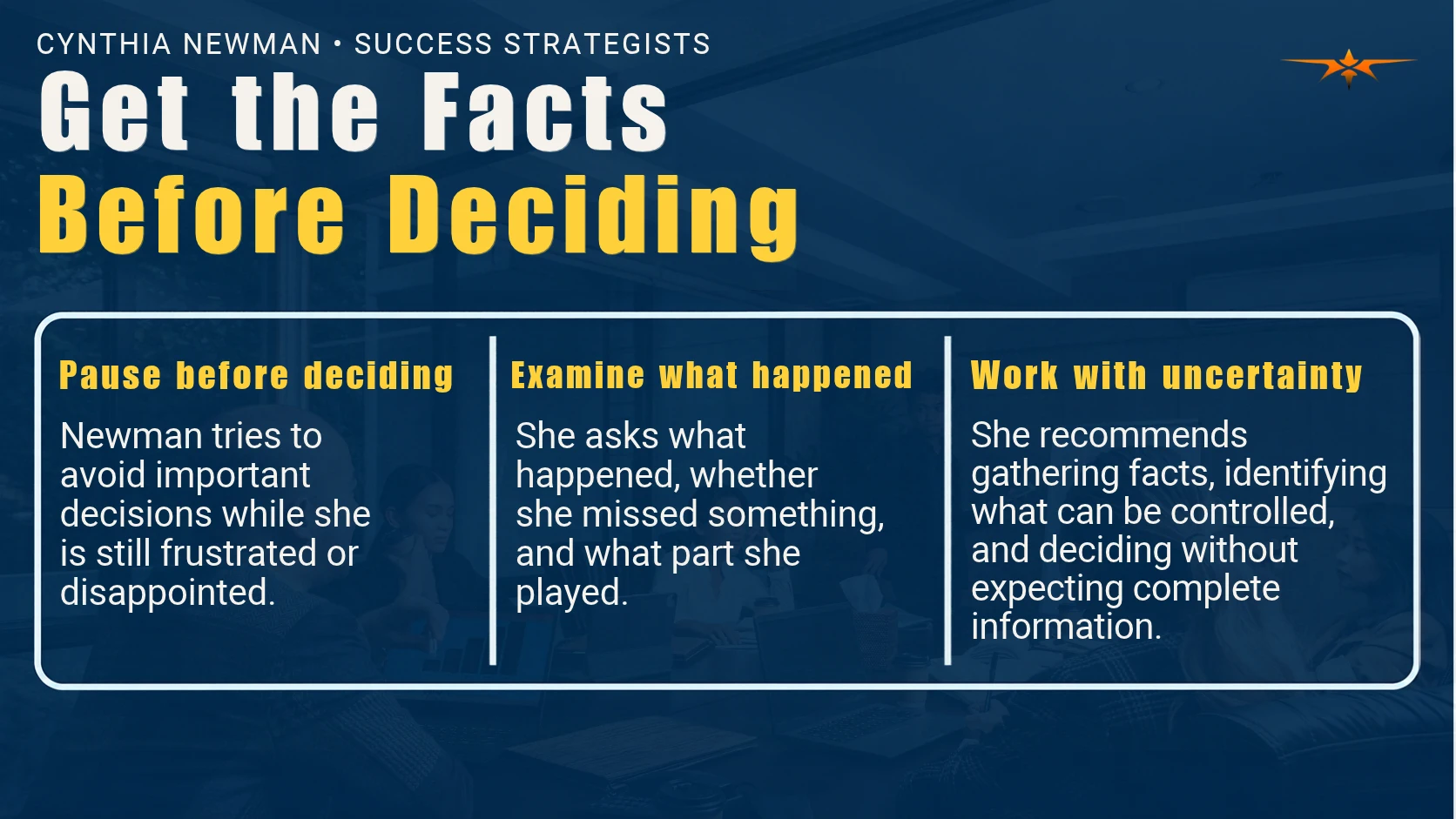
Newman said she tries not to make an important decision while frustrated or disappointed. After a setback, she asks what happened, whether she missed something, and what part she played. When circumstances are uncertain, she advises getting the facts, identifying what can be controlled, and making a decision without expecting complete information.
A leadership video needs a similar check before the interview begins. A producer should confirm which decisions are final, what their reasons are, and which details remain open. That information helps shape questions the speaker can answer accurately. It also identifies anything the video should acknowledge as unresolved, especially when employees or customers may be waiting for an update.
Explain the Change From the Audience’s Position
Newman said the offices in her new assignment had gone through a major consolidation but still had divided cultures. At first she focused on the position she had lost. She then recognized that people depended on her and that bringing the organization together required her attention. She said the team worked through the issues and the complex later became one of the top performers in the country.
For a business video, the useful connection is the gap between announcing a change and helping people understand it. An executive can explain why a restructuring happened, but viewers may also need to know what changes in their work, who will make decisions, and where to take questions. A producer can build those needs into the interview outline and use another qualified speaker when the executive cannot address an operational detail. Employee interviews should represent what those participants actually said about the transition.
Test the Brief With Someone Who Will Challenge It
Newman emphasized the value of a person who will tell her the truth instead of automatically agreeing. When reviewing a setback, she asks whether a decision was poor, information was missed, or circumstances changed. She also said an adviser may need to point out that the leader is contributing to a problem.
Before filming, a producer can ask someone familiar with the intended audience to review the planned questions. An internal communications lead or department representative may notice a term employees will not understand or a practical concern missing from the brief. That review does not require every concern to appear in the final cut. It helps the team prepare a speaker to address the points the video has been chosen to explain.
Practical Application: Build the Video From Confirmed Answers
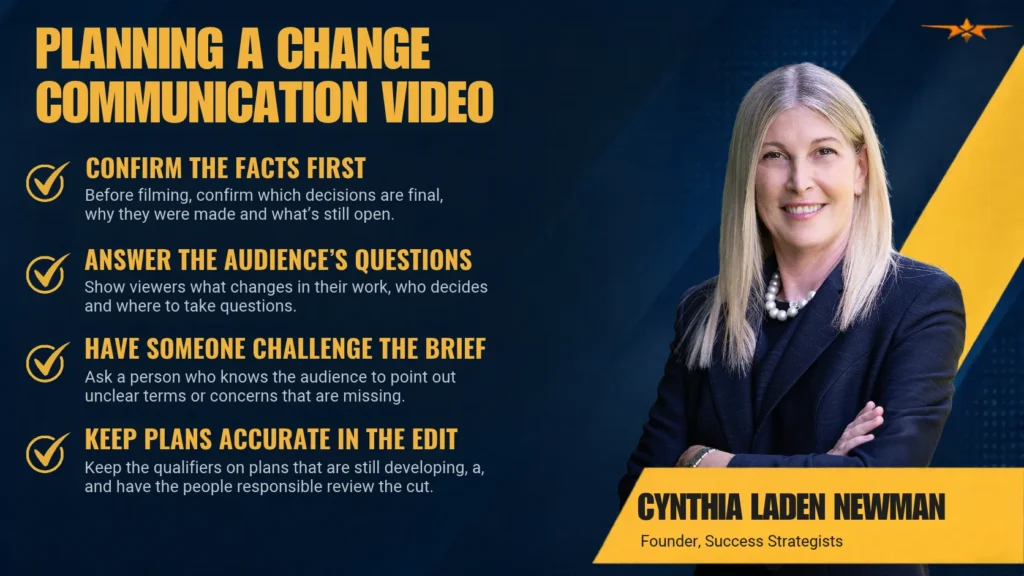
In preproduction, list the audience’s likely questions alongside the approved facts. Separate what the organization can explain now from what it plans to communicate later. Decide which speaker can answer each question and whether the video needs a follow-up channel for details that may change. These decisions should come before writing a polished opening statement.
On the shoot, ask the leader to explain the decision in their own words, then follow with its immediate effects and next steps. Capture workplace footage only when it accurately represents the operations being discussed. During editing, keep qualifications that affect the meaning of an answer, particularly around plans that are still developing. Review the cut with people responsible for those details before release.
Team Beverly Boy’s Takeaway
Newman’s reorganization story reminds us that a change announcement reaches people with different questions. For our team, the producer’s job is to find out what the audience needs to understand and what the organization is ready to say. The brief should give the executive room to explain a decision without asking one person to speak for every team affected.
We would also check the finished video for clarity from the viewer’s position. Does it identify what is changing, what is known, and where further information will come from? A confident delivery cannot fill in a missing answer, so those questions belong in the planning and review process.
Conclusion
Newman’s interview describes how she responded to uncertainty and a difficult reorganization. For leadership video production, her experience points to a practical sequence: establish the facts, consider the people affected, and prepare speakers to address the questions the organization can answer. The video can then communicate the decision within the limits of what is known.
This article is based on an interview originally published by Authority Magazine. Read the full interview here.