Why Oliver Silverstein’s Case for Early Creator Input Matters for Video Campaigns
Oliver Silverstein, Chief Operating Officer of SoaR, discussed creator partnerships, audience attention, and campaign development in his Authority Magazine interview. His account traces a change in creator marketing: brands increasingly value creators’ judgment alongside their ability to distribute content.
That distinction matters for businesses commissioning video. Creator video campaigns require decisions about who shapes the idea, what gets filmed, and how a brand belongs in the finished piece. Silverstein’s observations offer useful starting points for those decisions, without prescribing a production workflow.

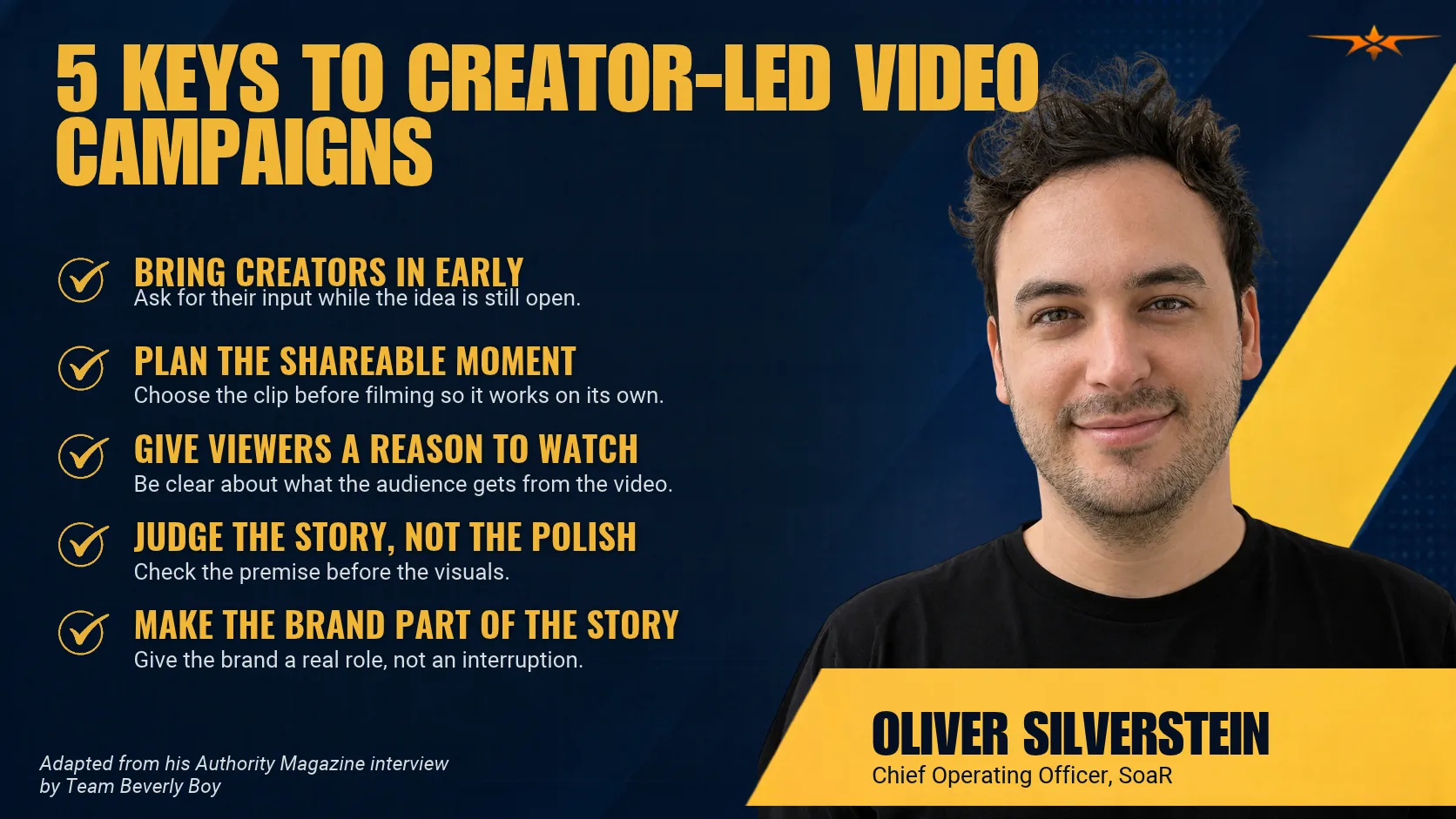
Give Creators a Role Before the Idea Is Locked
Silverstein described a shift away from treating creators as distribution channels and toward treating them as campaign co-authors. He recommended involving them while an idea is still being developed, when their knowledge of audience response can inform the concept. He also described SoaR moving beyond an exclusive creator roster to select talent suited to each idea.
A production brief should therefore leave substantive decisions open for creator input. Before approving a script, the brand and producer should ask the creator to assess the premise, language, and proposed performance against their established work. Casting should consider how someone tells a story, rather than treating follower count or existing availability as sufficient reasons to choose them.
Plan the Shareable Moment Before Filming
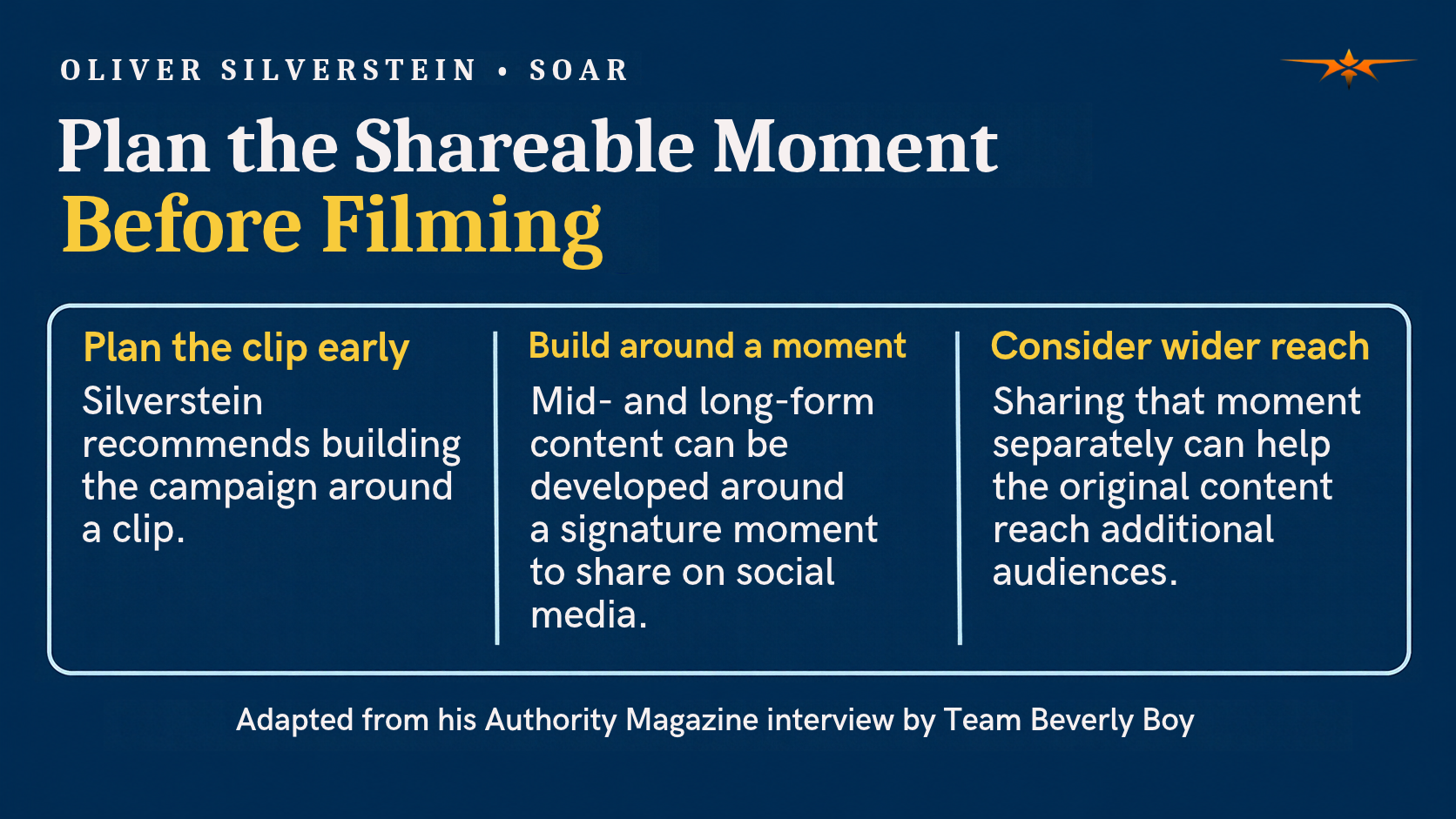
Silverstein’s recommendation to build a campaign around a clip reverses the usual assumption that short excerpts are an afterthought. He described mid- and long-form content being developed around a signature moment that can circulate separately on social media. In his account, that moment can extend the original piece’s audience.
For production, this means identifying the intended excerpt during development and checking that it works both within the longer video and on its own. The script or interview outline should give that moment enough context to remain understandable when separated. The shot plan should also account for the action or reaction that makes the excerpt worth watching. This is a specific capture requirement, rather than an instruction to extract something attention-grabbing from whatever footage happens to exist.
Give the Audience a Reason to Spend Time
Silverstein described a growing gap between platform incentives and what audiences want to consume. His view is that people are seeking greater meaning, enrichment, and purpose, creating an opportunity to reach fewer people with material that resonates more deeply. He identified community-based platforms as channels marketers may increasingly prioritize.
A business video brief can translate that observation into a clear statement of viewer value. Before scripting, the producer should identify what the intended audience will understand or find worthwhile after watching. During the edit, sequences that merely prolong the video should face a different standard than sequences that explain something the audience came to learn. Pace still matters, but rapid cuts alone cannot supply a reason to keep watching. The proposed value needs to be visible in the content itself.
Judge the Story Separately From Its Polish
Silverstein argued that easier content production through AI does not replace storytelling judgment. He connected a story worth following with creativity and understanding the audience. Looking ahead, he predicted that speed, production, and polish would become baseline expectations, while originality and taste would remain differentiators.
Businesses should assess the narrative before approving a treatment on visual presentation alone. A producer can ask whether the proposed film has a clear subject, a question worth pursuing, and enough material to develop an answer. At rough-cut review, decision-makers should be able to explain what holds the piece together without pointing only to music, graphics, or attractive footage. Those production elements can support a story, but they should not conceal that the underlying premise remains unresolved.
Make the Brand's Presence Belong in the Experience
Silverstein favored brand integrations that feel native to the entertainment over ad reads or traditional spots that interrupt it. He framed this as a way for brands to become part of the experience audiences chose to watch.
A production team should identify that relationship in the treatment, before discussing logo placement. The brand’s participation needs a clear function within the activity or story being filmed. Script review can then examine whether a product mention advances that activity or pauses it for a separate sales message. This does not mean concealing the commercial relationship. It means making a deliberate creative decision about the brand’s role, rather than attaching promotional copy to an otherwise unrelated video.
Define What the Finished Video Must Accomplish
Asked about measurement, Silverstein recommended starting with the business objective instead of the largest dashboard number. He preferred a small set of metrics that indicate whether the work succeeded over a report crowded with impressive-looking figures. That distinction gives businesses a practical way to evaluate competing creative choices.
Before production, the commissioning team should define the video’s intended job and the evidence it will use to assess completion of that job. A request for another sequence or a different ending should have a stated relationship to the agreed objective, rather than resting solely on personal preference.
Team Beverly Boy's Takeaway

We think the producer’s responsibility for resolving production problems deserves particular attention here. Silverstein said clients hire his team to solve problems regardless of whose fault they are. For creator-led video, we see that as a responsibility to turn a disruption into a decision the commissioning team can actually make.
We would expect the producer, when a production issue arises, to present a feasible remedy and explain what it changes in the approved concept. We would recommend proceeding only after the person responsible for the affected creative commitment accepts that change. Solving the immediate problem should not quietly remove the creator’s contribution that justified the project.
Creator co-authorship has practical consequences beyond an initial brainstorming session. It remains meaningful when production decisions preserve the creative contribution the business commissioned, including when the original plan needs to change.
This article is based on an interview originally published by Authority Magazine. Read the full interview here.