What Josh Murray’s Acting Experiences Suggest for Video Interviews
Actor and producer Josh Murray spoke with Authority Magazine about starting his acting career, learning from an uncomfortable audition, and continuing to work through rejection. An underprepared theater audition taught him to take the demands of each medium seriously and avoid changing too many things at once.
Although Murray was discussing acting, his experiences raise practical questions about preparing people to speak on camera. For business video production, those questions include how much preparation a participant needs, how to handle nervousness, and when to allow room for natural responses. These are Beverly Boy’s production applications, not recommendations Murray made about corporate interviews.
Prepare for the Kind of Recording You Are Making
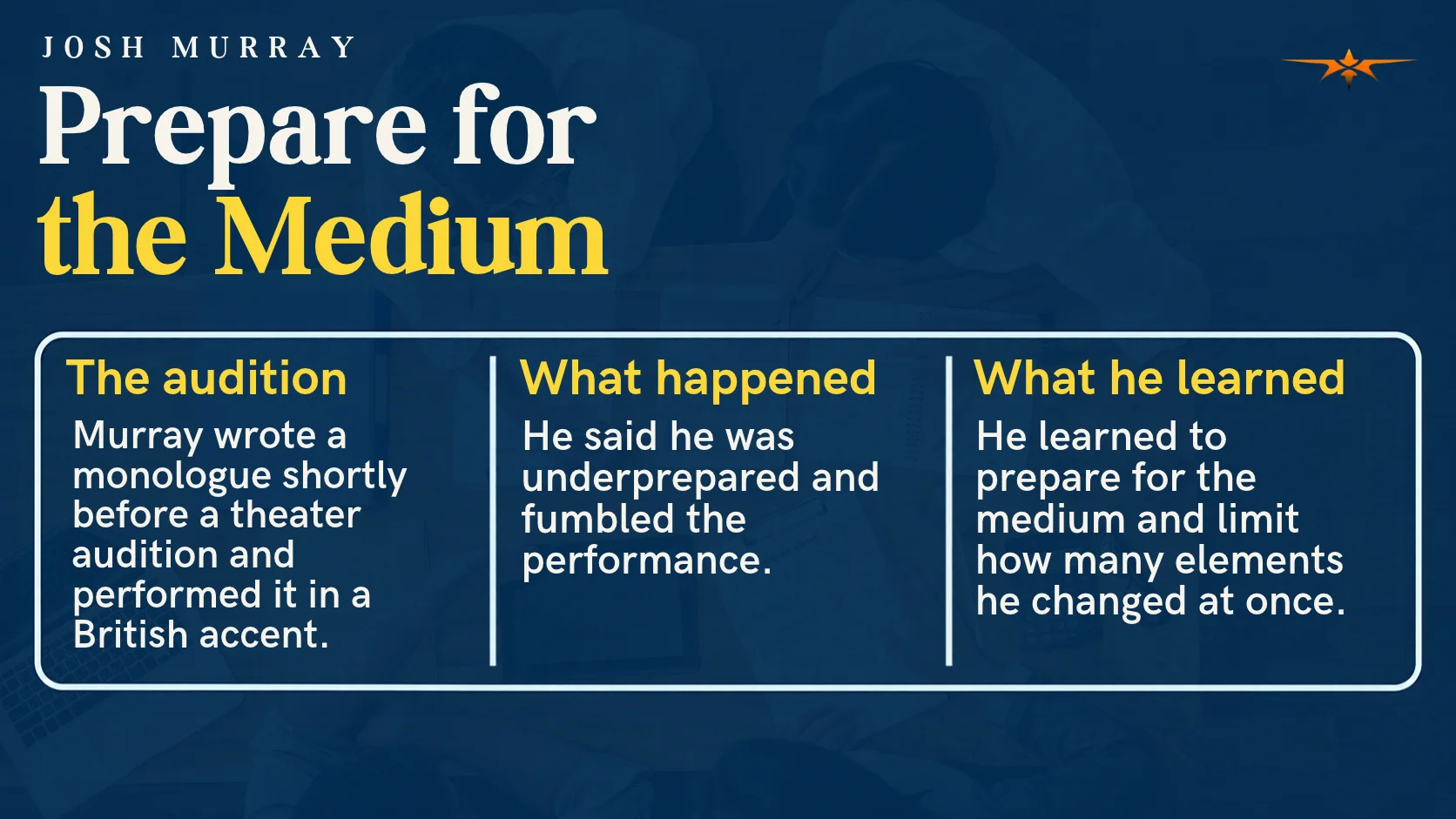
At a theater open call, Murray performed a monologue he had written shortly before the audition and delivered it in a British accent. He said he was not adequately prepared, fumbled the performance, and left with a lesson about preparing for each medium and limiting last minute changes.
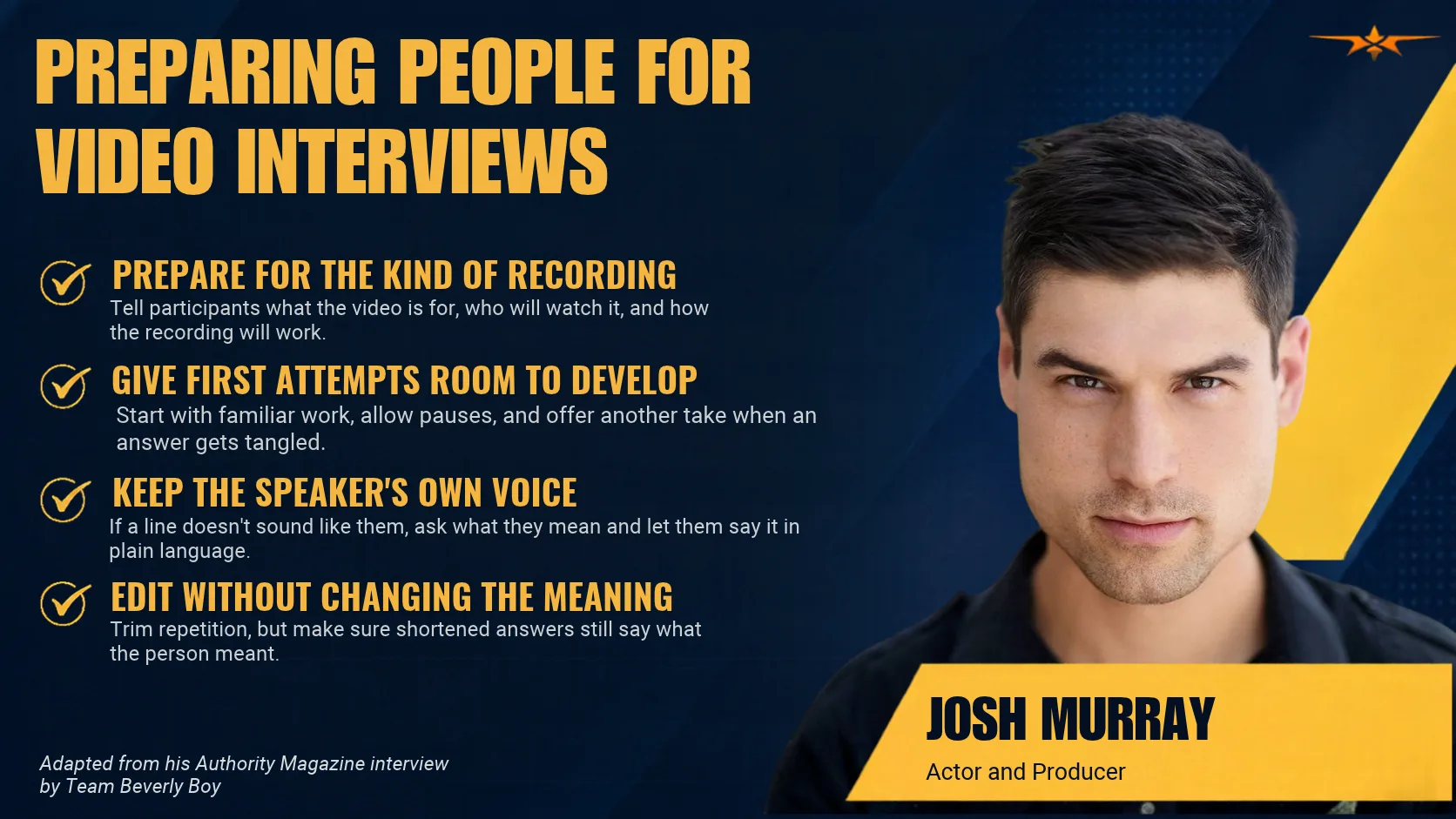
Before a business interview, a producer should tell the participant what the video is for, who will watch it, and how the recording will work. A short conversation can establish which examples the person knows firsthand and which questions need another speaker. Give them the key subjects in advance while leaving room to answer in their own words. Adding an unfamiliar script or changing the message just before the shoot makes the task harder for the person on camera.
Give the First Attempts Room to Develop
Murray recalled feeling so nervous before his first short film audition that his hands went numb. He still booked a small speaking part, but he knew he had more to learn. In his advice to aspiring actors, he also said that getting good at something new involves being bad at it first and that experienced people continue to face setbacks.
An employee speaking on camera does not need to perform like an actor. Start with a question about work they do every day, allow a pause before the next question, and offer another attempt when an answer gets tangled. A producer can ask for a specific example if a first response sounds too general. Those choices make the interview more useful without judging the participant by one awkward take.
Keep the Speaker’s Own Voice
Murray described initially seeing acting as a way to wear a more attractive mask. Over time, he said acting taught him the value of letting that mask go. That personal reflection still leaves room for careful preparation before a business interview.
For a company video, the useful connection is how a participant sounds when the planned message reaches the camera. If an executive would never say a line in ordinary conversation, a producer can ask what they mean and invite them to explain it in familiar language. In the edit, remove repetition where needed while preserving the meaning of the answer. The aim is a clear account from the actual person, with claims the organization can verify.
Practical Application: Plan the Interview Around the Participant
In preproduction, identify the video’s audience and the one or two points the interview must explain. Choose participants who can speak to those points from experience, then share a short list of topics rather than a page of polished answers. Ask what details they can discuss, whether anything needs approval, and which terms a viewer outside the organization might not understand.
On the shoot, explain where to look and how questions will be asked before recording the main answers. Begin with familiar work, then move to harder topics once the participant understands the rhythm. Capture relevant work and settings as supporting footage, and leave time for follow-up questions. During the edit, check that shortened answers still represent what the person meant and that the visuals support the words.
Team Beverly Boy’s Takeaway
Murray’s audition experiences highlight how preparation and nerves can affect someone’s performance. In business video production, our role is to help participants understand what is expected and feel prepared to answer questions on camera.
We would also judge an interview by what a viewer can learn from it, rather than whether every sentence arrives perfectly on the first take. We would favor a specific example in the speaker’s own voice over a line they struggle to deliver. The edit should clarify that example while keeping the speaker’s meaning intact.
Conclusion
Josh Murray’s interview focuses on the challenges of building an acting career, but his experiences also offer a useful perspective on preparation and working through discomfort on camera. For business video producers, the application is straightforward: prepare participants for the recording, give them room to speak naturally, and edit their responses without changing their meaning.
This article is based on an interview originally published by Authority Magazine. Read the full interview here.