How Kevin Gaspar’s Approach Can Help Video Interviewers Invite, Not Force, Openness
Kevin Gaspar, co-founder and Chief Hangout Officer at Yirl, spoke with Authority Magazine about creating conditions where people feel comfortable being themselves. The conversation connected a difficult product change with questions about disagreement, personal disclosure, and the relationship between a company’s promises and people’s experience.
For businesses producing interview-based video, the useful distinction is between inviting openness and requiring someone to perform it. Gaspar’s comments offer a starting point for decisions about interview questions, speaker participation, and what a company chooses to show. Those production applications are Beverly Boy’s interpretation, rather than methods Gaspar described using.
Ask About What Changed, Not Just What Was Planned
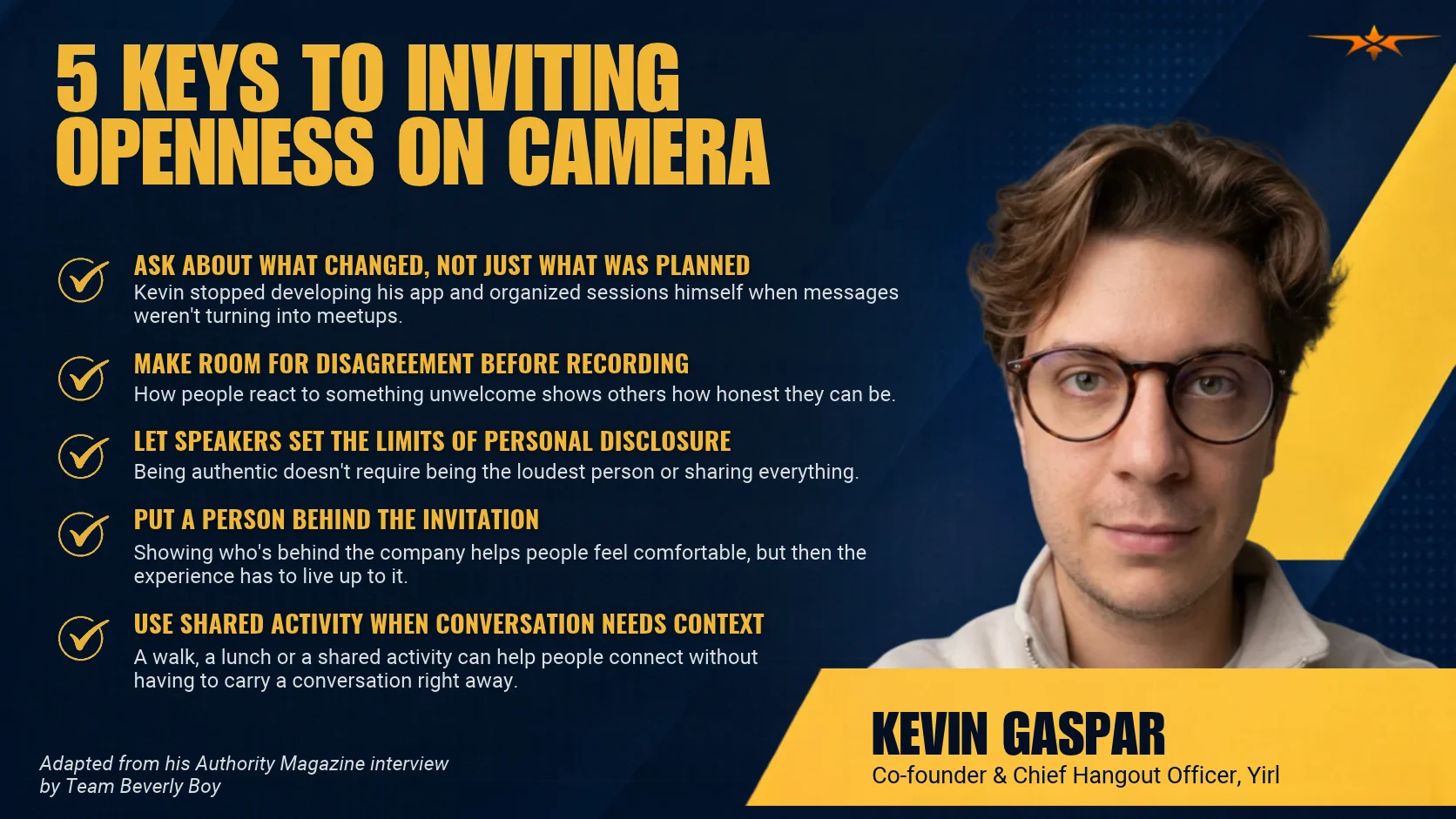
Gaspar recalled returning to an app concept that helped people find others to play sports with. By early 2025, more than a thousand people in Paris had downloaded it, but messages were not becoming meetings. He stopped developing the app and began organizing sessions himself, handling groups, details, and reminders. He said that within a week, users who had never met through the app were meeting in person.
A business interview can examine that kind of gap between an intended service and its actual use. Instead of asking a founder only to explain the original vision, an interviewer should ask what customers did, what failed to happen, and what the company changed. Gaspar’s account contains concrete actions that make the change understandable. A video about a business decision should seek that same specificity rather than relying on a general statement about listening to customers.
Make Room for Disagreement Before Recording
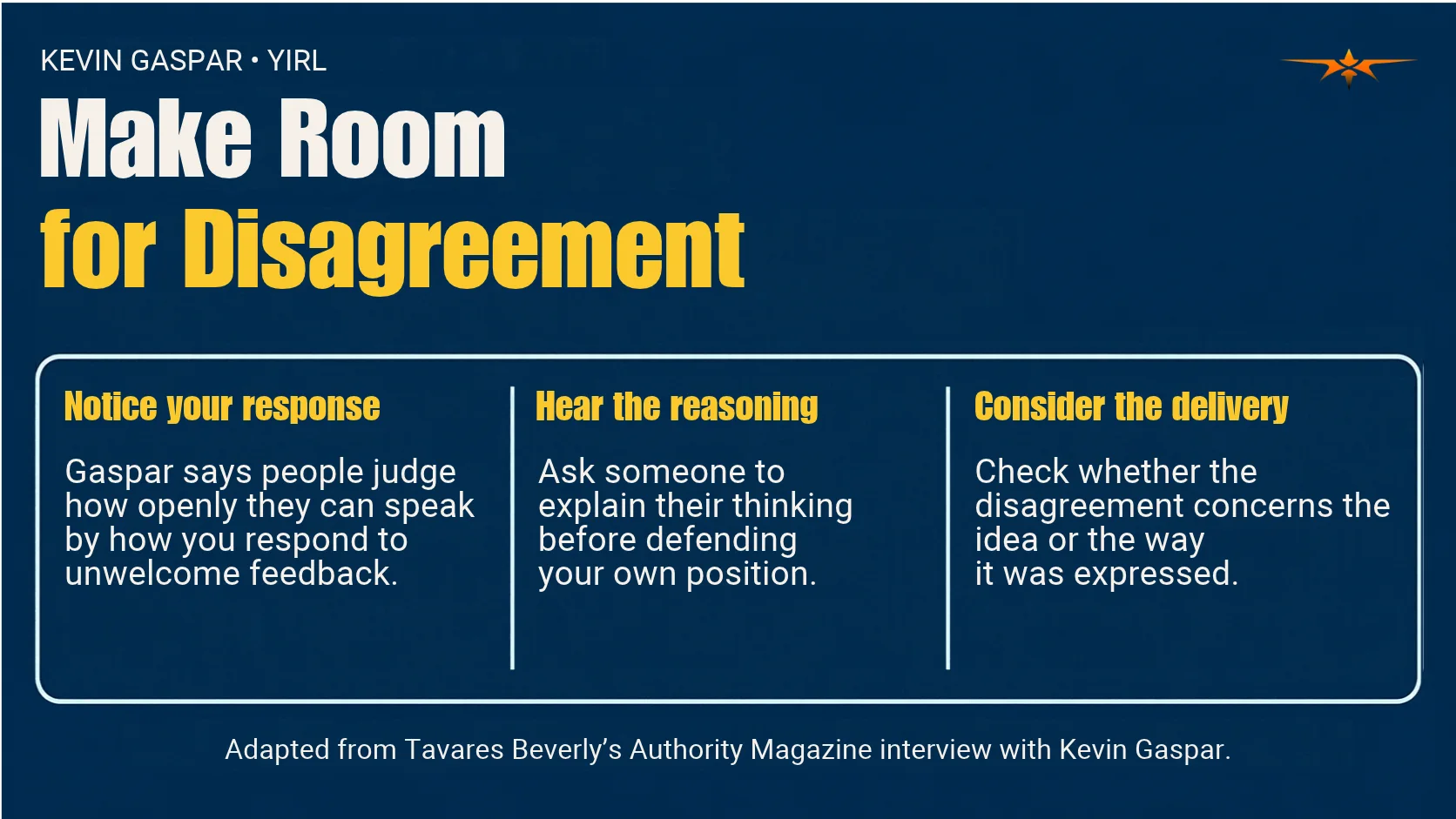
Gaspar said people learn how honest they can be through the response they receive when they say something unwelcome. He suggested asking someone to explain their reasoning before defending a position. He also described becoming more aware, while spending time in the United States, that his directness could feel abrupt to someone else. His question was whether people disagreed about an idea or were reacting to its delivery.
During video development, a producer should give participants a private opportunity to challenge the interview premise. An employee may disagree with how a proposed question describes a change, even while supporting the change itself. Ask what feels inaccurate and hear the explanation before revising or defending the brief. Settling that distinction before recording helps prevent an interview from becoming an exercise in getting a speaker to accept wording they do not believe.
Let Speakers Set the Limits of Personal Disclosure
In his five recommendations, Gaspar said authenticity does not require being the loudest person or sharing an entire personal situation. Some people speak readily in groups; others need time or prefer a private conversation. His own comments add useful context: although Yirl is sharing more faces and more of its journey, he said posting does not come naturally to him and acknowledged being camera shy.
Businesses should separate willingness to contribute from willingness to disclose personal details. Before filming, an interviewer can discuss which experiences a speaker wants to address and which subjects should remain outside the conversation. A speaker can explain a product decision or describe their work without supplying a personal struggle to make the video feel candid. Participation should not depend on accepting an emotional storyline chosen by someone else.
Put a Person Behind the Invitation, With Something Specific to Explain
Gaspar said Yirl asks people to meet strangers without first browsing everyone’s photos or spending days getting acquainted online. He described putting more faces to the company so people could understand who was behind that invitation and feel comfortable asking questions. He also said the experience then had to live up to what the company had told them. His point connected visibility with responsibility for the experience being offered.
A company representative’s appearance in a video should therefore have a clear purpose beyond adding a human face. Interview questions can address what participation involves and what the organization actually handles. The speaker should be able to explain those details through their own responsibilities. Avoid treating a friendly introduction as evidence that the service will deliver; give the audience information it can use to understand the offer.
Use Shared Activity When Conversation Needs Context
Gaspar described early sports sessions as giving people something to do together without having to carry a conversation immediately. He also suggested that a walk, shared lunch, or activity outside a formal meeting could help colleagues get acquainted. That observation adds a separate production consideration: whether a seated interview is the most suitable setting for the subject.
For a business video about collaborative work, a producer can consider recording a conversation alongside an ordinary activity the participants already do together. Choose the activity because it relates to the questions, and schedule space for answers rather than asking people to talk through demanding tasks. This is a format choice, not proof that a speaker is being more genuine. The activity should provide context without turning an informal interaction into a staged display of friendship.
Team Beverly Boy's Takeaway

We think the editor has a particular responsibility when a speaker acknowledges uncertainty or a change of mind. An edit can make a qualified answer sound absolute simply by removing the words that establish its limits. For interview-based business video, preserving those limits matters more than selecting the most confident-sounding sentence.
We would review a promising soundbite against the surrounding answer before approving it. If the shorter version changes a belief into a fact or makes an unresolved question sound settled, we would retain the qualification or choose another passage. The final cut should preserve the scope of what the speaker actually said.
Openness on camera remains incomplete if the finished video makes someone sound more certain than they were. The audience ultimately encounters the edited statement, so that statement must fairly represent the conversation.
This article is based on an interview originally published by Authority Magazine. Read the full interview here.