
How Ben Billups’ B2B Marketing Lessons Apply to Video Production
A single video can introduce a B2B buyer to a company. A later video can answer a question that comes up as the buyer evaluates its offer.Buyers may encounter a company many times before they are ready to book a call, request a demo, or make another meaningful move, so the production strategy has to support a longer decision process.
Ben Billups is the founder of Breaker, a B2B newsletter platform, and has worked across startups, media, e-commerce, and B2B marketing. In his Authority Magazine interview, he argues that marketers often give up too early and that the core of marketing remains getting the right message to the right person at the right time.
For Beverly Boy Productions, those ideas translate into a B2B video system built around a clearly defined audience, repeated useful touchpoints, strong subject-matter expertise, and content that supports the buyer journey instead of relying on a single campaign moment.
Define the Buyer Before Planning the Shoot
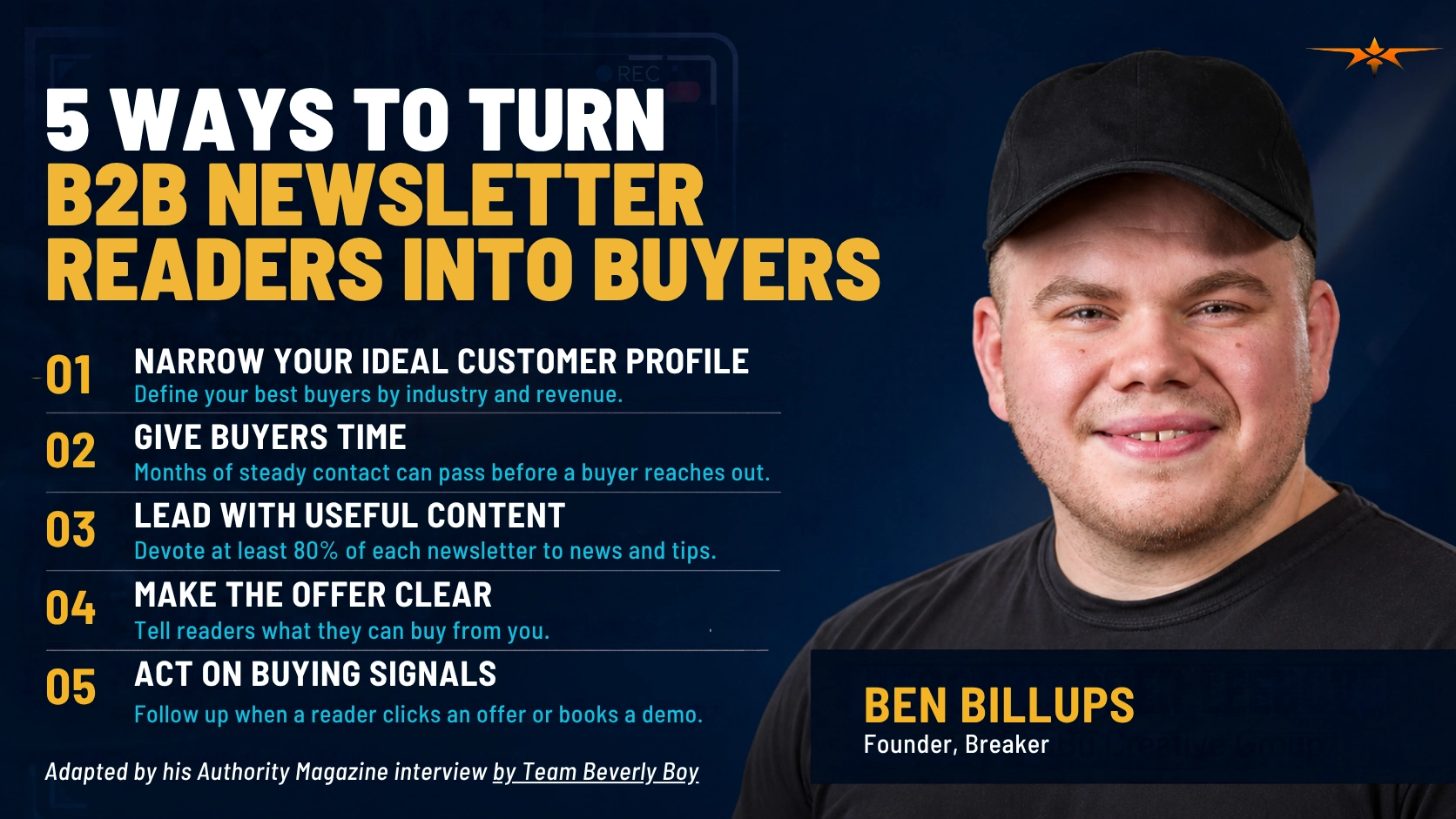
Billups’ first B2B strategy point is that a company’s ideal customer profile is often narrower than it thinks. He argues that broad categories become more useful when refined by factors such as company size, industry, or other characteristics that distinguish the strongest buyers.
That information can shape the entire production brief. A video aimed at enterprise healthcare decision-makers should not automatically use the same interview subjects, examples, terminology, or visual priorities as one targeting smaller technology companies.
Knowing the ICP before filming also helps determine who belongs on camera. The right customer testimonial, executive, technical specialist, or case-study subject should reflect the questions and concerns of the audience the client actually wants to reach.
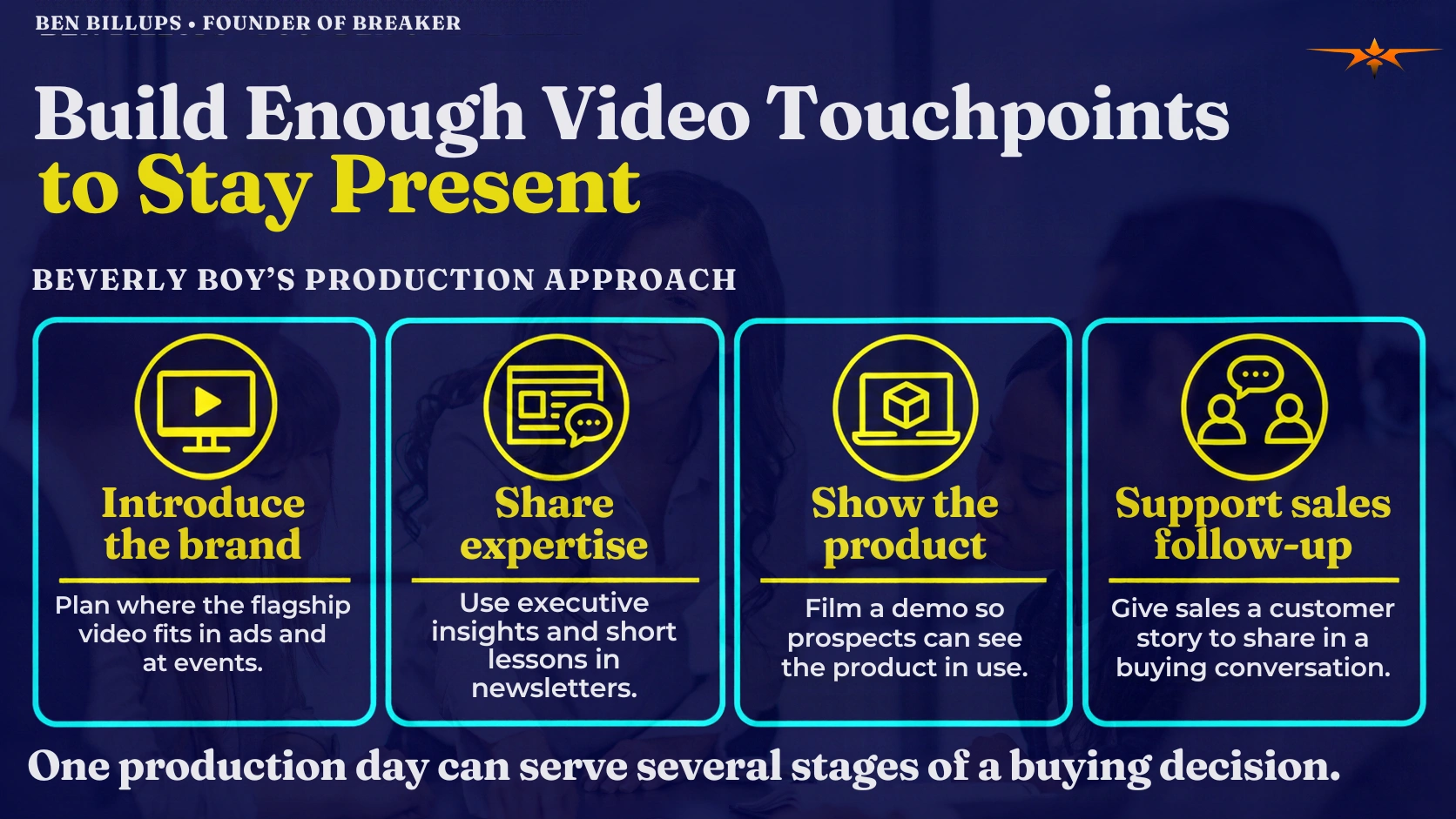
Build Enough Video Touchpoints to Stay Present
Billups says B2B buyers may require many touchpoints before taking action and warns against judging a strategy after only a few weeks. In his example, even consistent exposure can take months before results become visible.
For Beverly Boy, that suggests planning where a flagship video fits alongside the client’s newsletters, advertising, events, and sales follow-up. One production day can support a main brand video, executive insights, customer proof, short educational clips, product demonstrations, and social edits that give prospects several useful ways to encounter the company.
The point is not to create more content simply for volume. It is to make sure the video library supports the different stages between first awareness and a serious buying conversation.
Lead With Useful Content
Billups’ third formal tip is to focus on value first. In his newsletter framework, most content should help the audience with useful information rather than functioning as a continuous sales pitch.
The same principle works well for executive and thought-leadership video. Instead of spending the entire interview describing the company, the speaker can address real buyer questions, common problems, market changes, or practical lessons the organization is qualified to explain.
This gives the production team stronger source material because the content begins with substance. The brand is still present, but the viewer gets something useful before being asked to consider a service or next step.
Make the Offer Clear When It Matters
Billups also warns against going so far toward education that the audience never understands what the company actually sells. His fourth tip is to balance useful content with a clear, tasteful offer.
That becomes an editing and scripting decision. Not every short clip needs a hard call to action, but product-focused videos, case studies, service explainers, and lower-funnel content should make the next step clear.
The CTA can be planned into the interview, closing graphics, landing-page version, or final edit rather than being awkwardly added after production. That keeps the sales message connected to the story instead of interrupting it.
Create Video for Different Levels of Intent
Billups’ fifth strategy is to respond quickly when a prospect shows strong intent. He points to behaviors such as clicking an offer or booking a demo as signals that deserve more attention than passive audience activity.
Video can support those moments with deeper assets designed for prospects further along in the buying process. Product walkthroughs, customer proof, executive answers, technical explainers, or case-study videos can give sales teams stronger material after someone demonstrates serious interest.
This makes the content library useful across the funnel. Awareness pieces create familiarity, while more detailed videos answer the questions that become important closer to a decision.
Repurpose Strong Source Material
Billups says AI makes it easier to turn existing YouTube videos, blog articles, and LinkedIn posts into full newsletters. His broader point is that production can now move faster, but expertise still determines whether the resulting material is actually useful.
That makes the original interview or shoot especially important. A well-prepared executive conversation can become short video edits, written content, sales materials, social clips, and other assets when the underlying answers are specific and substantive.
For Beverly Boy, this is where thoughtful pre-production can create more value from the same shoot. Strong questions and complete answers give the client better raw material to reuse across multiple channels.
Put Real Experts on Camera
Billups argues that AI cannot replace skill and experience. In his view, the expert is still necessary because that person knows what a strong answer should look like and can judge whether an AI-assisted result is actually useful.
That principle is especially relevant to B2B video. Executives, engineers, consultants, operators, and other specialists can bring credibility because they understand the buyer’s problem in ways a generic spokesperson cannot.
The production team can improve lighting, sound, framing, pacing, and delivery, but the substance still has to come from someone who knows the subject well enough to say something worth hearing.
Team Beverly Boy’s Takeaway
Billups’ interview suggests that B2B video should be planned as a sequence of useful interactions rather than one polished piece expected to do everything. Beverly Boy can help clients define the ICP, capture expert-led material, plan multiple buyer touchpoints, and create different assets for awareness, consideration, and higher-intent prospects.
That gives each shoot a clearer business role. Production becomes part of the buyer journey rather than a standalone marketing deliverable.

Conclusion
A strong B2B video strategy combines precision and patience. Billups’ principles point toward knowing exactly who the content is for, giving that audience repeated value, making the offer clear at the right moment, and using real expertise to create material worth returning to.
This article is based on Ben Billups’ Authority Magazine interview with Tavares Beverly. Read the full interview on Medium.
