
Daryl Mosley on Storytelling, Patience, and Creative Growth in Video
Strong storytelling usually develops over time. It comes from observation, repetition, feedback, and learning how to turn specific experiences into something an audience recognizes in its own life.
Daryl Mosley is a four-time Songwriter of the Year winner with more than 20 chart-topping songs and more than three decades in bluegrass music. His career has included New Tradition, The Osborne Brothers, The Farm Hands, and a solo career built around stories drawn from small-town life, family, memory, and everyday experience.
For Beverly Boy Productions, Mosley’s interview offers useful lessons for video teams working with artists, executives, employees, and documentary subjects. His ideas point toward a production approach built on patience, stronger listening, specific stories, and respect for the people behind the content.
Give the Story Time to Develop
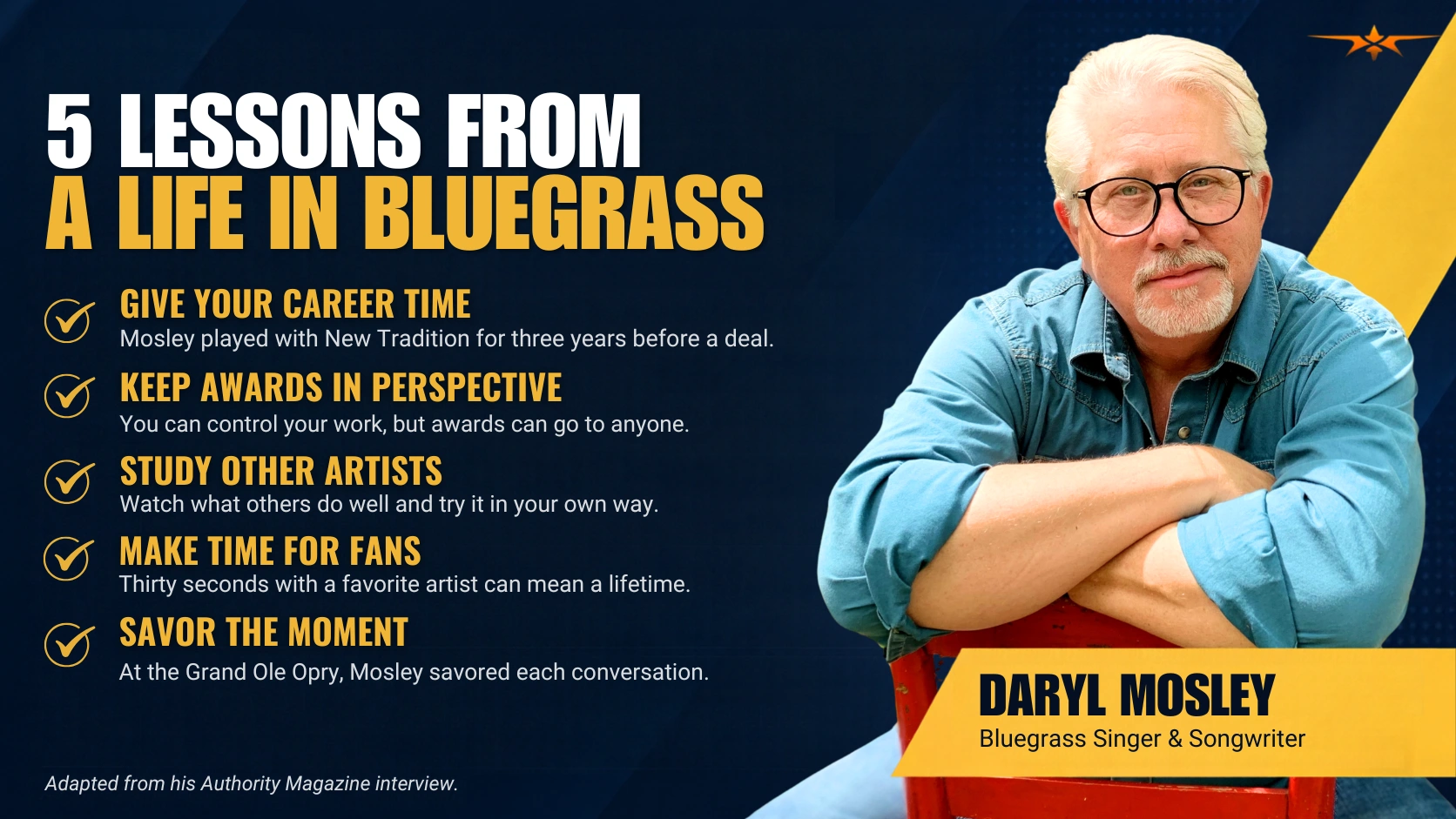
Mosley’s first formal lesson is that success does not happen overnight. He recalls waiting three years after joining New Tradition before the group received its first record deal, a period that felt long at the time even though he now considers it relatively fast.
Video production has its own version of that patience. A strong interview series, documentary project, artist campaign, or corporate storytelling program may improve across several productions as the team learns what questions produce better answers, which stories connect, and what visual approach suits the subject.
For Beverly Boy, that means not treating every shoot as an isolated event. Lessons from one production can improve the next, especially when the client is building a recurring content program.
Learn From People Who Know the Craft
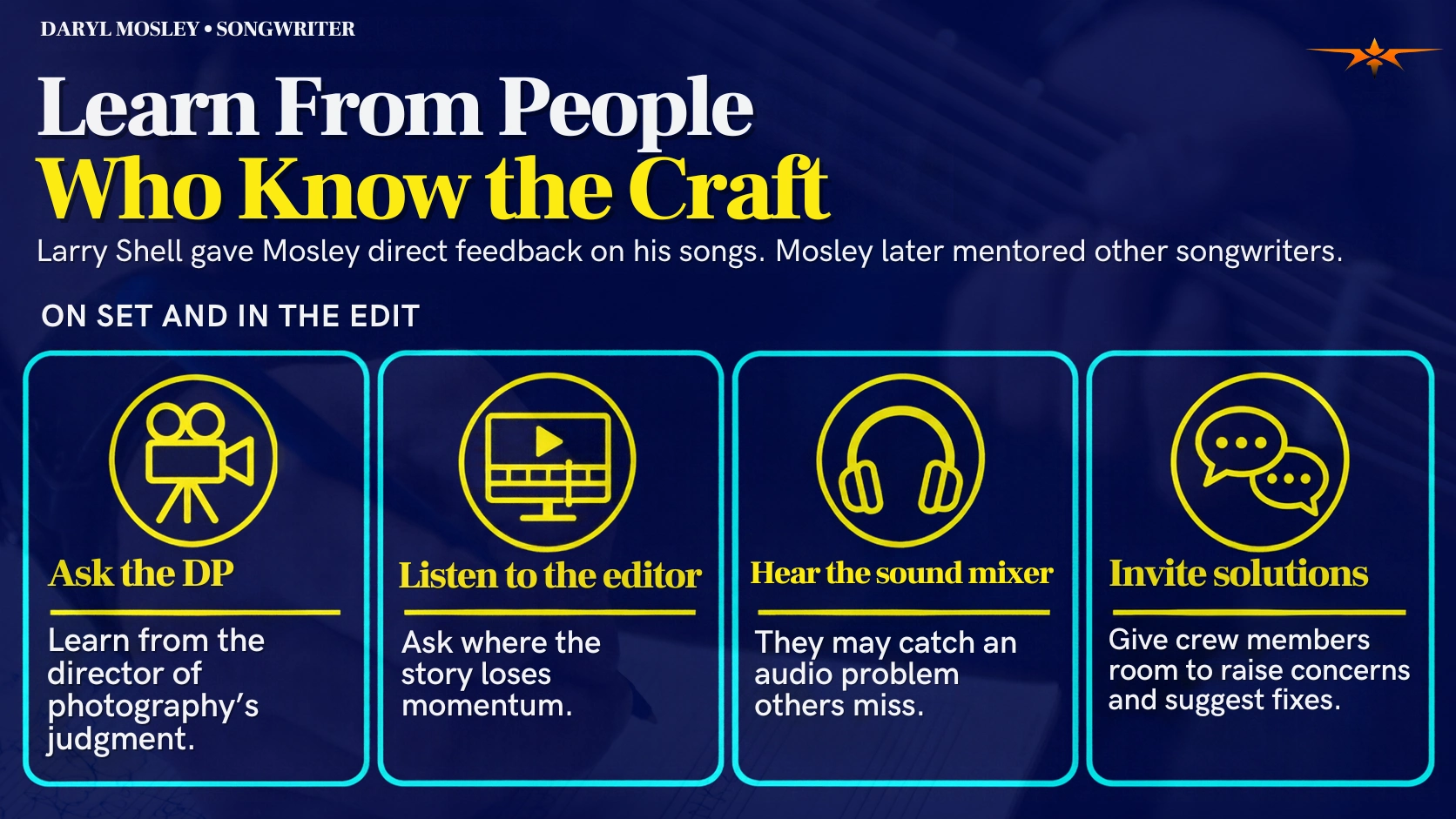
When Mosley began taking songwriting seriously, established songwriter Larry Shell allowed him to bring songs into his office and receive direct feedback about what worked and what did not. Mosley credits that guidance with helping him develop his craft and later paid it forward by mentoring other songwriters.
Production improves the same way. A producer can learn from an experienced DP, an editor can identify where a story loses momentum, and a sound mixer may catch an audio problem others miss while focused on different tasks.
For Beverly Boy, experienced crew members are not simply there to execute instructions. Their judgment can improve the project when the production gives them room to raise concerns and contribute solutions.
Focus on What the Team Can Control
Mosley says the music industry is not always fair and that awards, recognition, and opportunities do not always go to the person who seems most deserving. His response is to concentrate on what can be controlled and release what cannot.
Video teams face similar uncertainty. Weather can change, a speaker can arrive late, a location can become unavailable, or audience response can differ from expectations, but preparation, communication, coverage, audio quality, interview direction, and post-production discipline are still within the team’s influence.
For Beverly Boy, that distinction helps producers respond practically when conditions shift. Instead of spending time on what cannot be recovered, the crew can protect the parts of the production that still can.
Keep Learning From Other Creators
Mosley’s third lesson is to never stop learning. Even after decades in music, he still watches other artists, pays attention to what they do well, and remains open to the possibility that another approach may work better than his own.
That mindset matters in video because production methods continue to change. New camera systems, lighting approaches, editing techniques, distribution formats, and audience behaviors can create better options, but experience still requires curiosity to recognize when those options are useful.
Beverly Boy can apply that without chasing every trend. The useful question is whether a new technique helps tell the story more clearly, improve the shoot, or serve the audience better.
Build Interviews Around Specific Memories
Mosley says he loves writing stories that allow listeners either to relate to the person in the song or find themselves inside the experience. He draws from his own town and memories, but the goal is to reach something recognizable in the audience’s own life.
That is especially valuable for Beverly Boy interviews. Instead of asking only broad questions such as why someone loves their company or what makes a product different, a producer can ask for a moment, person, place, decision, or memory that demonstrates the idea.
Specific answers also give the production team better visual opportunities. A real story can suggest archival material, B-roll, locations, photographs, or supporting footage that makes the edit more dimensional.
Let Ordinary People Carry Big Themes
Mosley believes powerful art often explores major emotions through the lives of ordinary people. His own songs focus on conversational storytelling and shared experiences rather than making the storyteller feel distant from the audience.
That principle translates naturally to documentary, corporate, nonprofit, and brand video. A company’s larger mission may become easier to understand through one employee, customer, patient, volunteer, or community member whose experience gives the idea a human scale.
For Beverly Boy, the strongest spokesperson is not always the most senior person in the organization. Sometimes the person closest to the experience carries the story more effectively.
Protect the Relationship Behind the Production
Another of Mosley’s lessons is simply to be good to people. He notes that a short interaction with an artist may become a lasting memory for a fan, making the way people are treated part of the experience itself.
Film sets work through relationships too. Subjects may remember how comfortable they felt during an interview, clients remember whether communication was clear, and crews remember whether their time and expertise were respected.
For Beverly Boy, the production experience matters alongside the final edit. A good result is stronger when the people involved also feel respected throughout the process.
Team Beverly Boy's Takeaway
Mosley’s strongest production lesson is that memorable stories come from craft, patience, and attention to real human experience. Beverly Boy can apply that by preparing carefully, listening for specific memories, learning from experienced collaborators, and giving authentic voices enough room to carry the story.

Conclusion
Good storytelling does not require making ordinary experiences sound larger than they are. Mosley’s career shows that the deeper opportunity is to find the emotion already inside those experiences and present it in a way that allows other people to recognize themselves.
This article is based on an interview originally published by Authority Magazine. Read the full interview here.
