
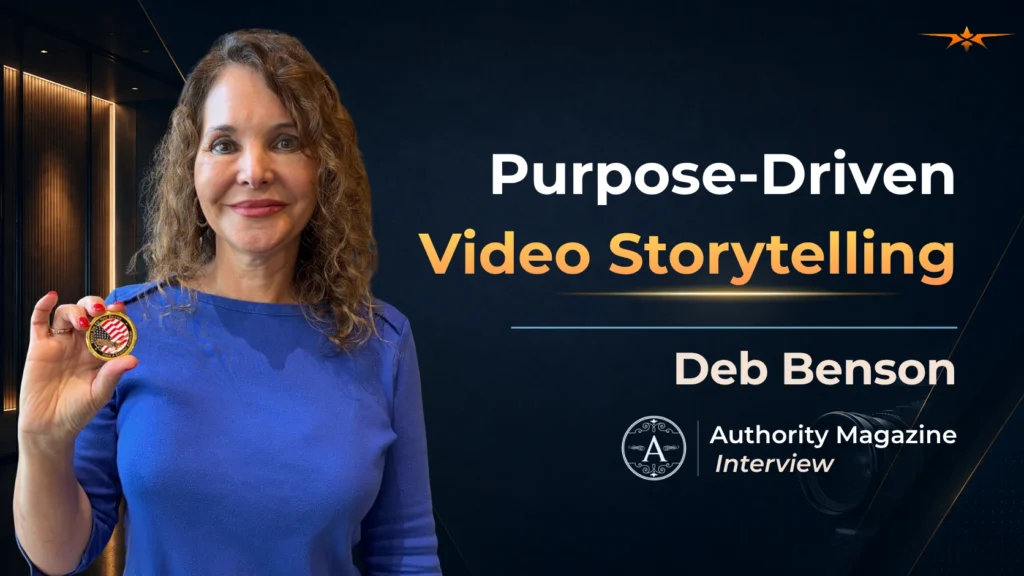
Deb Benson on Purpose-Driven Video Storytelling
Mission-driven organizations often already have compelling stories. The production challenge is identifying which people, moments, and visual details can make that mission tangible on screen instead of relying on broad statements about impact.
Deb Benson founded Grateful American Coin after taking her young sons to MacDill Air Force Base in 2007 to thank service members. What began as a personal expression of gratitude developed into a volunteer-run nonprofit centered on giving Americans a tangible way to thank veterans and service members.
For Beverly Boy Productions, Benson’s experience offers a practical framework for nonprofit and community video. Her story points toward productions built around real interactions, carefully chosen interview subjects, meaningful locations, and visual evidence of the work happening behind the mission.
Build the Video Around the Origin Moment
Grateful American Coin began with a specific experience rather than a formal nonprofit strategy. Benson wanted her sons to understand gratitude by thanking service members directly, and the coin eventually became a way for other people to do the same.
For Beverly Boy, that origin provides a strong opening structure for a nonprofit film. A producer could use a pre-interview with Benson to reconstruct the first experience, identify photographs or early materials, and determine whether the original location, family members, or first coins could provide visual context.
The story can then expand from that personal beginning into the organization’s larger impact. This gives the edit a narrative progression instead of opening with statistics or a general explanation of the nonprofit.
Film the Mission in Action
Benson’s organization is built around a physical gesture: giving someone a coin, shaking their hand, and expressing gratitude. That gives Beverly Boy something especially valuable for production because the mission can be shown rather than only described.
A shoot could capture coin preparation, volunteers working, event interactions, close-ups of the coins, and genuine exchanges with veterans or service members. Those scenes can become the visual backbone of the film while interviews provide context around why the moments matter.
This approach also gives the editor natural material to cover interview cuts and build emotional pacing. Instead of relying heavily on talking heads, the story can move between explanation and observable action.
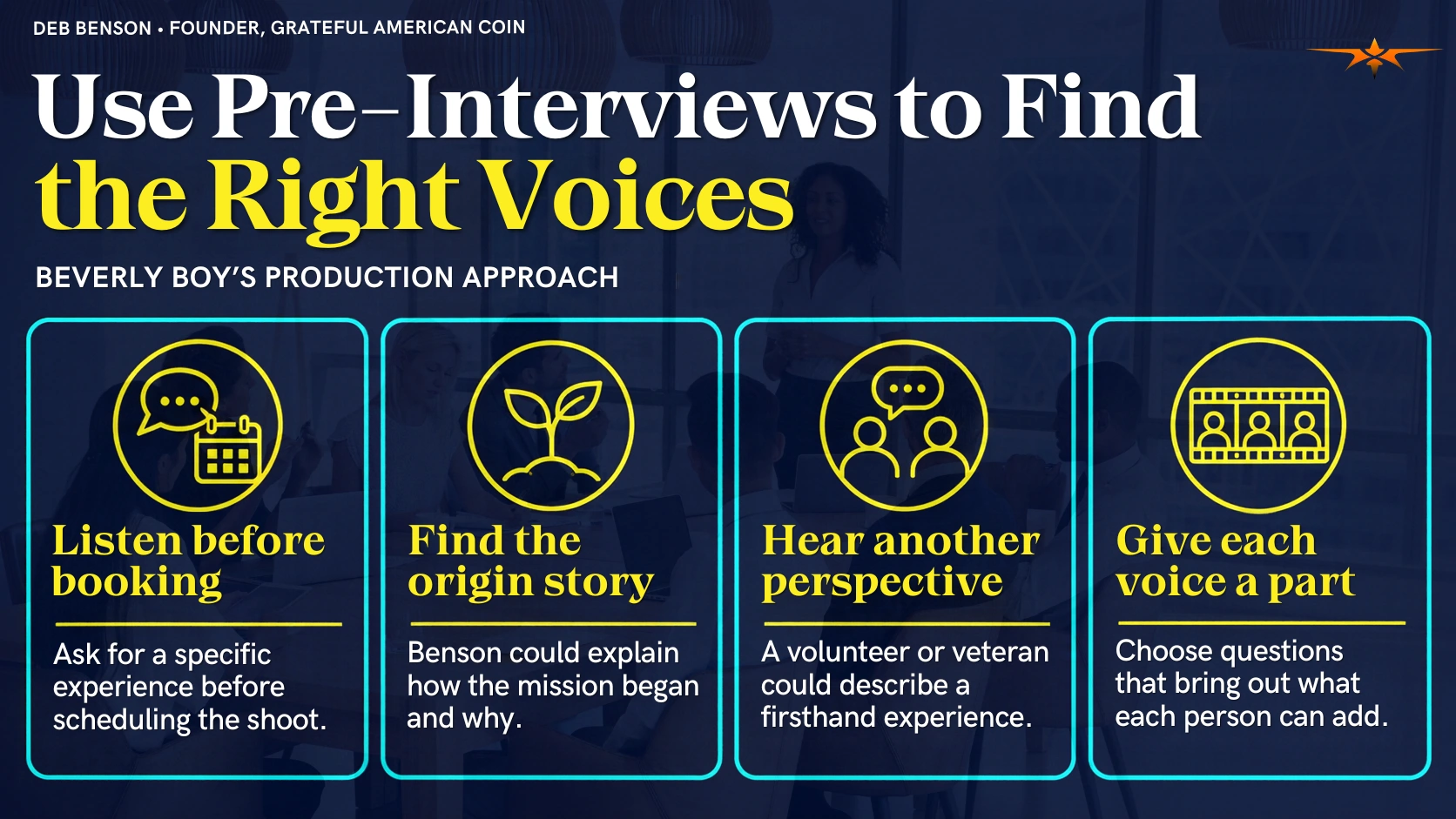
Use Pre-Interviews to Find the Right Voices
Benson repeatedly credits family, friends, volunteers, and longtime collaborators with helping the organization continue. That suggests the strongest film may need more than one spokesperson to show how the mission developed and why people remain involved.
Beverly Boy can use pre-interviews to identify the people with the most specific experiences before scheduling the shoot. Benson may provide the origin and larger vision, while a volunteer, veteran, military family member, or supporter could show how that mission is experienced from another perspective.
That preparation also helps avoid repetitive interviews. Each subject can carry a different part of the story rather than several people answering the same broad questions.
Turn Perseverance Into Visual Evidence
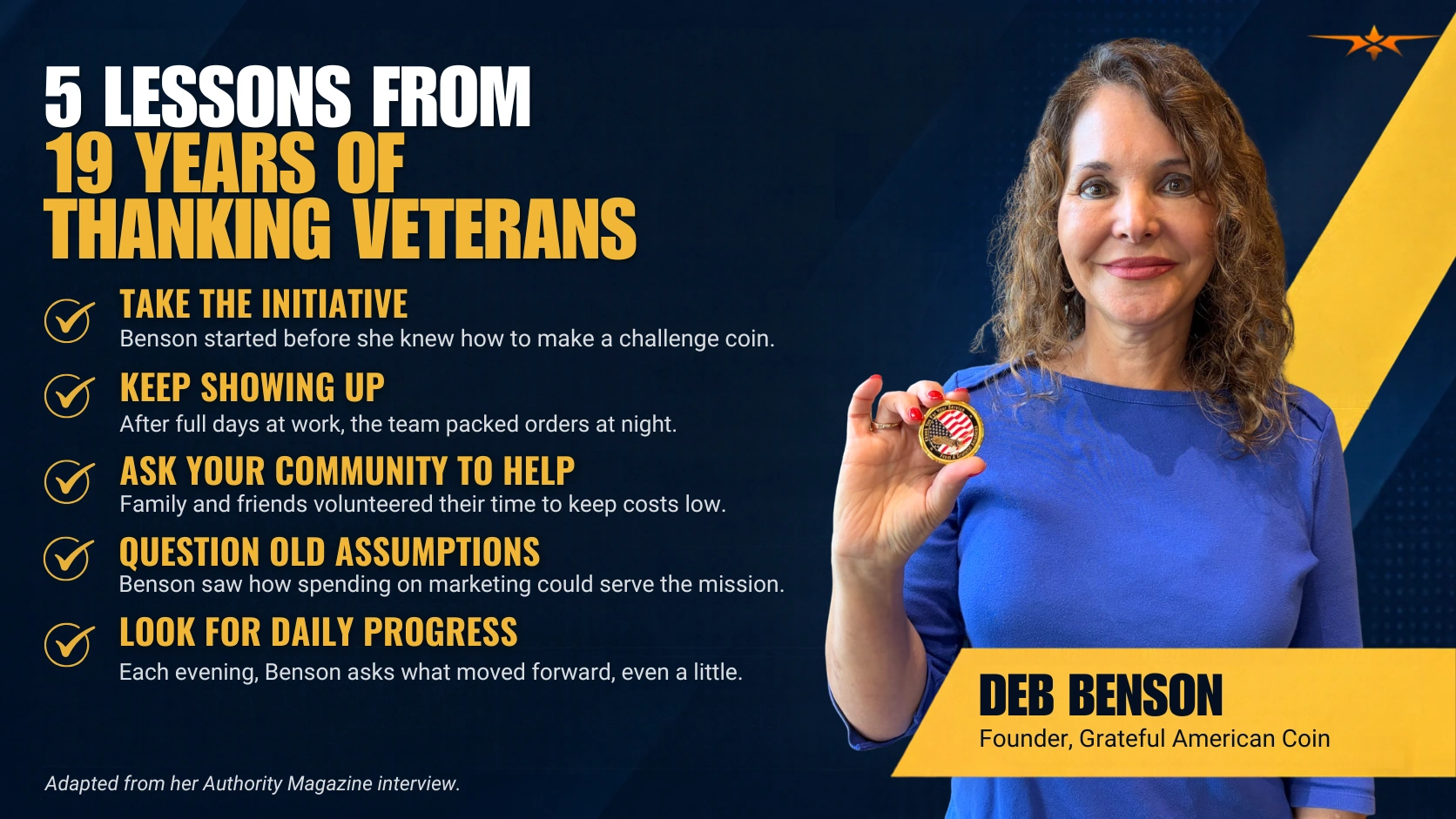
Benson describes perseverance through ordinary work: balancing jobs and families, packaging coins at night, handling rising costs, and continuing through difficult periods. Those details are more useful for production than simply having someone say the organization is resilient.
Beverly Boy can look for ways to visualize that effort through working footage, archival photographs, packaging materials, event preparation, or other behind-the-scenes activity. If some of those moments cannot be filmed now, photographs, documents, and existing footage can be incorporated into the edit to establish history without recreating events.
The production goal is to show what persistence looked like. Specific images make the value more believable than a general statement about dedication.
Plan the Production Around the Available Resources
Benson’s story emphasizes resourcefulness and recognizing what is already available. For a nonprofit production, that can include volunteers, meaningful locations, archival material, existing event footage, community partners, and people with firsthand stories.
Beverly Boy can assess those assets during pre-production and determine where professional production will add the most value. If strong archival material already exists, the shoot may concentrate on interviews and current-day coverage rather than spending budget recreating information the organization can already show.
That planning also influences crew size and equipment. A controlled sit-down interview may justify a more polished lighting and audio setup, while an active volunteer event may require a smaller mobile crew that can follow genuine interactions without disrupting them.
Match Production Value to the Fundraising Goal
Benson eventually reconsidered whether keeping marketing expenses extremely low was limiting the nonprofit’s ability to reach more people. That creates a useful production question: what responsibility will the finished video carry?
A short volunteer update may only need a lean production, while a flagship fundraising film may need multiple interviews, stronger location coverage, archival integration, graphics, music, and a more developed edit. Beverly Boy can help define that production envelope according to whether the asset is intended for donor meetings, events, social campaigns, a website, sponsorship outreach, or several uses at once.
This keeps production spending tied to a communication purpose. The question becomes not simply how much the video costs, but what the finished asset needs to accomplish.
Capture Multiple Assets While the Story Is Available
A mission-driven organization may not have the budget or availability to organize a full production every time it needs content. That makes advance deliverable planning especially important.
When planning a shoot with Benson and other contributors, Beverly Boy can identify coverage for the main film, social clips, donor messages, and future edits.
The result is a more useful footage library without forcing every future message into the same finished video.
Build the Edit Around Action and Impact
Nonprofit videos can become repetitive when every interviewee explains how important the mission is. Benson’s story provides a stronger structure because the film can move from the original idea, to the work required to sustain it, to the people experiencing its impact.
For Beverly Boy, post-production can use that progression to decide where interviews, archival material, present-day B-roll, music, graphics, and organizational milestones belong. Statistics can support the story once viewers understand the human reason behind the work rather than carrying the entire message themselves.
The final call to action can then follow naturally from what the viewer has seen, whether the organization wants people to donate, volunteer, share the mission, or participate directly.
Team Beverly Boy’s Takeaway
Benson’s story shows why nonprofit production works best when the values of the organization are made visible. Beverly Boy can help translate a mission into a filmable plan by identifying the strongest people, real actions, meaningful locations, archival material, and deliverables before the cameras arrive.
The production can capture genuine moments, organize them into a coherent story, and show audiences how they could contribute.

Conclusion
Purpose-driven video becomes stronger when the production moves beyond explaining the mission and shows how that mission actually lives in people’s actions. Benson’s experience offers Beverly Boy a clear production opportunity: build around specific human moments, capture the work behind them, and structure the final film so the organization’s impact is both understood and seen.
This article is based on Deb Benson’s Authority Magazine interview with Tavares Beverly. Read the full interview on Medium.
