
What Video Teams Can Learn from Allison Yazdian About Building Trust
Video can earn attention quickly, but attention alone does not create a durable relationship. The stronger question is what the viewer should understand, trust, or do after watching.
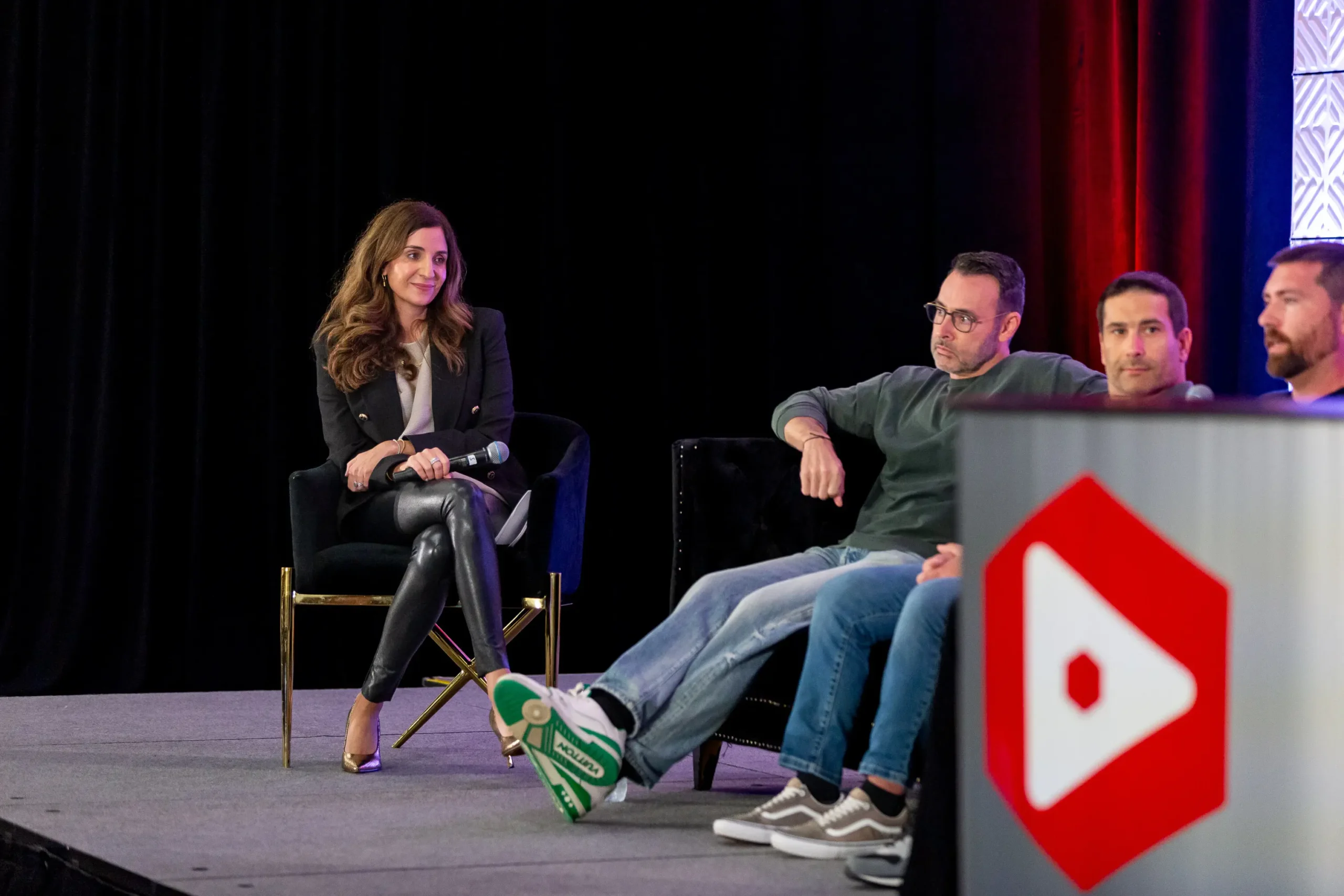
Allison Yazdian is CEO of Uscreen, a video monetization and OTT platform that helps creators and independent video businesses build direct audience relationships, community, and recurring revenue. Her experience across LTK, Compass, Brighter, and Uscreen has shaped her view that serious video strategy should move beyond platform reach toward trust and long-term audience ownership.
The production recommendations below are Beverly Boy Productions’ applications of Yazdian’s ideas, rather than additional advice or examples from her interview. The goal is not simply to deliver a polished video, but to help clients define the job of each asset, capture credible people and useful ideas, and build enough material for a video system that supports discovery, consideration, education, and retention.
Give Every Video a Business Job
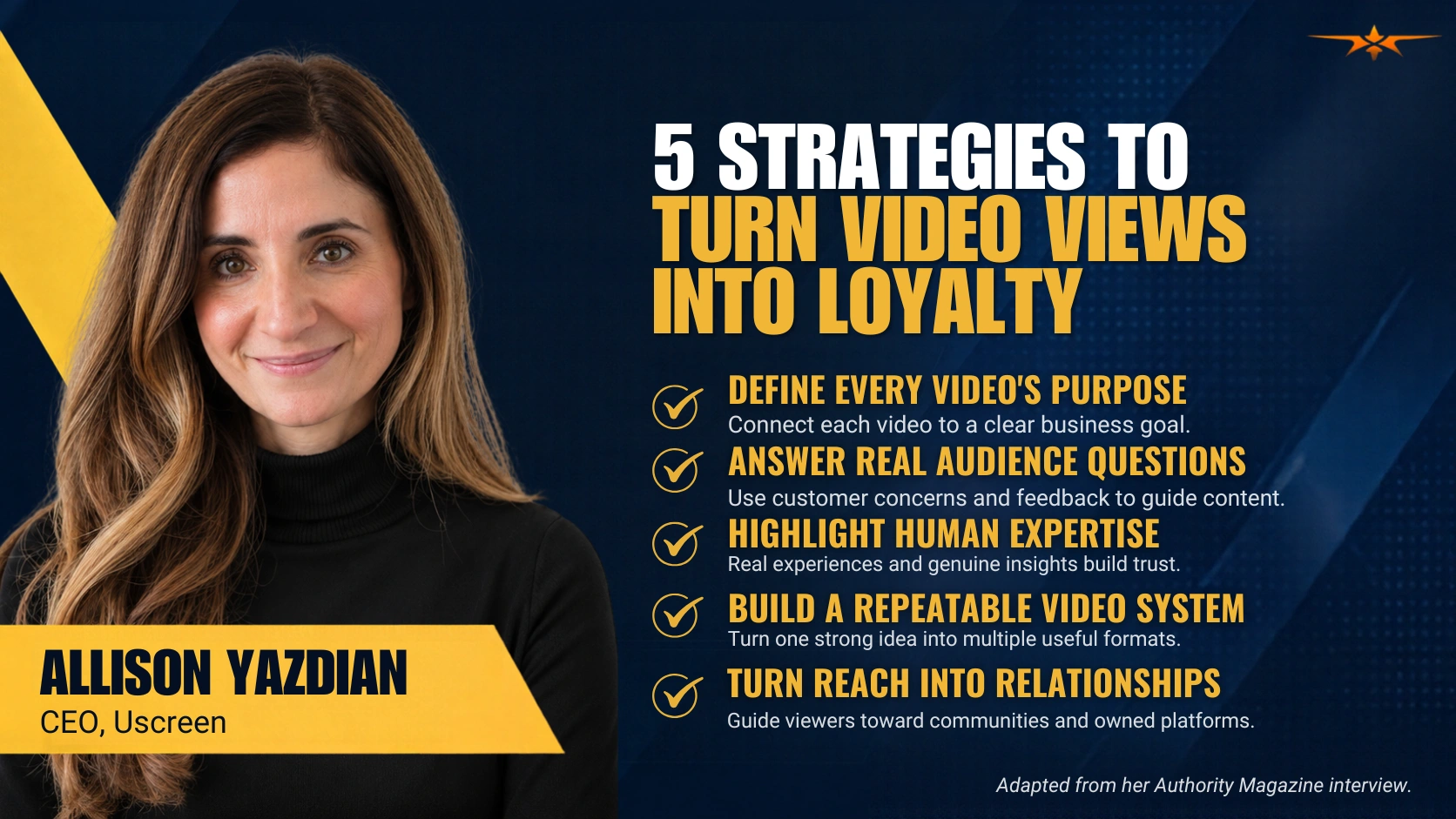
Yazdian’s first principle is to define the outcome before creating the content. A video might be intended to build awareness, earn trust, generate demand, improve conversion, educate customers, or increase retention, and each objective should be judged differently.
That decision should influence production from the beginning. A product demonstration may need clear close-ups, screen capture, and a concise explanation, while an executive leadership piece may depend more on strong interview direction, credibility, and a point of view that can develop across several videos.
For Beverly Boy, clarifying the job before the shoot helps determine the right crew, location, runtime, interview structure, supporting visuals, and deliverables instead of asking one video to accomplish everything.
Build the Shoot Around Real Audience Questions
Yazdian says the strongest video ideas are often already inside the organization. Sales calls, support tickets, customer interviews, community discussions, and recurring objections reveal what audiences actually need to understand.
Those inputs can become a practical pre-production brief. Rather than creating generic thought-leadership questions, the production can center interviews on problems buyers repeatedly raise and decisions customers are already trying to make.
For Beverly Boy, one practical application is to plan an expert interview around several audience questions, with each answer considered for a separate edit.
Put Human Expertise Close to the Camera
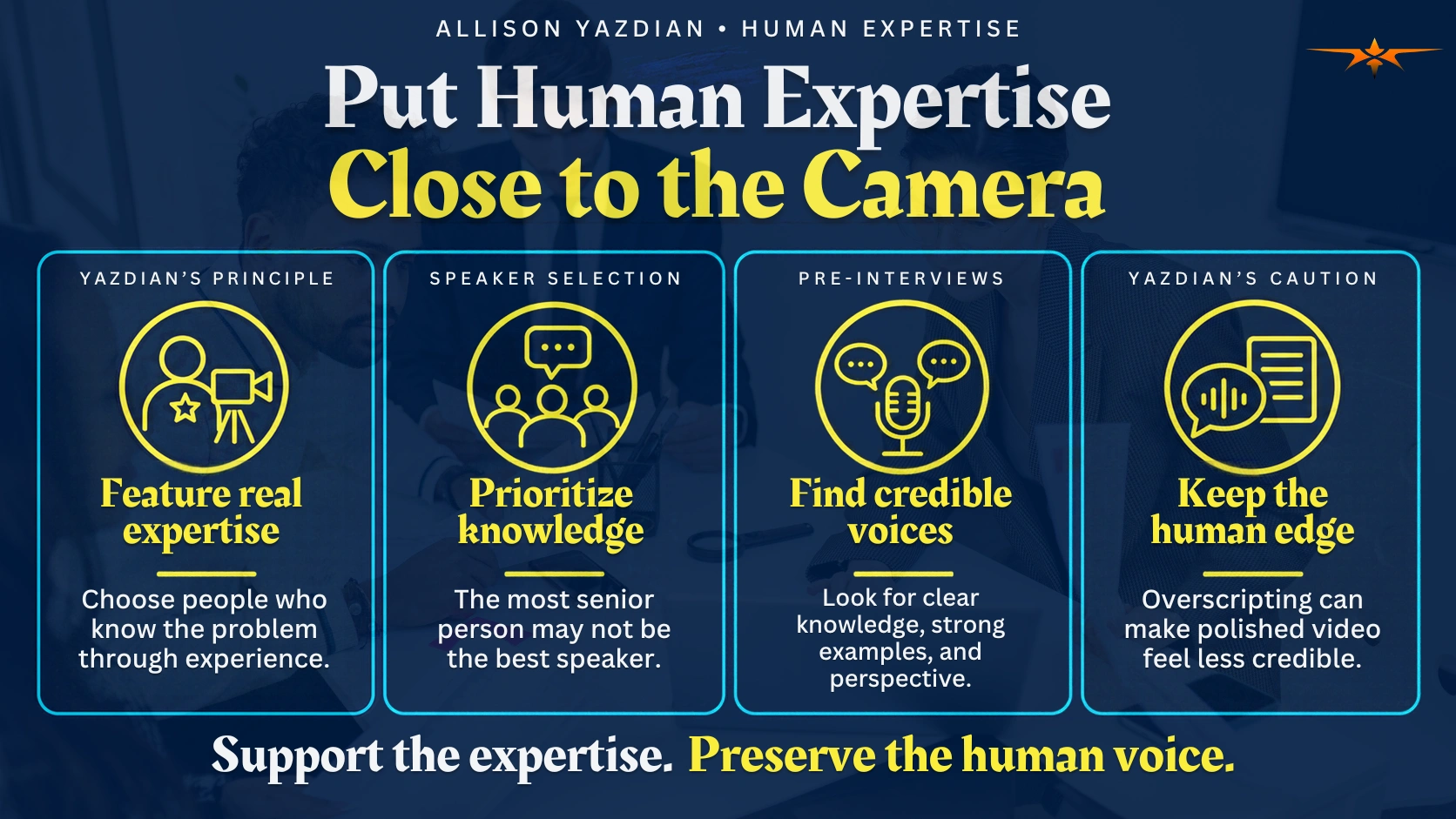
Yazdian argues that trust-building video works best when knowledgeable people are close to the content. That might be a founder, executive, practitioner, customer, or employee who understands the problem through actual experience.
This gives Beverly Boy a clear casting and interview role. The most senior person is not automatically the best speaker for every topic, so pre-interviews can help identify who has the clearest knowledge, strongest examples, and most credible perspective.
Production can then support that expertise with professional lighting, sound, framing, and interview direction without over-polishing the message. Yazdian specifically warns that overscripting can remove the human edge and leave a video looking expensive but feeling less credible.
Start Smaller Before Scaling Production
For leaders hesitant about video, Yazdian recommends making the first version smaller. She suggests beginning with one question the speaker can answer well, publishing it, studying the response, and improving the next piece rather than waiting for a perfect studio setup.
She also recommends separating the cost of starting from the cost of scaling. The idea and format should prove useful before a brand invests heavily in a production approach it has not yet tested.
Beverly Boy can support that progression with a focused pilot shoot before expanding into a larger recurring program. Once the client knows which speakers, topics, formats, and visual approaches work, future productions can be planned with greater confidence.
Design a Production System, Not One-Off Videos
Yazdian’s fourth principle is to create a repeatable content engine rather than a sequence of disconnected productions. One long-form conversation can become shorter clips, written insights, customer education, email content, and material for live discussions.
That is where production planning creates additional value. A Beverly Boy shoot can be structured around a main interview while also capturing alternate framing, shorter responses, vertical-safe compositions, B-roll, product demonstrations, and additional material for future edits.
When these deliverables are included in the production scope, the captured material can support future edits and reduce the need for additional filming.
Match Video to the Stage of the Relationship
Yazdian advises brands to begin with the audience rather than the platform. Someone discovering a company needs different content from someone comparing options or trying to get more value after becoming a customer.
That can guide both production and post-production. Discovery videos may need concise hooks and accessible explanations, while consideration-stage content can go deeper through case studies, demonstrations, customer interviews, or expert answers.
For existing customers, training, onboarding, product education, and community content may be more useful than another promotional message. Planning those needs together gives the production library a role across the entire relationship.
Connect the View to a Next Step
Yazdian’s central argument is that attention should lead somewhere. Social platforms can create discovery, but the most interested viewers need a clear path into a deeper relationship through email, community, membership, an app, or another owned experience.
That means the production team should know where each video sends the viewer before editing is finished. Calls to action, end cards, landing-page versions, product links, or follow-up content can be planned into the deliverables instead of added as an afterthought.
The stronger system is a flywheel: discovery creates trust, trust creates action, and the resulting audience feedback informs the next round of content. Yazdian describes that cycle as getting discovered, earning trust, converting interest, retaining the relationship, learning from the audience, and reinvesting in a better experience.
Put the Strategy Into Production
A strategy only becomes useful when it can be translated into something the audience can actually watch. Beverly Boy Productions can help organizations turn that plan into executive interviews, customer stories, product demonstrations, educational content, recurring video series, and supporting short-form assets.
From pre-production and crew planning through filming and post-production, the goal is to build the right production around the role each video needs to play. If your organization is ready to turn its video strategy into a practical production plan, Beverly Boy Productions can help develop and produce the content needed to move viewers from attention toward trust and action.
Team Beverly Boy’s Takeaway
Yazdian’s strongest production lesson is that video should have a role beyond being watched. Beverly Boy can help clients connect business goals to the people, questions, visuals, formats, and deliverables captured on set so that each production supports a larger customer relationship.
The camera creates the asset, but the strategy determines what that asset is supposed to become.

Conclusion
A serious video strategy should move viewers somewhere meaningful. Yazdian’s framework points toward production that starts with purpose, uses real expertise, builds repeatable content, and gives audiences a clear reason to keep engaging after the first view.
This article is based on Allison Yazdian’s Authority Magazine interview with Tavares Beverly. Read the full interview on Medium.
