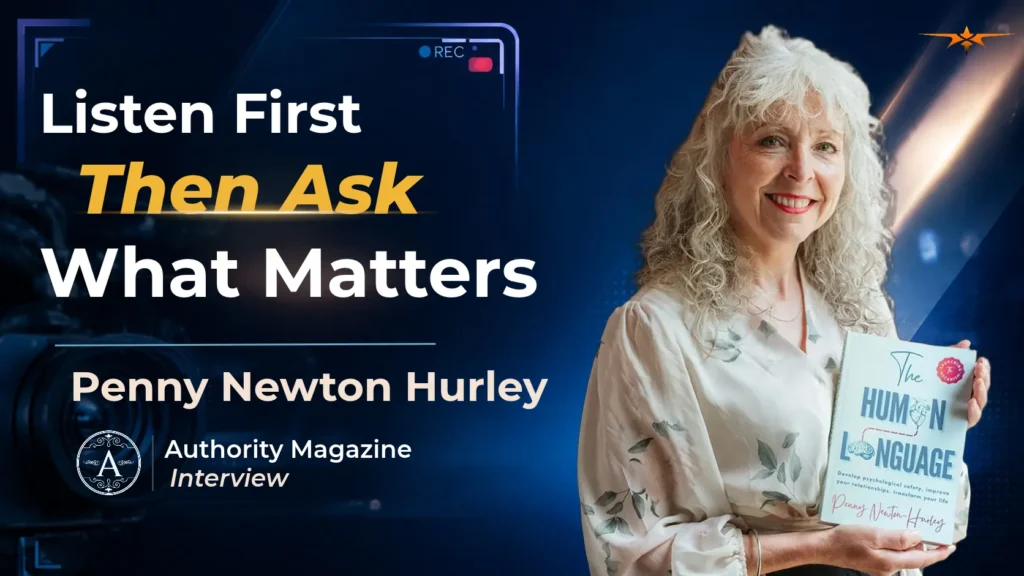
What Penny Newton Hurley’s Empathic Listening Teaches Video Interviewers
Penny Newton Hurley, founder of CommPassion Ltd and a specialist in workplace conflict resolution and psychological safety, discussed effective communication in her Authority Magazine interview. The conversation covered listening, communication styles and the personal preparation involved in speaking with greater confidence.
For businesses producing video interviews, her observations offer a useful distinction: preparing someone to speak also requires attention to how the conversation is conducted. A polished question list has limits if the interviewer overlooks what the speaker is trying to explain. Beverly Boy’s application centers on creating room for specific answers while keeping the finished message clear.
Listen for What Matters Before Asking the Next Question
Hurley described effective communicators as dedicated listeners who resist talking over others or trying to fix them. In her five techniques, she connected her listening development to extensive Samaritans training, weekly volunteer shifts and her work in mediation. She said that practice has helped people feel heard and resolve issues themselves. Her account makes listening an activity that requires practice, rather than simply the absence of speech.
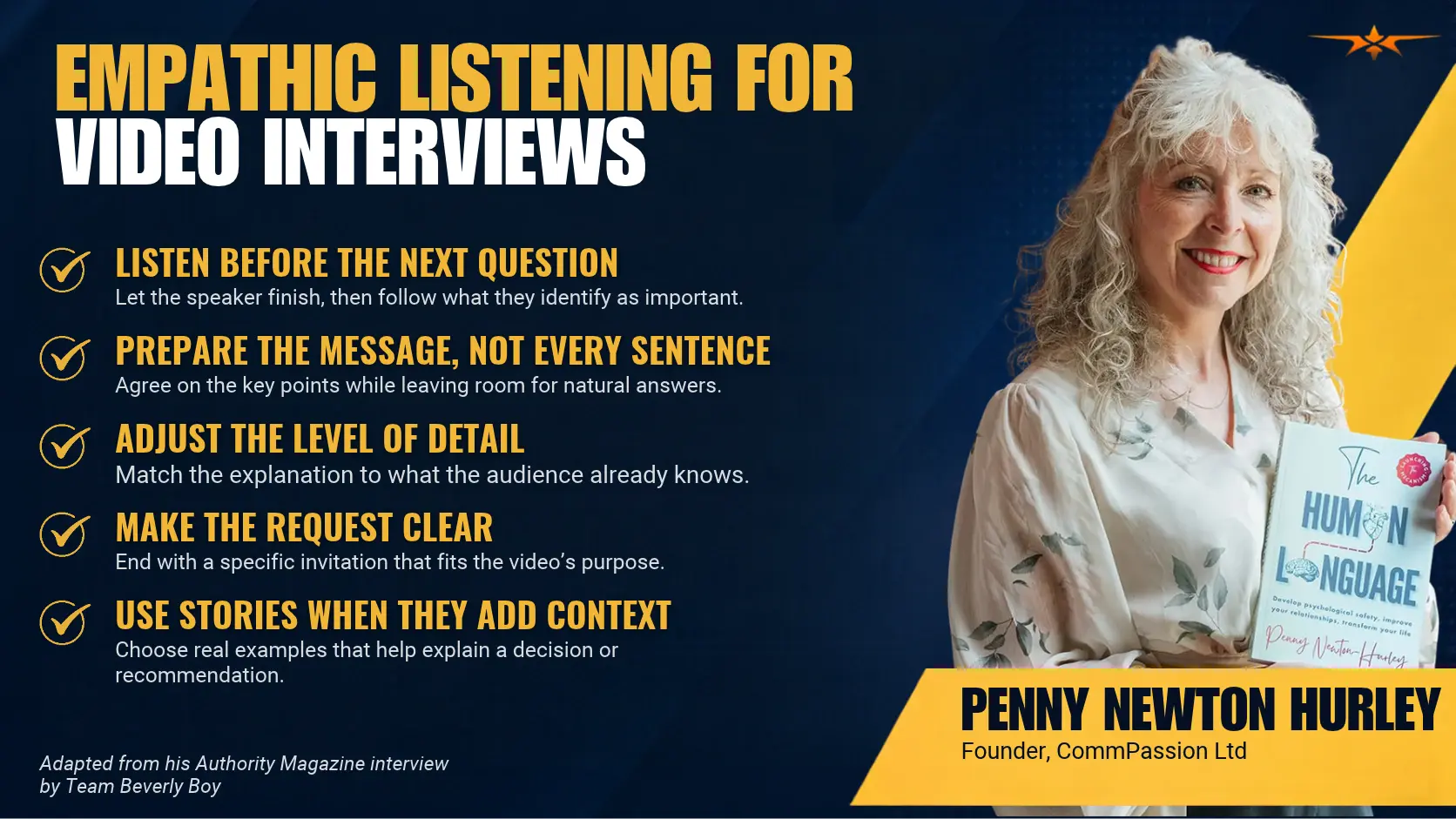
An interviewer should leave room for a speaker to finish an answer before moving to the next prepared question. Follow-ups can address what the speaker has identified as important: what they needed, what concerned them or what remained unresolved. In customer and employee interviews, that means avoiding questions that supply the desired conclusion. Asking someone to explain their priorities gives the conversation more room than asking them to confirm a promotional statement.

Prepare the Message Without Prescribing Every Sentence
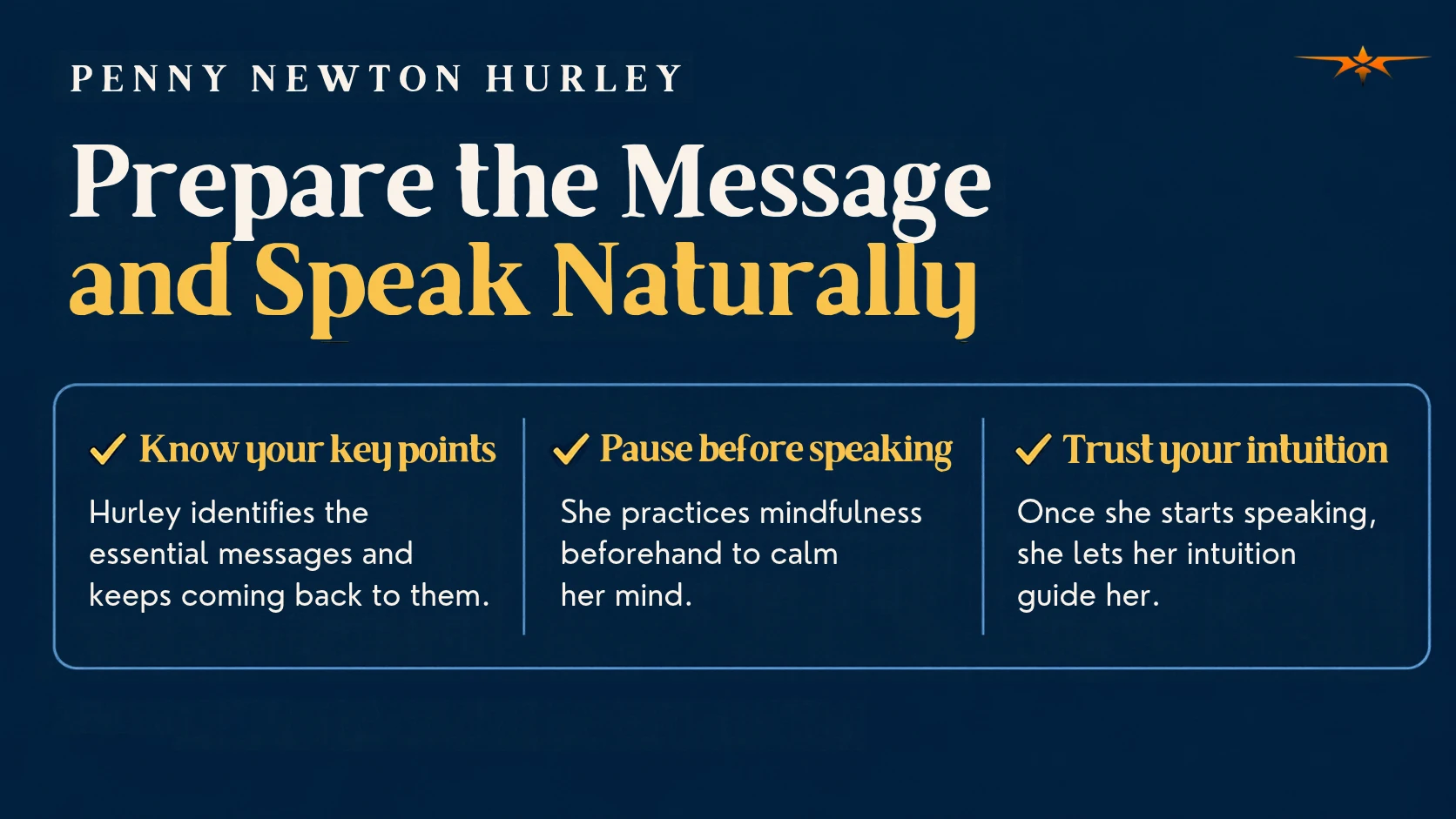
Discussing stage fright, Hurley said she had worked on negative core beliefs over several years. She described moving from being quite stilted in webinars to being herself. Her preparation includes knowing the essential messages she wants to convey and returning to them, alongside mindfulness beforehand. This is a personal account of developing confidence, not a promise that one preparation technique will remove another speaker’s anxiety.
A producer can apply the preparation lesson by agreeing on a small number of messages with the speaker before recording. Those messages should establish what the interview needs to explain without prescribing the wording of each answer. A rehearsal can then check whether the speaker understands the questions and can explain the subject in their own language. Production preparation should remain within that role; a director should not treat an interview rehearsal as a way to diagnose or resolve someone’s deeper beliefs.
Adjust the Level of Detail While Keeping the Language Plain
Hurley described differences in communication preferences, including people who favor concise, top-line information and those who want more detail. She also recalled a meeting where senior colleagues accepted her recommendation after she repeated it using business jargon. Despite that experience, she said she would still promote plain talking. The anecdote records one audience response; it does not establish jargon as the better way to explain a subject.
A video brief should therefore specify what viewers already know and what they need explained. Interview questions for a specialist audience can invite supporting detail, while introductory questions should establish unfamiliar terms before proceeding. The producer should separate necessary technical vocabulary from language that merely sounds formal. This makes audience adaptation a decision about information and explanation, rather than an instruction to imitate the vocabulary of the most senior person watching.
Give the Closing Request a Clear Meaning
Hurley’s communication framework distinguishes requests from demands. She said people often forget to make requests in conversations and emails, and that the wording can become either too vague or too demanding. She connected learning this distinction with being better able to ask for the help she wanted. Her point concerns both clarity about a need and care in how another person is asked to respond.
That distinction applies to the closing lines of a business video. A scriptwriter should establish exactly what the audience is being invited to do and check that the invitation matches the video’s purpose. An invitation to learn more should not quietly become pressure to make an immediate commitment. The wording also needs to distinguish a voluntary action from a requirement, particularly when a business uses video to communicate with employees as well as prospective customers.
Use a Story When the Video Needs to Explain a Decision
Hurley said relatable stories can help people connect with what matters to them, understand the benefit of an action and retain details. She contrasted this with simply listing information. Beverly Boy sees a practical application in deciding how a business video explains a recommendation: a factual account of a decision can provide context that a sequence of promotional assertions leaves out.
During story development, a producer should ask the participant for a real situation that illustrates the video’s central point. Establish what happened and why the decision mattered to that person, using only details they can substantiate and are comfortable sharing. Then decide whether that account actually explains the recommendation better than a straightforward explanation would. A story should earn its place through relevance; adding an anecdote merely to make the video feel more emotional can distract from the information viewers need.
Team Beverly Boy's Takeaway
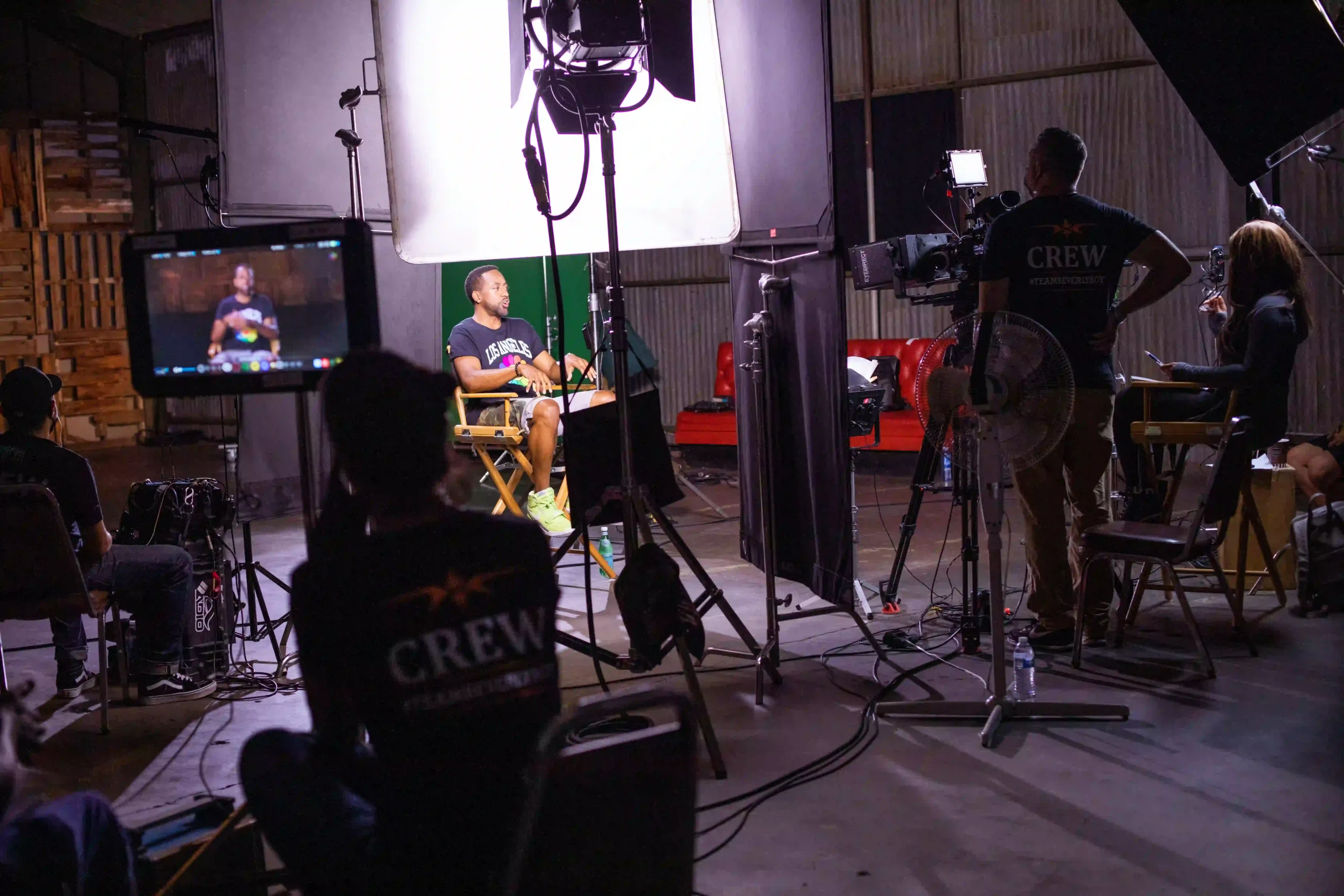
Hurley’s emphasis on listening also matters after the interview ends. For video teams, shortening an answer should not remove a qualification or piece of context that changes what the speaker actually meant.
When selecting soundbites, the editor can compare the excerpt with the surrounding answer and retain enough context to preserve its original meaning. The finished video cannot reproduce the entire conversation, but it can protect the distinctions that made the speaker’s answer worth recording.
This article is based on an interview originally published by Authority Magazine. Read the full interview here.