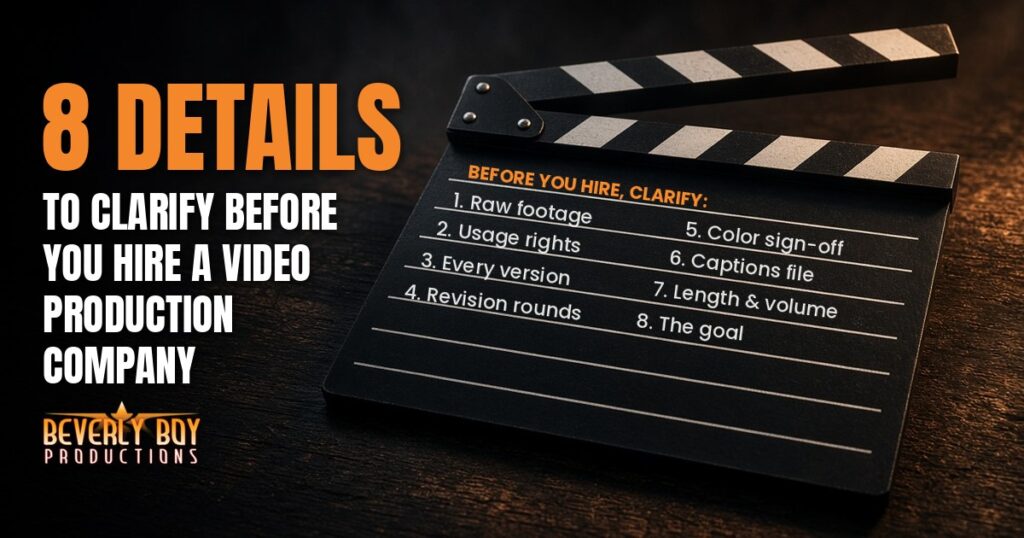
8 Details to Clarify Before You Hire a Video Production Company
A video project can run into trouble over a detail that was never settled in writing.
We asked marketing leaders, producers and business owners who have hired or managed video production companies one question: what is one overlooked detail businesses should clarify before hiring a video production company, and what can happen if they miss it?
Below are eight contributors’ accounts and recommendations, submitted in response to our question on Connectively. Quotations are excerpted for length without changing their meaning.
1. Ask who keeps the raw footage

Emma Sansom
Managing Director, Flamingo Marketing Strategies
Who has the raw video footage? This is often something many companies don't think about and then regret once the project is complete (I've been there myself). We assumed that we'd get all of the video files but in the end just received the final video. Adjusting or repurposing that piece later became very difficult. I now get that clarified in every quote.
2. Know where, and for how long, you can use the video

The detail nobody reads carefully enough is usage rights. … We shot a behind-the-scenes video at Kate Backdrops showcasing how our backdrops are made. It performed so well organically that we wanted to put ad spend behind it six months later. When we went back to the production company, the license we'd signed didn't cover paid promotion. Extending it cost nearly as much as the original shoot. … Now I read the usage clause before I sign anything. Every contract we sign specifies platform, paid vs. organic use, duration, and whether we own the raw files outright.
3. List every version you need before filming starts

Marcus A.
Creative Director, Edifying Pursuits Media
The most overlooked detail is defining the specific multi-format deliverables and platform aspect ratios before filming starts. If you simply contract for "a video," you will likely receive a single horizontal asset that cannot effectively serve vertical social feeds or varied marketing channels. … For example, when we filmed a University of Arizona keynote, planning the deliverable scope in advance allowed us to produce 30 short clips, a highlight reel, a speaker promo, and a full-length edit from that single event. Missing this detail leaves valuable marketing content on the cutting room floor and forces you into costly re-shoots.
4. Count the revision rounds in the price

Lilach Bullock
AI Implementation Consultant and Fractional CMO
The detail most businesses skip is how many revision rounds are built into the quoted price, not just assumed from the pitch. I advised a founder who hired a production company for a launch video and assumed two rounds of changes were included. The contract only covered one. A normal request to re-pace a section and swap the music came back as an extra day rate close to the original shoot cost.
5. Decide who signs off on color, with the real product in the room

Here's the detail most people miss: before you hire anyone, ask who gets the final say on how the colors look in the video and make sure your actual product is in the room when that decision gets made. We skipped that once. A crew filmed one of our dusty-rose backdrops, and the finished video looked beautiful. The only problem? The editor had adjusted the colors to feel warmer, and our fabric ended up looking peach on screen. We ran that ad for six weeks. Soon after, "the color wasn't what I expected" became our number one reason for returns and returns on that product doubled. Now we require someone from our team to physically hold a fabric swatch next to the monitor before we approve the final cut. It takes an extra hour. It's saved us a lot more in refunds.
6. Name captions as a file you own

Dora Bloom
Chief Revenue Officer, iotum
The detail most buyers skip is the deliverable spec, written down before anyone shoots: every aspect ratio, every runtime, captions as a separate timed file rather than text burned into the frame, and audio description where the content calls for it. … If [captions] are not named in the contract as a file you own, you either pay again or publish video that part of your audience cannot use. We work to WCAG 2.0 AA at iotum and publish an accessibility progress report, so I treat captions as a deliverable rather than a favour.
7. Define what "one video" means

Muhammad Usman Qamar
Co-Founder & CEO, Editvideo.io
The detail most businesses skip is defining what one video actually is: how long it runs, how many they need per month, and what the price covers. I work on the production side, editing for clients, so I see what happens when it's left vague. Our standard plans cap video length at 45 minutes. One client came to us with videos around two hours long, wanted ten a month, and wanted to keep the same editor. We built a custom plan at a higher price and said yes. … Pin down length, volume and what's included before anyone signs.
8. Pick the goal before you write the script

Too often we start making a video without agreeing on what it should get people to do. I've signed off on great-looking videos that didn't drive action, and then we couldn't measure if they worked. Pick your success metric first, whether that's leads or signups, and write the script around that. Otherwise you've just made something pretty that doesn't help sell anything.
The common thread: write it down before the shoot
Every answer comes back to one habit. Settle the details in writing before anyone picks up a camera: who keeps the footage, where the video can run and for how long, which versions you need, how many rounds of changes are included, who signs off, and what the video is supposed to do.
These questions give buyers a practical checklist to discuss before production begins. If you’re planning a video project, bring this list to your first call with a production company.
Also confirm the shoot date, crew call time, location access and delivery date in writing before production begins.
About the author
Tavares Beverly | Founder & CEO, Beverly Boy Productions
Member, Fast Company Executive Board and Forbes Business Council | Executive Contributor, Authority Magazine