How Angelo Maldonado Jr.’s Views on Representation Apply to Video Production
Angelo Maldonado Jr., an actor, filmmaker, and founder of Mindstate Films, spoke with Authority Magazine about representation, mental health, and the stories he wants to help create. At the time of the interview, he was developing People Like Us, a film drawing on family experience and examining how mental health affects more than one person.
For organizations commissioning videos about personal experiences, that raises a production question: how can a film introduce someone’s circumstances without making those circumstances their entire identity? The applications here are Beverly Boy’s interpretation of Maldonado’s interview, not his recommendations for organizational videos.
Let Participants Be More Than Their Struggles
Maldonado said he wants to see characters experiencing anxiety, grief, trauma, and other challenges without a diagnosis becoming the whole character. He also does not want Latino actors restricted to one kind of role.
That matters when an organization plans a patient story, community profile, or employee interview. If the brief only asks about a difficult event, the footage may leave out the person’s work, relationships, interests, and choices. A producer can ask participants what else they want viewers to know about them and plan scenes that reflect their ordinary life or role, when appropriate. The edit should give the central experience context without implying it defines the person.
Decide Whose Perspectives the Story Needs
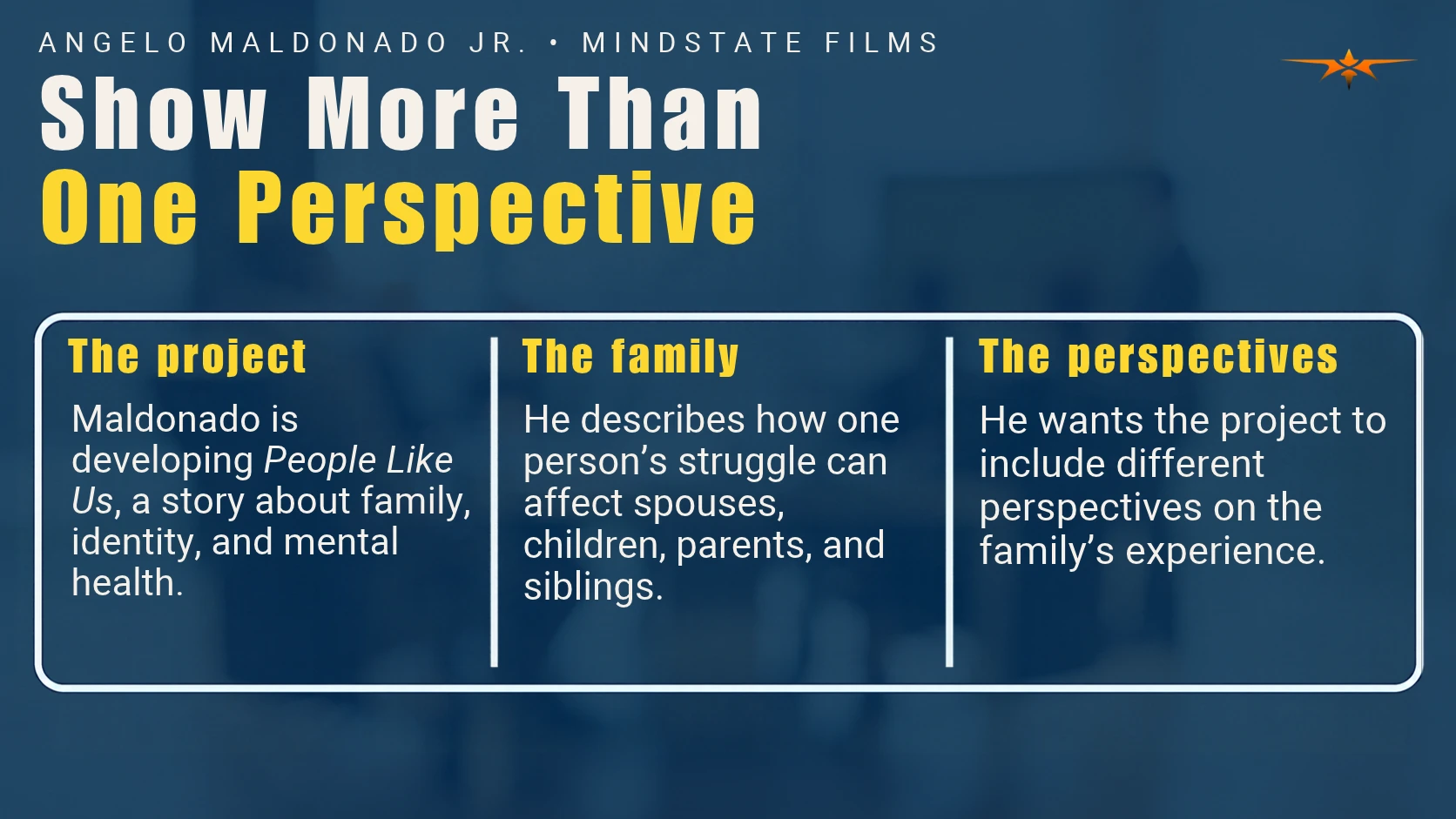
Maldonado described People Like Us as a story about family, identity, and mental health. He said a person’s struggle can affect spouses, children, parents, and siblings, and that he wants the project to show more than one perspective.
For an organization filming a real person’s story, the producer can decide whose voice is needed to explain the subject fairly. A participant may speak about their own experience, while a relative, colleague, or professional may offer a different, clearly identified perspective if they agree to take part. Interview each person about what they actually know. Do not use one speaker’s account to fill in another person’s thoughts or make the story stand for an entire community.
Treat the Experience on Set as Part of the Work
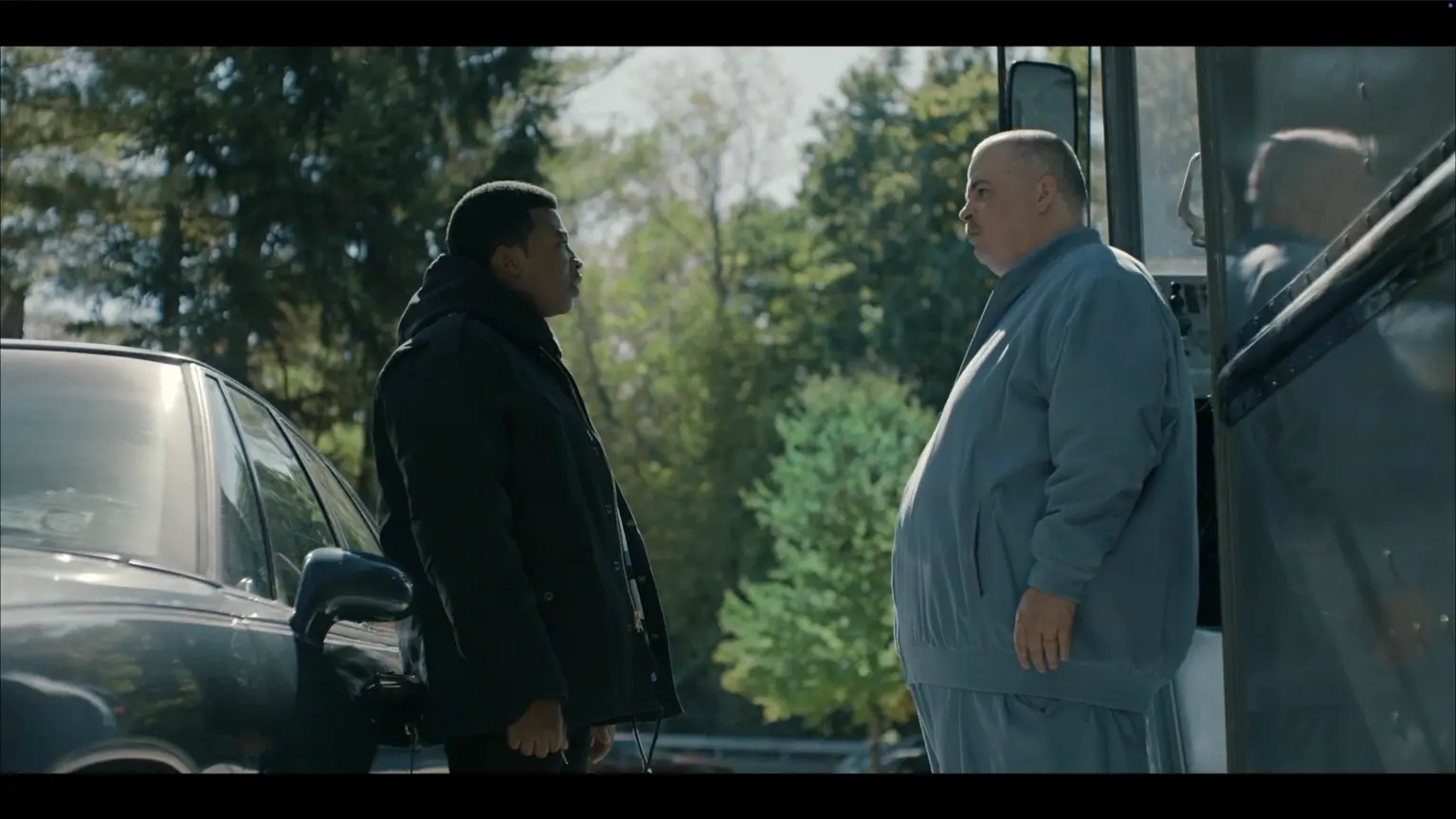
Maldonado recalled having an anxiety attack while working on Chicago P.D. He said fellow actor LaRoyce Hawkins noticed, supported him, and treated him as an equal. Maldonado described that interaction as changing how he approached being on set, though he said he still deals with anxiety.
Maldonado’s experience concerns support between actors on a professional set, but it also raises a consideration for producers filming personal stories: how participants are treated during production matters alongside what the camera records. Before the interview, discuss the topics in advance and ask whether any details are outside the agreed scope. On set, explain the process, make room for pauses, and avoid pushing for a disclosure because it would make a stronger scene. Participants should understand the purpose of the interview, how their footage may be used, and whether they can decline questions or request a pause during recording.
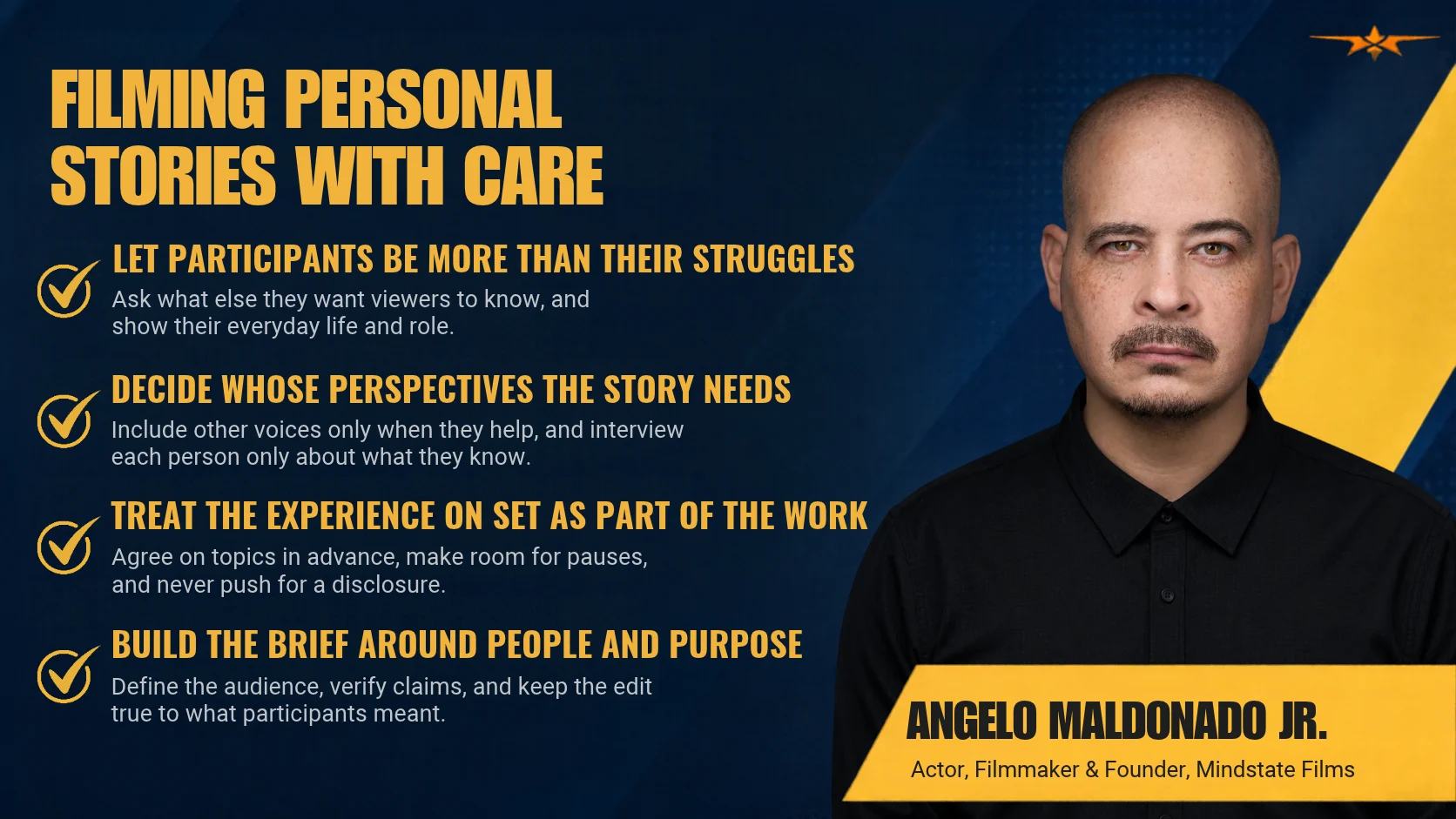
Practical Application: Build the Brief Around People and Purpose
Start by defining the audience and the reason for telling the story. For a nonprofit or healthcare organization, that could mean explaining a service, introducing a community member, or showing how a program works. Identify the claims that require verification and decide which participant can speak to each one. Prepare questions that invite specific experiences as well as the person’s life beyond the central challenge.
Plan footage that supports those answers without staging hardship for the camera. During editing, check whether a short excerpt keeps the meaning of a longer response and whether surrounding images suggest something the participant never said. If several people appear, identify how their experiences differ. Give the organization a factual review, and keep a clear distinction between a participant’s personal account and any broader claim the video makes.
Team Beverly Boy’s Takeaway
Maldonado’s comments about representation raise a practical question for our team: what will viewers learn about a participant beyond the challenge being discussed? We would ask that question in preproduction, then make room for answers in the interview and shot list. It can prevent the video from reducing a participant to a diagnosis or a single difficult moment.
We would also decide where another perspective helps the viewer understand the subject. More interviews do not automatically make a story fuller. Each voice needs a reason to be there, and the edit needs to preserve what that person meant.
Conclusion
Maldonado’s interview is about his acting career and the film he is developing. For business video production, the useful connection is the care required when filming people whose experiences touch sensitive subjects. A clear purpose, informed participants, and an edit that preserves context can help the video tell a specific story without making it speak for everyone.
This article is based on an interview originally published by Authority Magazine. Read the full interview here.