What Video Teams Can Learn from Stuart Snyder About Audience Experience
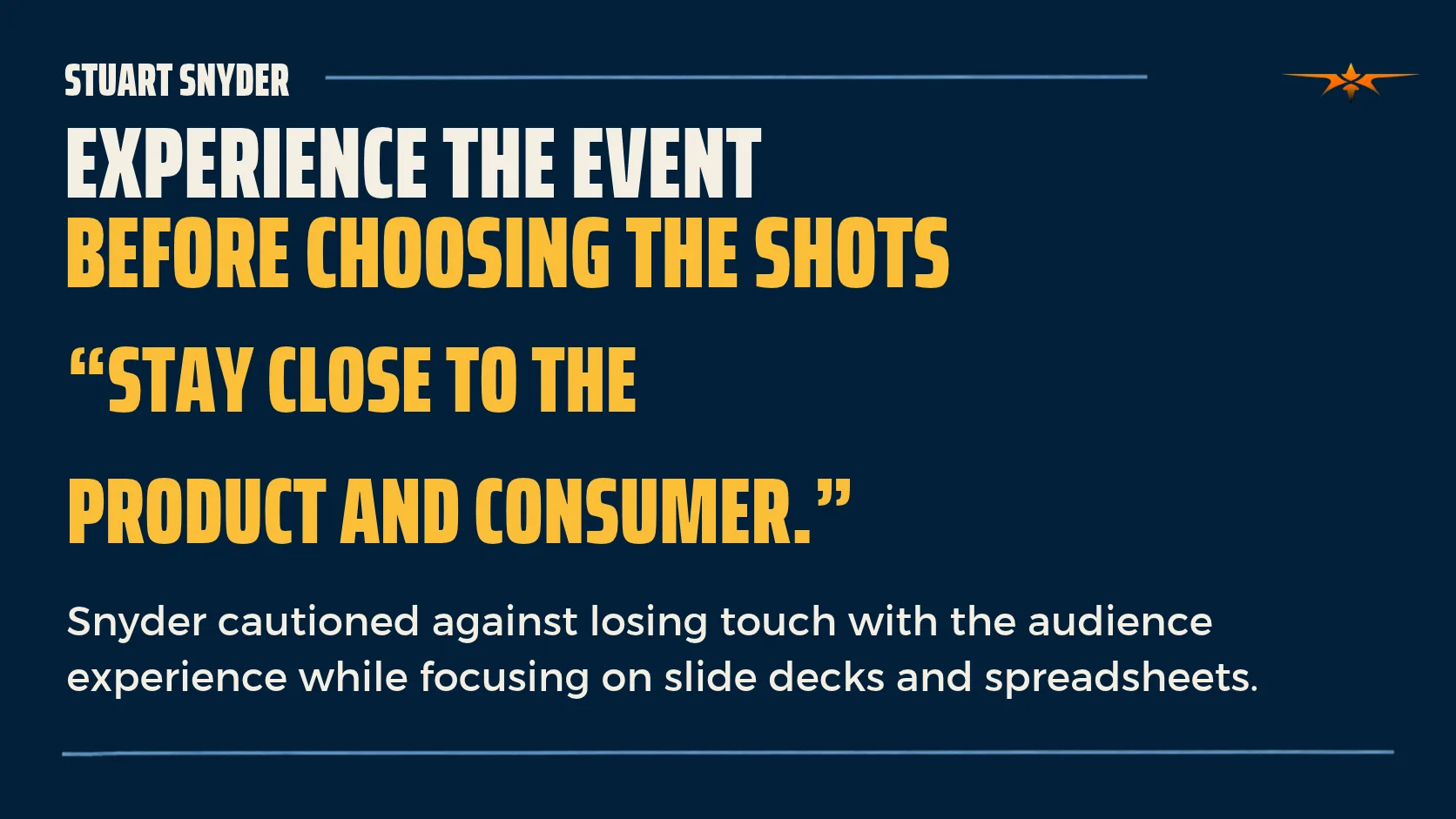
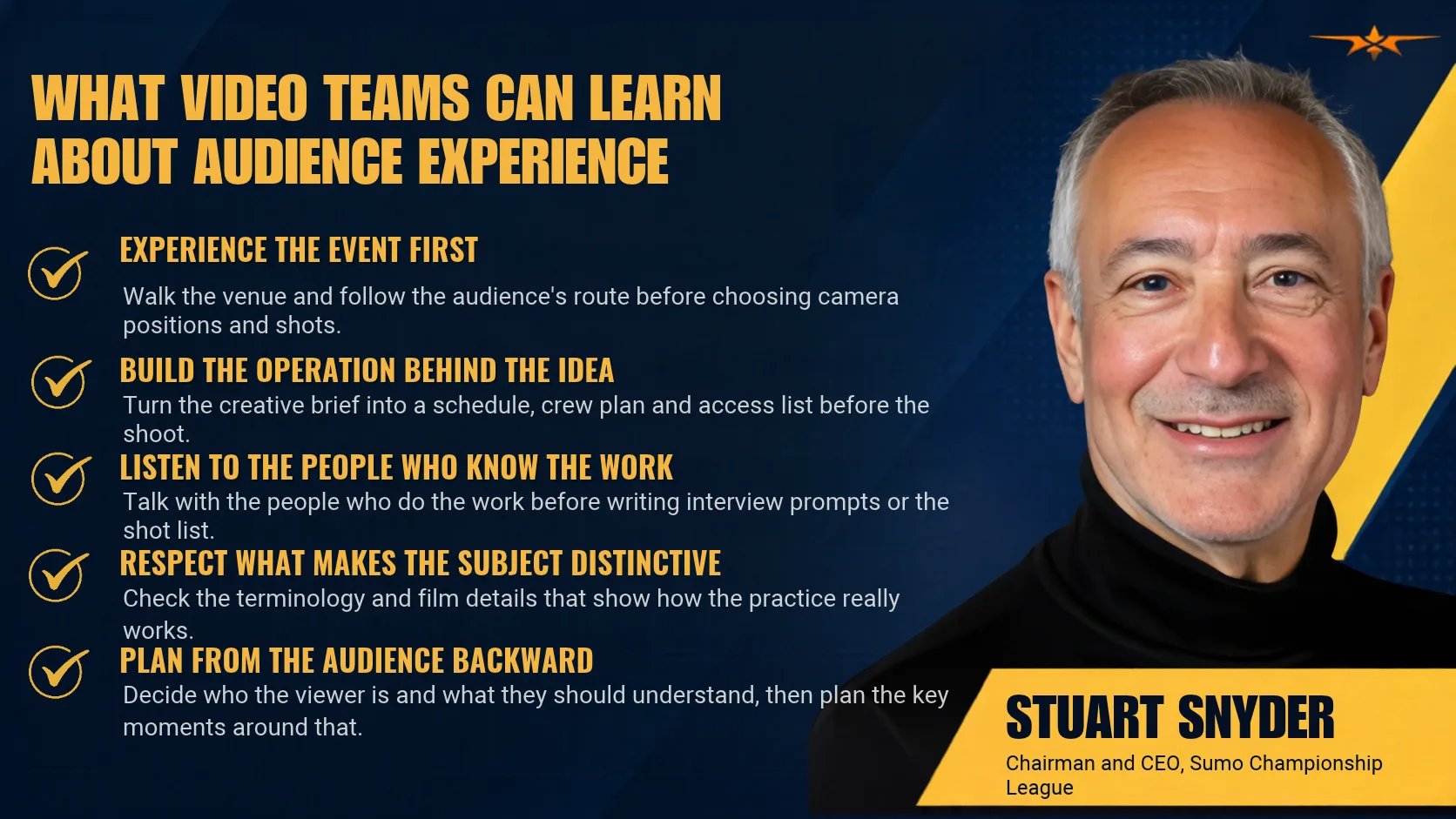
Experience the Event Before Choosing the Shots
Snyder said senior leaders should stay close to the product and audience experience rather than relying only on reports and presentations. He cautioned that slide decks and spreadsheets can draw executives away from what customers and fans actually encounter.
For an event video, a producer can walk the venue with the client, follow the audience’s route, and check where important moments will be visible. That helps determine camera positions, interview locations, and which activities need coverage. If the video is meant to explain an attendee experience, the footage should show what visitors actually encounter rather than relying only on crowd reactions.
Build the Operation Behind the Creative Idea
Listen to the People Who Know the Business
Snyder said new executives sometimes make changes before understanding why existing systems and processes were established. He encouraged leaders to spend their first 90 days listening and learning from employees who understand how the organization operates.
That principle applies to a brand or recruitment video. Employees may know which processes have changed and which scenes represent daily practice. A producer can speak with the people who do the work before writing interview prompts or finalizing the shot list. Their input can make the film more specific and accurate.
Respect What Makes the Subject Distinctive
Discussing Sumo Championship League, Snyder explained that his goal was to build a modern professional league while preserving sumo’s traditions and authenticity. Rather than changing the sport into a gimmick, he wanted to develop the league infrastructure around what already makes it distinctive.
For a business video featuring a craft, community, or cultural tradition, a producer can ask what knowledgeable participants want viewers to understand. Verify terminology, consult the people doing the work, and film details that reflect the actual practice. Use music, graphics, and pacing to support an accurate account of what happens on screen.
Practical Application: Plan From the Audience Backward
Identify the intended viewer and what they should understand. Walk through the experience with the client and the people responsible for delivering it. Agree on the key moments, interviewees, access requirements, and facts that must be verified.
During filming, capture the event and context for what viewers see. Record knowledgeable participants describing their roles in their own words. In editing, check that the sequence reflects the real experience and that supporting footage does not suggest a service or outcome the business did not provide. Review the cut with someone close to the work as well as the marketing team.
Team Beverly Boy’s Takeaway
Snyder’s experience reinforces that a successful event depends on more than the moments an audience sees. For our team, that means understanding the people, planning, and coordination required to deliver the experience before deciding how to document it.
We would work with the event and operations teams to identify essential moments, confirm access and timing, and determine which participants can explain the work firsthand. The goal is to produce a video that accurately represents the event while giving viewers enough context to understand what took place.