
What Video Teams Can Learn from Gerard Johnson About Demonstrating Complex Products
Gerard “Gerry” Johnson, founder of Urban Pulse, spoke with Authority Magazine about applying his engineering experience to developing and operating Urban Alpha, a rule-based trading strategy. He discussed testing the system, resolving problems during live operation, and publishing unfavorable results alongside stronger ones.
For complex product videos, his experience raises questions about demonstrations and claims. The production applications here are Team Beverly Boy’s interpretation of Johnson’s account, not video advice he gave in the interview.
Show the System Under Real Operating Conditions
Even after five years of backtesting and Monte Carlo stress testing, Johnson encountered problems during Urban Alpha’s live operation that were unrelated to the strategy’s logic. A platform setting unexpectedly reset a trading session time, leaving 19 days of data unreliable, and a virtual private server interruption later stopped trading for a day. These experiences showed him that testing the strategy alone was not enough to confirm the full system would operate as intended.
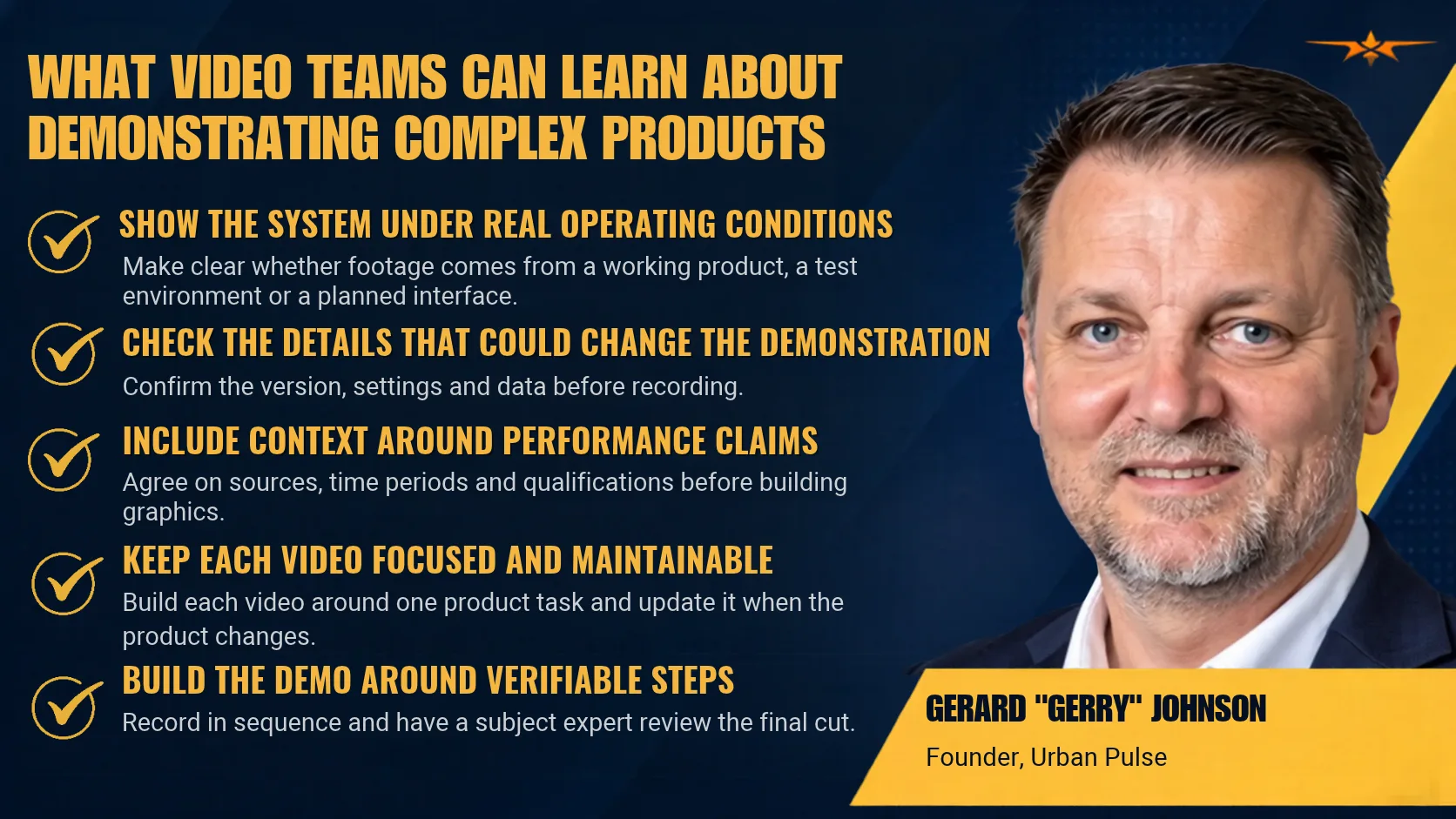
A product demonstration should identify what viewers are seeing. Is the footage from a working product, a test environment, or a planned interface? Confirm the setup, film the steps in sequence, and label simulations accurately. Explain conditions the footage cannot show before presenting a result.
Check the Details That Could Change the Demonstration
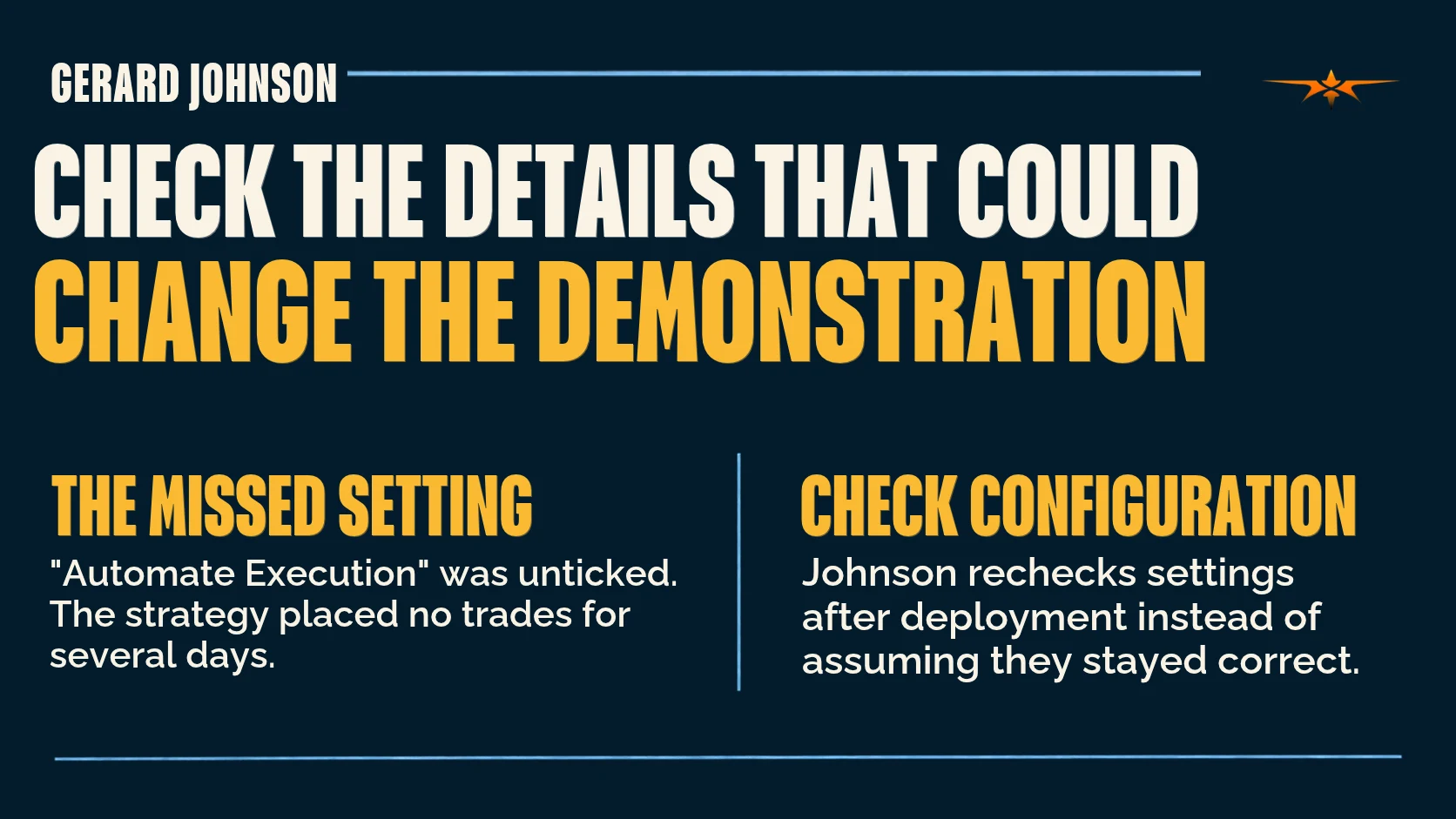
Johnson also recalled leaving an “Automate Execution” checkbox unticked when he first used a funded account. Although the strategy was ready, the unchecked setting prevented it from placing trades for several days. The experience reinforced his practice of checking configuration settings rather than assuming they remained correct after deployment.
That is a useful production reminder for any software or process video. Before screen recording, confirm the version, settings, and data with someone who operates the system. Check that labels and voiceover match the recorded sequence. A small setting can change what a viewer thinks the product did, even when the footage looks convincing.
Include Context Around Performance Claims
Johnson said Urban Pulse publishes a five-year backtested performance record, including a weaker year, and reports actual trading results weekly regardless of whether the period was favorable. He emphasized presenting unfavorable periods alongside stronger results rather than selecting only the most impressive figures. This describes his reporting practice, not an independent assessment of trading performance.
For a case study, ask which results the business can substantiate and under what conditions. A testimonial may describe one customer’s experience, but it should not be edited to imply that every customer can expect the same result. Agree on sources, periods, and qualifications before designing graphics. Review the finished visuals with the people responsible for the data.
Keep Each Video Focused and Maintainable
Johnson emphasized specializing in a single, well-understood trading instrument rather than claiming that his strategy could work across many markets. He also described publishing results on a fixed schedule, including unfavorable weeks. For video teams, those practices suggest keeping demonstrations focused and establishing a consistent process for reviewing published information.
A producer can plan each video around one demonstrable product task or customer question. That makes it easier to show the complete sequence and identify where qualifications belong. For regular updates, assign someone to verify new figures and review older videos when the product changes. Dates and version details help viewers understand which product the footage shows.
Practical Application: Build the Demo Around Verifiable Steps
Ask the product team what viewers should understand. Document the version, environment, inputs, and expected behavior. Separate the features the team can show today from functions in development or results reported by individual customers.
On shoot day, record the process in sequence and make note of any resets, test data, or steps performed off camera. Compare cuts, graphics, and narration with the recorded behavior. Have the subject expert review the final version, especially if a change in timing or sequence could suggest the product completed a task it did not perform.
Team Beverly Boy's Takeaway
Johnson’s experience shows why a convincing technical demonstration needs more than clear visuals. For our team, it starts with understanding the conditions under which the product operates and confirming which results can be demonstrated accurately.
We would work with the people responsible for the system to document its settings, distinguish live demonstrations from simulations, and review any performance claims before publication. The goal is to give viewers enough context to understand what the product did without implying capabilities or outcomes that have not been verified.
Conclusion
Gerard Johnson’s account of building Urban Pulse emphasizes testing the full system, reporting results in context, and keeping a clear focus. Those ideas can inform how businesses demonstrate technical products on camera.
A useful video shows what was tested or performed, under which conditions, and who can verify its claims.
This article is based on an interview originally published by Authority Magazine. Read the full interview here.