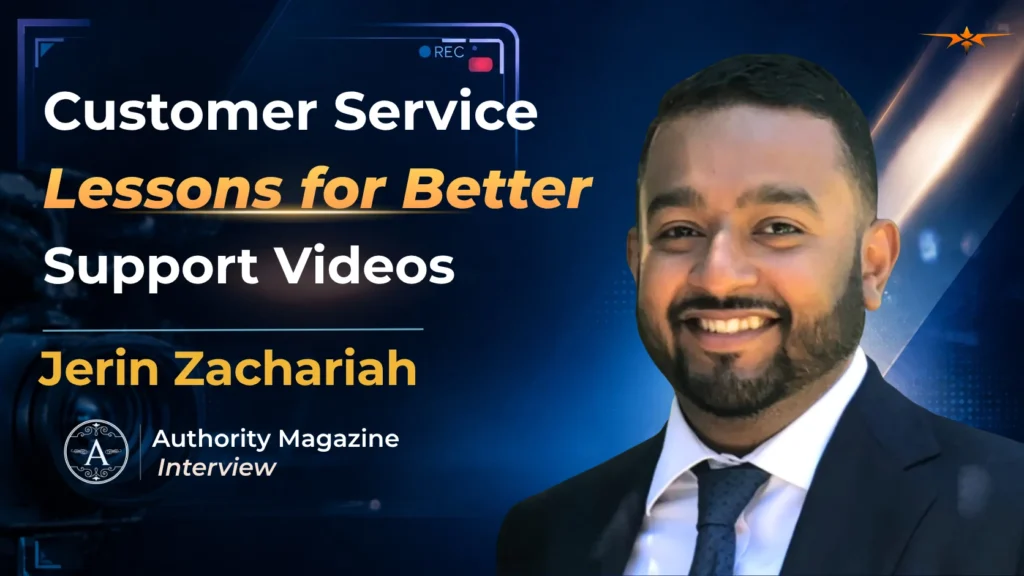
How Jerin Zachariah’s Customer Service Principles Apply to Support Videos
Jerin Zachariah, founder and CEO of Mentage, spoke with Authority Magazine about improving customer service by understanding where people encounter difficulties. He discussed observing user behavior, assigning responsibility for problems, and explaining what customers can expect next.
For businesses creating onboarding or customer support videos, his interview helps identify what viewers need. These video applications are Team Beverly Boy’s interpretation, not advice Zachariah gave to video producers.
Identify the Hesitation Before Writing the Script
Zachariah recalled an early user who entered a fake email address while registering for Mentage’s MEVA platform. Rather than dismissing the user as uninterested, his team recognized that the signup process had not established enough trust for someone to share real information. They reviewed the messaging, account setup, research explanations, and the distinction between wellness and medical diagnosis.
A business making a signup video should first find out why users hesitate at that point. The video can explain why information is requested and what happens after registration. A polished walkthrough cannot repair an unclear or demanding process on its own. Product or messaging problems that testing reveals need attention too.
Demonstrate the Task People Actually Struggle With
Zachariah said surveys can provide basic data but may not explain why someone abandons a process or keeps using a workaround. During early usability research, which included a project with students from Pace University’s computer science program, his team observed people using the tools and asked where their existing routines broke down. He recommended paying attention to behavior as well as stated preferences.
That is useful direction for a producer planning an instructional video. Ask which steps generate repeat questions, then observe users attempting them. Record the sequence a customer needs to follow, including choices or screens that commonly cause confusion. Plan for updates if the interface is likely to change.
Make Responsibility and Next Steps Visible
Zachariah described assigning one person to remain responsible for each meaningful customer issue until it is resolved, even when other departments help behind the scenes. He said customers should know who is responsible and what happens next instead of being passed between departments and asked to repeat their problem.
A customer support video can make that process easier to understand if it reflects how the business really operates. Show where a customer submits a request, what information helps the team respond, and how follow-up is communicated. Avoid promising a specific response time, named contact, or outcome unless the organization can reliably deliver it. The video should provide a clear path backed by human ownership.
Explain When a Different Team Must Step In
Zachariah explained that Mentage employees have authority to resolve routine customer issues without unnecessary approvals. Questions involving clinical, legal, privacy, safety, or urgent health concerns follow defined escalation procedures.
For a business with several types of customer request, a service video can explain which channel handles a routine issue and when a specialist takes over. Producers should confirm those routes with the people responsible before filming. In sensitive fields, wording needs careful review so a brief video does not imply that a general support team can answer questions reserved for qualified professionals. Keep the explanation practical: what should the viewer do, and what should they expect next?
Use Repeated Questions to Improve the Video
Zachariah said his team handles an immediate problem, documents its cause, and routes recurring issues to the team that can fix the underlying friction. When appropriate, they follow up with the customer about what changed. He emphasized that resolving an individual complaint is not enough if the same underlying problem continues affecting other customers.
The same principle applies after an onboarding video goes live. Review support questions and, where available, where viewers stop watching. If customers repeatedly misunderstand a step, check whether the video is unclear, the process itself needs revision, or both. Update the content when the workflow changes so the recording does not keep teaching an outdated process.
Team Beverly Boy’s Takeaway
Zachariah’s interview highlights why understanding the customer’s actual problem matters before deciding how to explain a service. For our team, that means investigating where people hesitate, which steps create confusion, and whether the issue can be addressed through clearer instructions or requires a change to the underlying process.
We would work with the client to identify a specific task, verify the steps with the responsible team, and record the process as customers will encounter it. A support video should make the next action easier to understand without suggesting that filming alone can resolve problems in the product or service.

Conclusion
Zachariah’s interview focuses on responding to customers with clarity, ownership, and attention to the causes of friction. Applied to video production, those ideas can help a business make an onboarding or support video that shows people what to do and what happens next. Its usefulness depends on whether the process on screen matches the service customers actually receive.
This article is based on an interview originally published by Authority Magazine. Read the full interview here.