What Video Teams Can Learn from Dr. Raza Bokhari About Communicating Uncertainty
Dr. Raza Bokhari, executive chairman and CEO of Medicus Pharma, spoke with Authority Magazine about leading a biotechnology company through changing circumstances. He discussed building teams, responding to unexpected opportunities, and making decisions when information is incomplete.
For executive or project videos, his experience raises questions about who speaks and which claims the business can support. The production applications below are Team Beverly Boy’s interpretation of his leadership views, not video advice he gave in the interview.

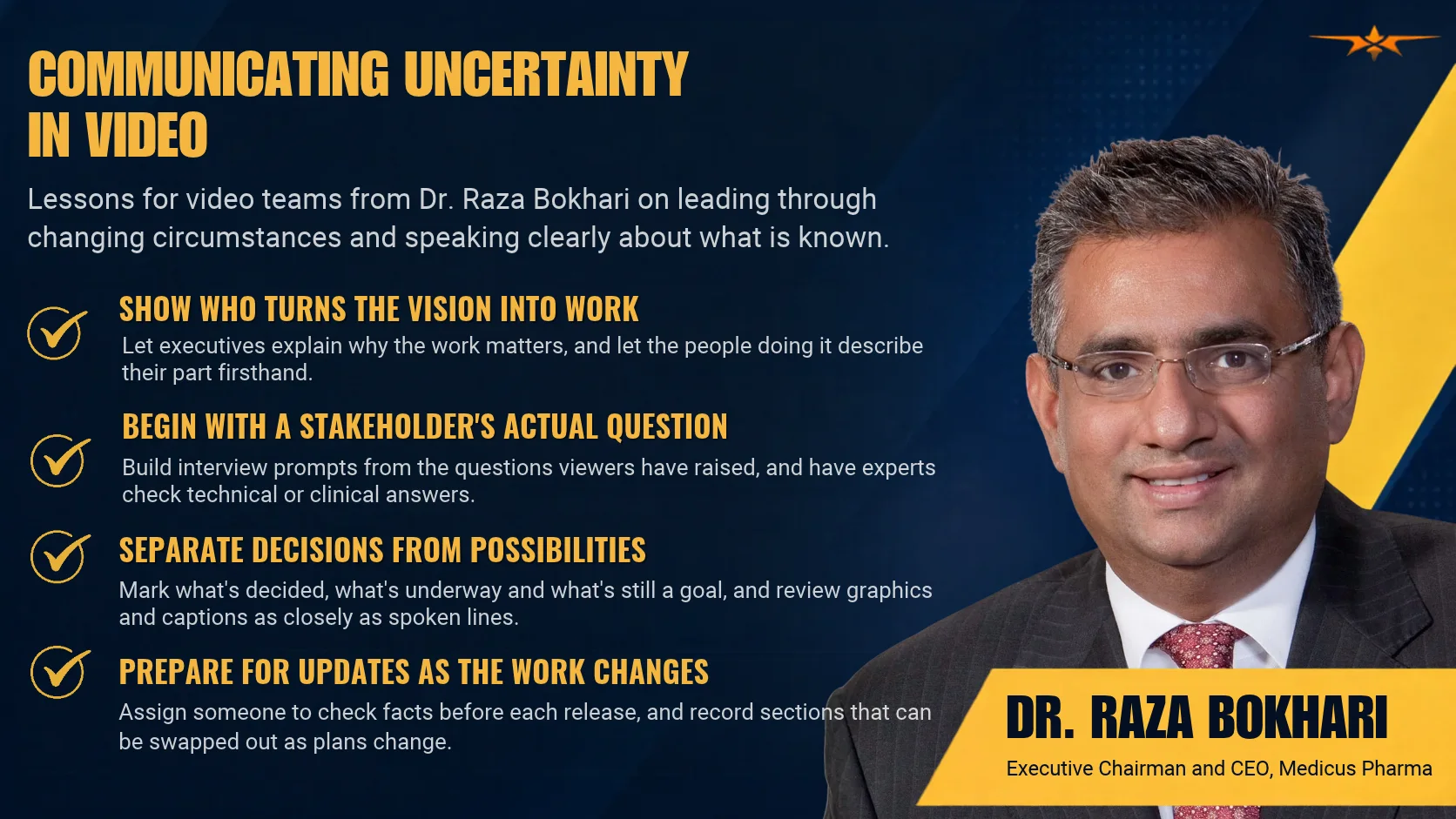
Show Who Turns the Vision Into Work
Bokhari distinguished leaders who establish a vision and direction from executives responsible for turning that vision into action. He emphasized that both roles matter and described CEOs as consensus builders who help align teams around organizational goals.
A company video about a new initiative can reflect that distinction. An executive may explain why the work matters, while the people carrying it out can describe their responsibilities and what has been completed. Choose interviewees for the work they know firsthand. Footage of a team at work should represent the process being discussed rather than stand in for an outcome that has not occurred.
Begin With a Stakeholder’s Actual Question
Bokhari recalled that the Gorlin Syndrome Alliance, a patient advocacy organization, contacted Medicus Pharma through LinkedIn to ask why patients with Gorlin syndrome had been excluded from its Phase 2 study. He explained that the initial question developed into a collaboration between the organizations. The example shows why stakeholder questions deserve attention.
For an update aimed at patients, partners, employees, or investors, a producer can start by collecting the questions those viewers have raised. That may reveal a gap in the planned message. Use the questions in interview prompts and have subject experts check technical or clinical answers. The video should address what the organization can confirm while making it easy for viewers to find further information.
Separate Decisions From Possibilities
Bokhari explained that important leadership decisions often involve incomplete information rather than clear answers. In biotechnology, he described the need to adapt plans as new challenges and opportunities emerge. For videos about ongoing initiatives, that distinction makes careful language particularly important.
During preproduction, distinguish decisions already made, current activities, and future goals. Identify the approver for each claim. Ask speakers what is happening now and what depends on future work, then preserve that distinction in editing. Graphics and captions need the same review as spoken lines, since a short label can accidentally turn a possibility into an apparent result.
Prepare for Updates as the Work Changes
Bokhari described the CEO’s job in biotechnology as planning for the unexpected and adjusting to shifting circumstances. He also emphasized timely decisions followed by continued learning. A recording can become outdated even if it was accurate on shoot day.
For a video series covering an ongoing project, establish who will check information before each release. Record explanations in sections that can be replaced when milestones, timelines, or plans change. Keep track of approved versions and make sure published videos direct viewers to current information when appropriate.
Practical Application: Build a Reviewable Production Brief
Start with the video’s audience and the questions that audience needs answered. List each claim, its qualified speaker, and its source. Include communications staff and subject experts before drafting prompts.
On the shoot, ask speakers to explain their own responsibilities and clarify whether they are describing completed work, a current plan, or a hoped-for outcome. Check interviews, narration, footage, and graphics against the approved facts. Check the final version shortly before release if the underlying situation is moving quickly.
Team Beverly Boy’s Takeaway
Bokhari’s interview highlights the difference between having a vision and demonstrating the work being done to pursue it. For our team, that means building the video around people who can explain the project firsthand and making sure their statements reflect its current stage.
We would also consider how quickly the information might change. When a project involves ongoing research or development, the production should clearly distinguish established facts from plans and expectations, with a review process that allows the organization to keep its communication accurate.

Conclusion
Dr. Raza Bokhari’s account of leading amid uncertainty offers a practical starting point for video teams working with evolving initiatives. The message needs a clear purpose, speakers with direct knowledge, and careful language about current facts and future plans.
A production can document the work accurately while leaving room for the organization to update viewers as circumstances change.
This article is based on an interview originally published by Authority Magazine. Read the full interview here.