What Video Teams Can Learn from Mel Carr About Founder Story Videos
Mel Carr spoke with Authority Magazine about building the Six-Figure Chicks book series while running her executive virtual assistant agency, Cloversy, and the nonprofit Her Write to Rise. She described the pressure of managing several projects at once, learning to ask for help, and giving women a place to tell the story behind their business success.
For businesses considering a founder story video, her interview raises a useful question: what should viewers understand about the work behind the result? The production applications here are Team Beverly Boy’s interpretation of Carr’s experience, not recommendations she made to video producers.
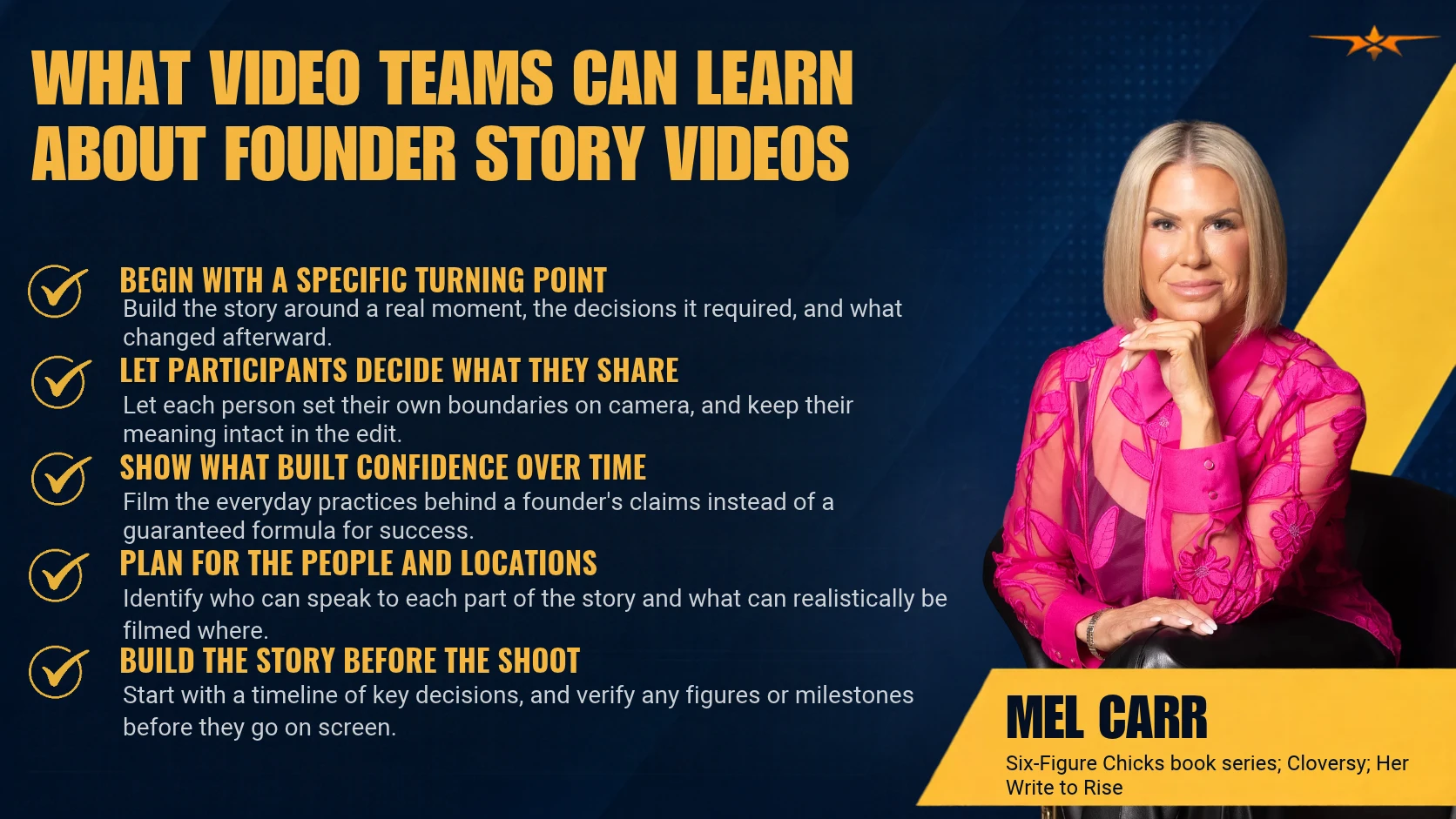
Begin With a Specific Turning Point
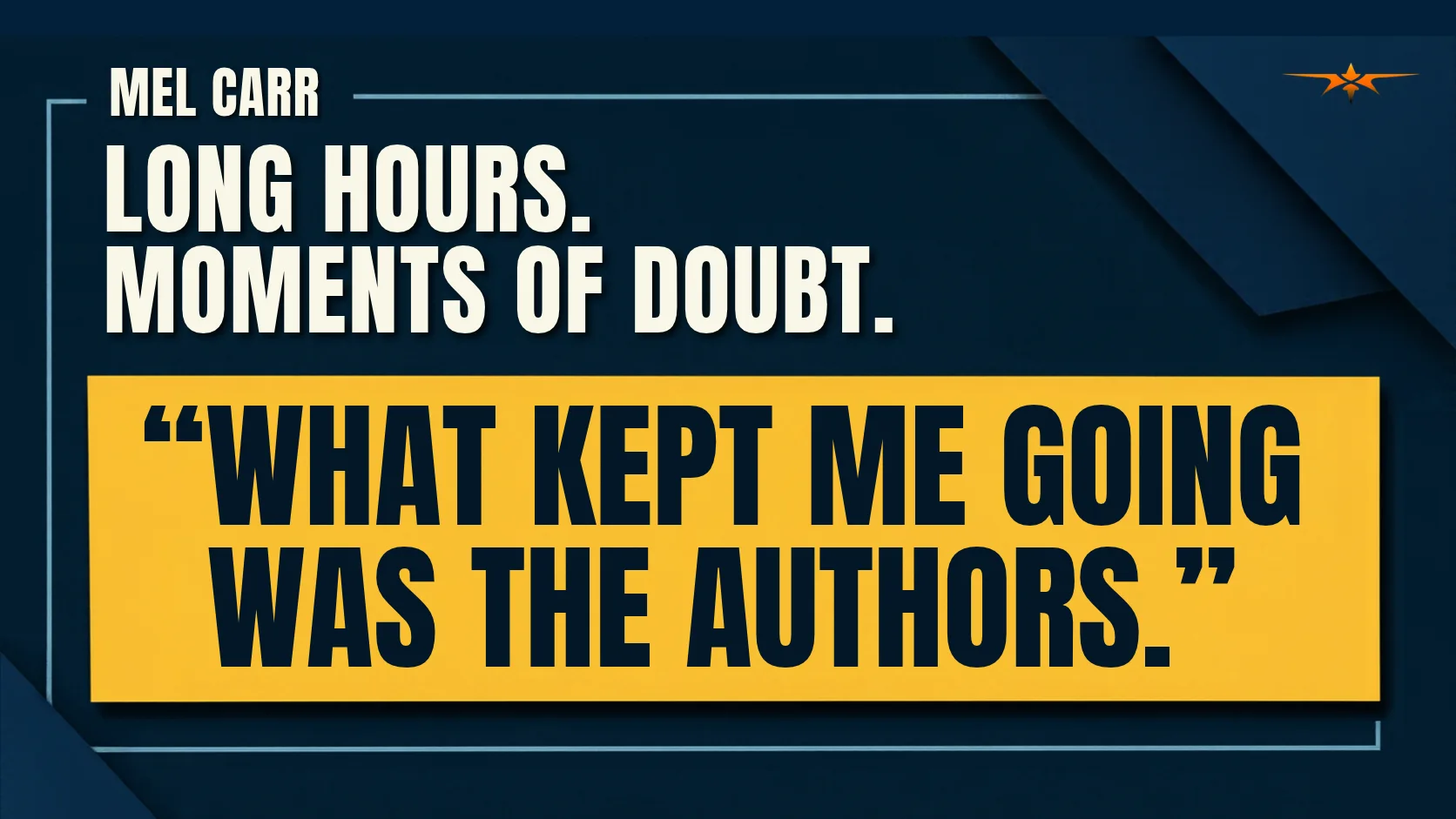
Carr recalled managing the Scottsdale, Houston, and Global editions of Six-Figure Chicks while running Cloversy and Her Write to Rise. Although her work appeared successful from the outside, she described long hours and moments of doubt. Hearing authors describe what writing their chapters meant to them, including sharing personal experiences with family members, helped her continue.
A founder video can use a specific period like this to give the story shape. Before filming, a producer can ask what was happening, which decisions had to be made, who was affected, and what changed afterward. Those details offer more than a general account of perseverance. Supporting footage should represent the work being discussed; staged scenes should not be presented as footage of events that were never filmed.
Let Participants Decide What They Can Share
Carr said some authors were moved by writing their chapters or reading them to family members, who had not known parts of their stories. She sees the book series as a place for women to share the journeys behind their achievements, including difficult periods.
A business video featuring founders, employees, or customers may invite similarly personal material. The producer should discuss the intended audience and distribution before recording, then let each participant set boundaries around what they will say on camera. Follow-up questions can clarify without pressing for more. In editing, keep the speaker’s meaning intact and confirm any sensitive details the organization plans to publish.
Show What Built Confidence Over Time
Carr recalled comparing her everyday challenges with polished portrayals of effortless entrepreneurial success. Over time, she learned to build confidence through consistent work, keeping commitments, and recognizing progress. She also described raising prices for her virtual assistance services after following a coach’s advice, then seeing business decline. The experience taught her to consider outside advice without abandoning her own judgment.
For a business profile, that suggests filming the practices behind a founder’s claims. Ask what the team does repeatedly, how a decision was made, and what can be shown or verified. A service business might film an actual planning session or process demonstration where appropriate. Give viewers enough context to understand how the business operates, without implying that one setback produced a guaranteed formula for success.
Plan for the People and Locations the Story Needs
Carr described how trying to plan, fund, and manage everything herself slowed progress. She began relying more on her team, mentors, and authors, including asking for help with book launches outside her home state. She also developed systems that allowed her to manage several book projects at once.
Those experiences have a practical parallel in a video involving several people. If the story spans authors, offices, or markets, a producer needs to identify who can speak to each part and what can realistically be filmed at each location. Set a consistent approach to interviews, permissions, scheduling, and footage requirements. That structure helps the editor connect different voices without forcing everyone into the same scripted answer.
Practical Application: Build the Story Before the Shoot
For a founder profile, start with a research call and a timeline of the business’s key decisions. Identify people who can speak firsthand about those moments and footage that can show the work involved. Prepare questions about actions and outcomes as well as feelings, and verify any figures or milestones before they appear on screen.
During filming, allow room for unexpected details. A story about resilience should still tell a potential client, partner, or employee what the organization does today and why the experience matters to them.
Team Beverly Boy’s Takeaway
Carr’s interview shows why a founder story needs more than a polished account of success. For our team, that means identifying experiences that explain the founder’s decisions, what changed along the way, and who contributed to the journey.
We would build the interview around events the founder can describe firsthand, then choose supporting footage and other voices that add useful context. The video can be candid about challenges while respecting what participants prefer to keep private.

Conclusion
Carr spoke about persistence, community, delegation, and the value of telling a fuller story about success. For businesses making founder videos, those themes can guide interviews and production choices. The result should help viewers understand the work and people behind the organization without overstating what one person’s experience proves.
This article is based on an interview originally published by Authority Magazine. Read the full interview here.