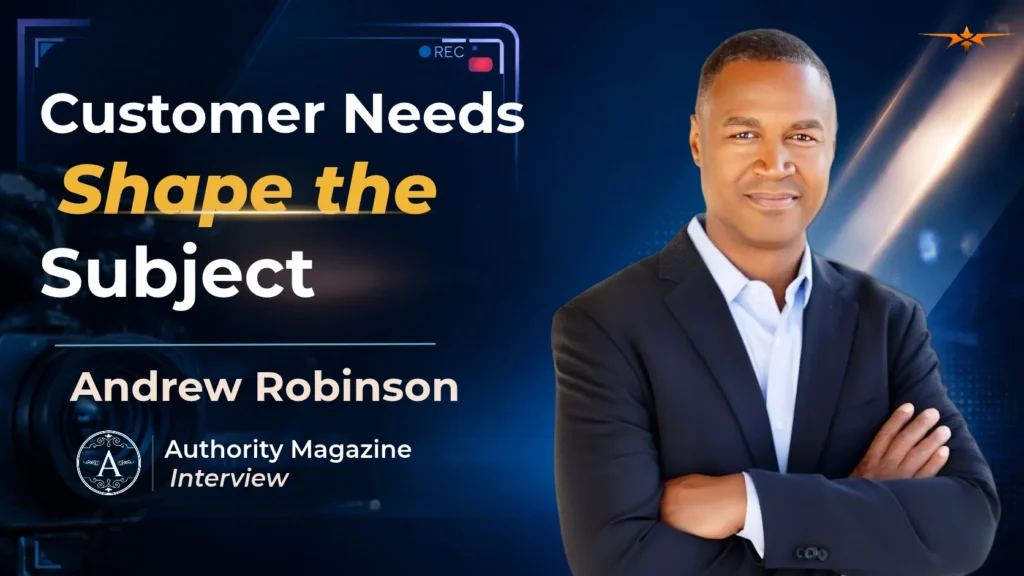
Andrew Robinson’s Customer-First Choices Can Help Define a Product Video’s Focus
Andrew Robinson, President & CEO of CenTrak, spoke with Authority Magazine about the responsibilities of executive leadership, including protecting team ownership and deciding when existing customers should take priority over new development. His account moves between the daily work of removing obstacles and decisions about what the company should build.
For businesses making product videos, the useful connection is the choice of what deserves attention. A demonstration can explain features clearly while leaving the customer’s actual problem underdeveloped. Robinson’s experiences offer a basis for choosing a video’s subject and organizing its message, although the production applications here are Beverly Boy’s interpretation.
Start With the Customer's Situation Before Explaining Features
Robinson recalled supporting a customer presentation with a sales leader and a consultant. The discussion covered solutions, workflows, and value propositions. During a break, a nurse told them that a staff safety solution had helped save her life: confronted by an aggressive patient, she activated her staff duress button, and security personnel responded quickly. She described her relief when help arrived.
Robinson connected that conversation to the reason behind the company’s work. Alongside revenue targets and operational priorities, he saw the importance of the people affected by the technology. His earlier career reflections make a related distinction: developing an idea was only part of the challenge; determining why it mattered and who could benefit required different questions.
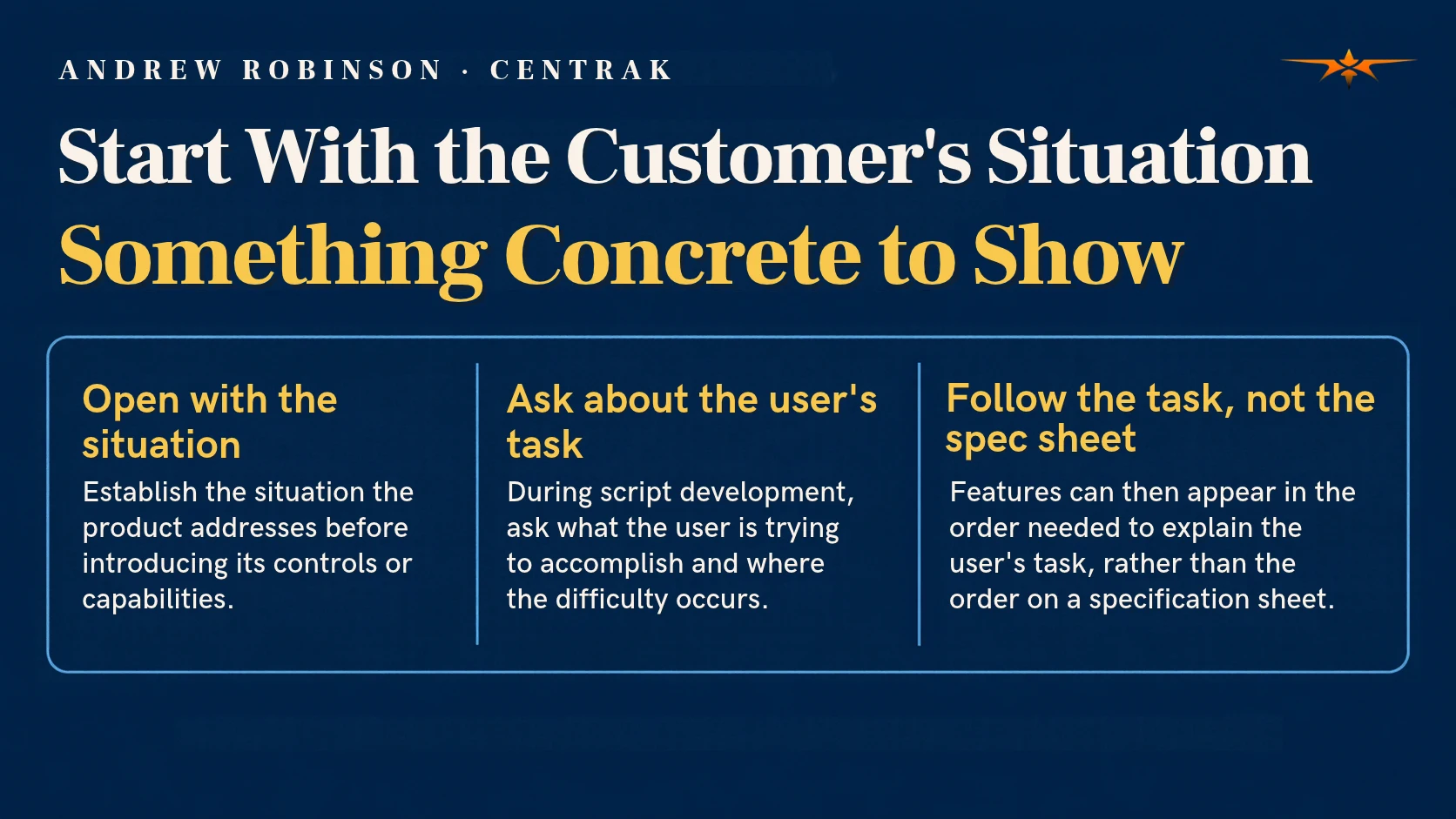
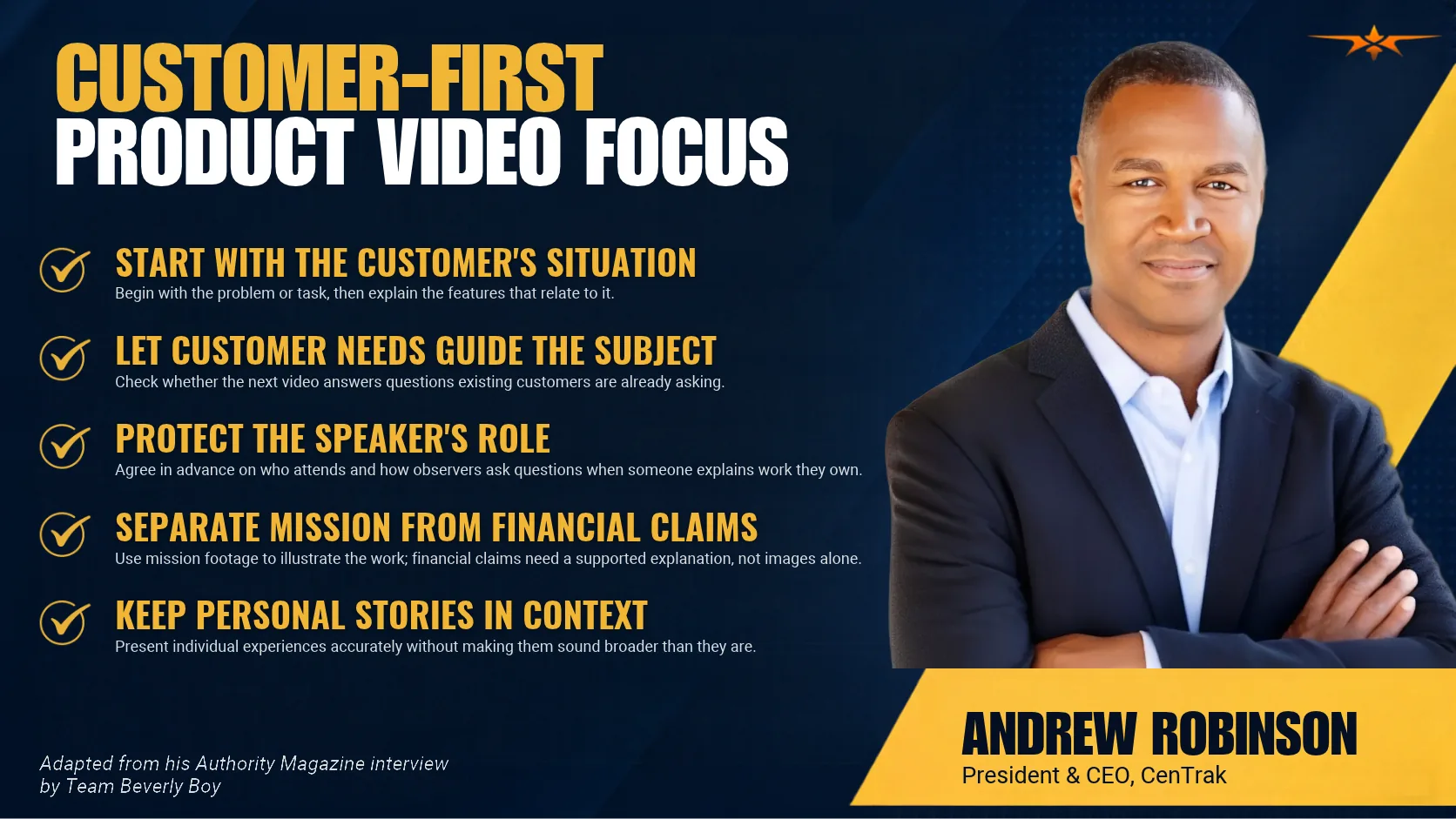
A product video’s opening should establish the situation the product addresses before introducing its controls or capabilities. During script development, the producer should ask what the user is trying to accomplish and where the difficulty occurs. That gives the demonstration a specific purpose. Features can then appear in the order needed to explain the user’s task, rather than in the order they appear on a specification sheet.
Let Existing Customer Needs Shape the Video's Subject
Robinson described a difficult choice shortly after joining CenTrak in 2023. New developments were underway, but some customers were reporting problems with older solutions they continued to use. The company temporarily slowed portions of its new product development and concentrated on quality, reliability, and customer experience. He acknowledged that some customers awaiting new capabilities were disappointed by the delays.
The distinction matters because both priorities had value. Robinson said he believed the company should honor commitments to existing customers before asking them to place confidence in something new. His account gives businesses a reason to examine whether their next video addresses the questions customers are currently asking.
Before commissioning another launch film, a marketing team should review the subject with customer-facing colleagues. An existing product’s operation or a documented improvement may deserve an explanation before another future-facing announcement. The production brief should identify the specific customer question the video will answer. This is a decision about the film’s subject, made before scripting, rather than an attempt to fit unresolved customer concerns into a promotional message already approved.
Protect the Speaker's Ownership of the Conversation
During his first month at CenTrak, Robinson entered a meeting organized by the newly promoted Chief Commercial Officer. She had brought her team together in person, and he wanted to listen and meet them. When she asked him to leave and catch up later, he initially felt embarrassed and offended. He later understood that his uninvited presence had intruded on her ownership of the meeting.
Robinson described the incident as a lesson in holding the company’s values above his ego. He appreciated her willingness to protect the space she had created for her team. The relevant production question is who needs to be present when someone is asked to explain work they own.
For an employee interview, the producer should agree in advance on who will attend and what role each observer has. A senior executive’s interest does not automatically require their presence beside the camera. The director should also establish how observers submit follow-up questions, instead of allowing interruptions throughout an answer. These arrangements cannot guarantee candor, but they can make the interview’s working boundaries clear before recording begins.
Distinguish Mission From Financial Sustainability
In his five lessons for prospective CEOs, Robinson said mission and economics must coexist. He described financial health as necessary for a business to sustain its purpose. That observation adds another question for video marketing: does the film distinguish the organization’s purpose from its ability to sustain that purpose financially?
In Beverly Boy’s view, a producer should distinguish what supporting footage illustrates from what requires a supported financial explanation. Mission-related footage can illustrate the people or work the organization aims to serve, but it does not establish financial sustainability. Any claim about the organization’s ability to fund that work over time needs a supported explanation rather than mission-related images alone.
Team Beverly Boy's Takeaway

We think the editor has a specific responsibility when a product story includes a striking personal account: preserve its scope. In a healthcare technology video, the strongest sentence may describe one person’s experience without establishing what the product will do in every situation. We should judge the surrounding edit as carefully as the soundbite itself.
We would review that passage in the rough cut before selecting excerpts for shorter versions. We would keep the context needed to identify the statement as an individual account and reject a cut that turns it into a general promise. That decision belongs in editorial review even when the speaker’s original words remain unchanged.
A customer-centered product video depends partly on what the finished film allows the audience to conclude. Keeping the account within its stated limits lets a specific experience explain why the product matters without making that experience carry a claim it cannot support.
This article is based on an interview originally published by Authority Magazine. Read the full interview here.