
Lauren Sergy on Clear Stakeholder Communication in Video
A video can be accurate and still miss its audience. The problem often appears when the same message is delivered to executives, employees, partners, and customers without adjusting the context each group actually needs.
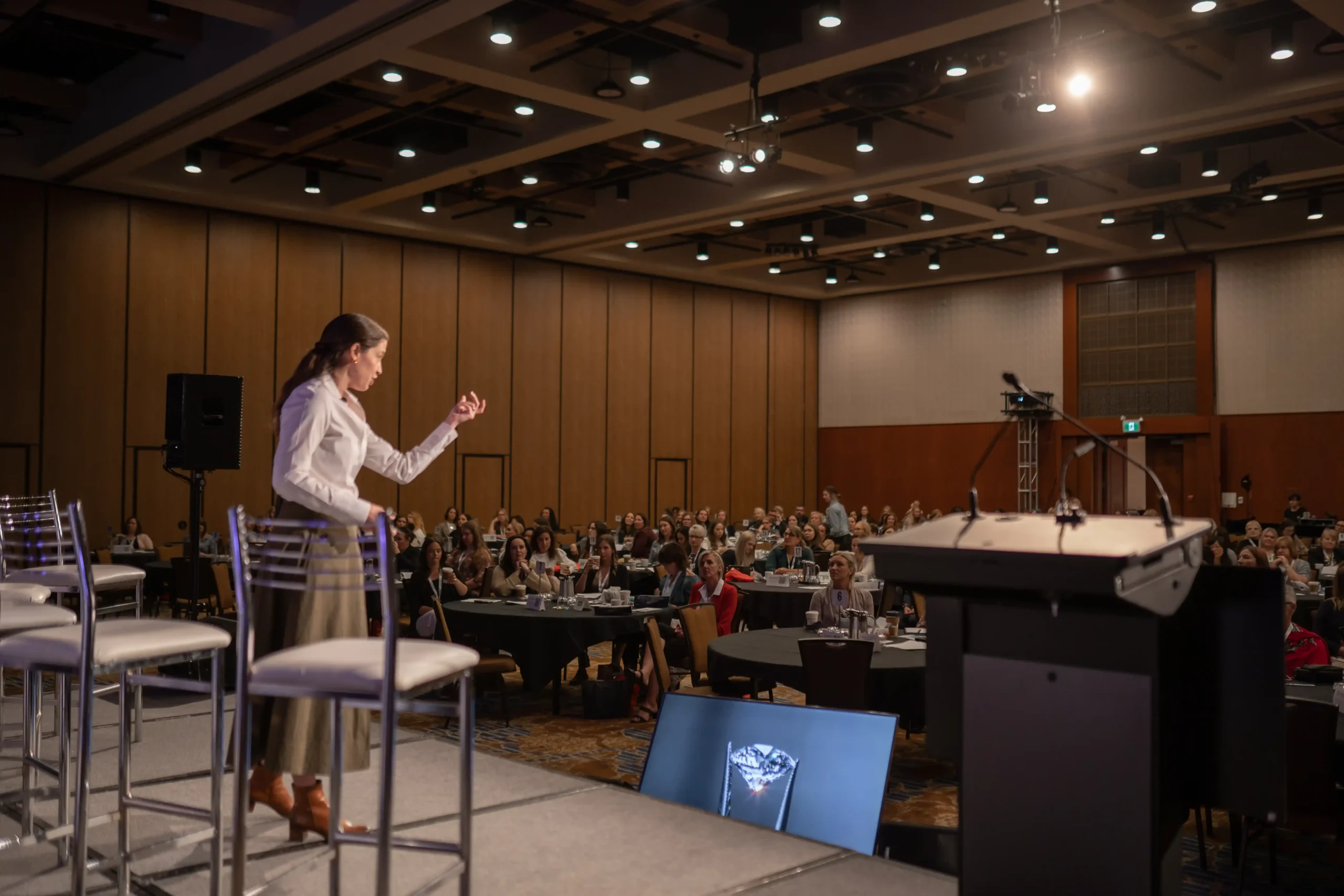
Lauren Sergy is a public speaking and communication expert who has worked with leaders and organizations across Canada, the United States, the United Kingdom, and Europe. Her work spans business communication, presentation strategy, workplace communication, and virtual meetings.
Her Authority Magazine interview offers a practical framework for stakeholder communication that translates directly to corporate video. For Beverly Boy, that means building audience needs into pre-production, shaping scripts around real stakeholder concerns, choosing the right format for the message, and keeping the core facts consistent across every version.
Adapt the Video Without Changing the Message
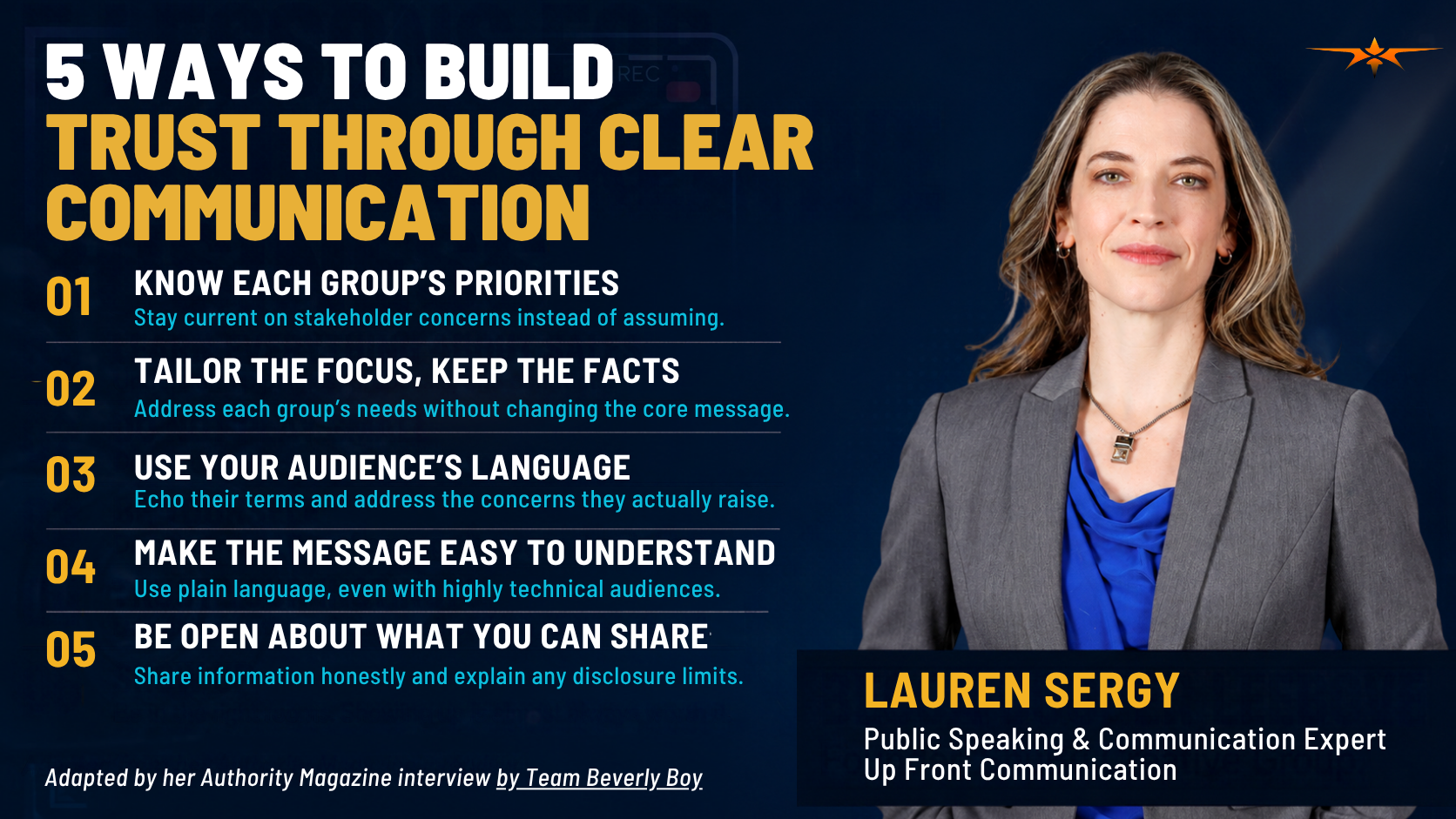
Sergy says audience adaptation should not change the core intent of a message. The facts and overall through-line stay consistent, while the focus changes according to the audience’s needs, context, and interests.
For Beverly Boy, that can begin with a simple audience map before scripting. If one production needs versions for executives, employees, customers, and partners, the team can identify what each group needs to understand, which details stay universal, and which sections should be adjusted in the script or edit.
That makes versioning more deliberate. Instead of creating four disconnected videos, Beverly Boy can build one core message architecture and adapt the emphasis, examples, graphics, or calls to action for each audience.
Listen Before Writing the Script
Sergy warns leaders not to assume they already know what stakeholders are thinking. She recommends speaking directly with representative members of each audience, reviewing comments and survey responses, and looking for questions or concerns that appear repeatedly.
Beverly Boy can apply that during discovery and pre-interviews. Before finalizing a leadership video, training piece, customer story, or internal announcement, the producer can ask which questions employees are already raising, what customers misunderstand, or where previous communication has created confusion.
Those answers can influence interview questions, script priorities, supporting graphics, and the order of information. The result is a video built around actual audience needs rather than assumptions made in a conference room.
Use the Audience’s Own Language
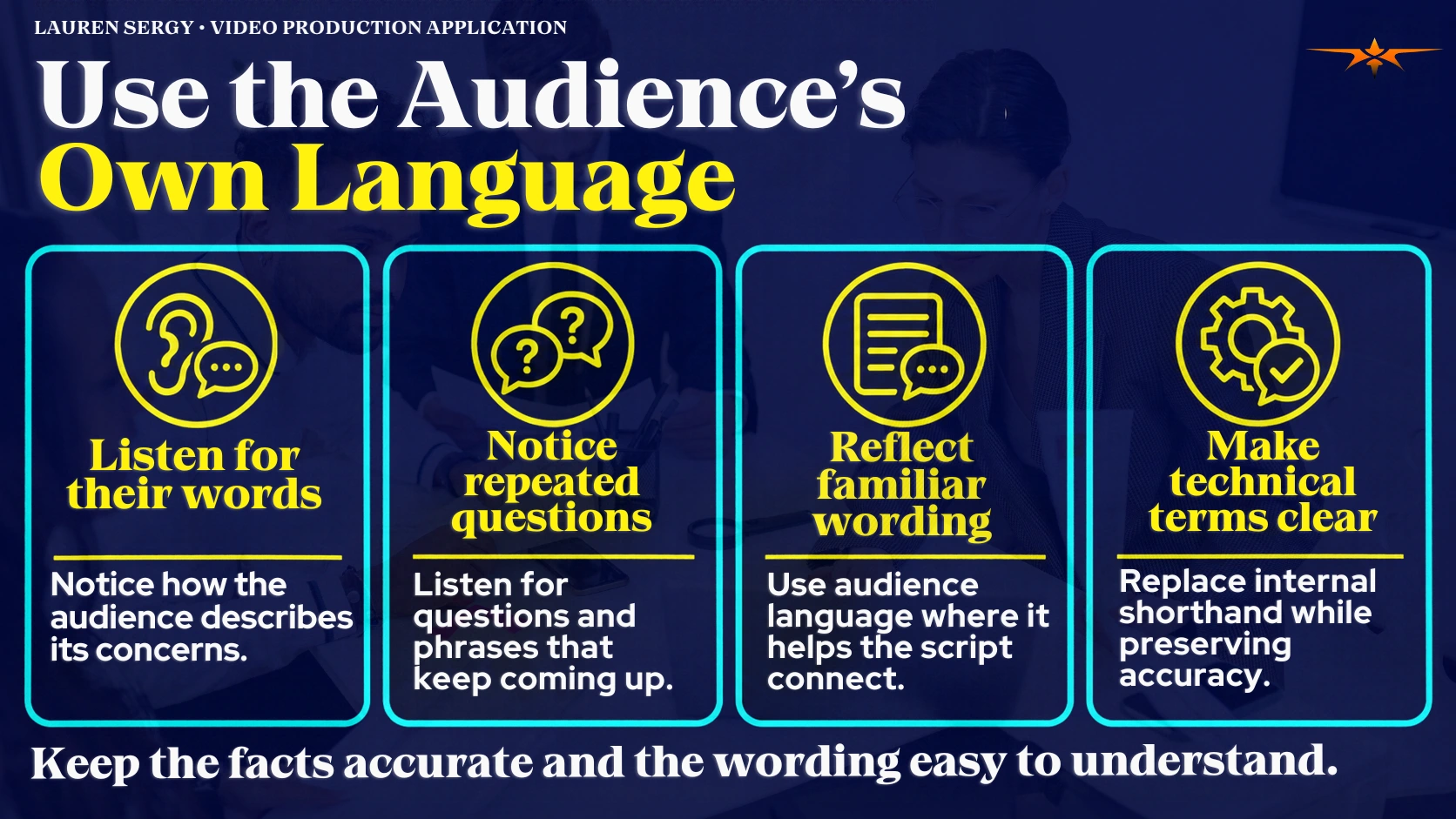
One of Sergy’s formal strategies is to pay attention to the language stakeholders use and reflect that wording back when communicating with them. She describes engineers whose highly technical language created distance with external partners until they began using terminology that matched how those partners described their own concerns.
That gives Beverly Boy a practical scripting rule: listen for the words the intended audience already uses. If employees describe a new process as confusing, customers keep asking the same question, or executives repeatedly use one phrase to define the objective, that language may belong in the final piece.
This is especially useful when interviewing technical experts. Beverly Boy can preserve accuracy while helping the speaker replace internal shorthand, acronyms, or departmental language with wording the audience can understand immediately.
Simplify Complex Information for the Camera
Sergy argues that clear, straightforward language builds trust because people more easily understand the core message. In one example, she helped a public health researcher replace a dense academic presentation with plain language and stronger visual communication, which generated more follow-up interest than previous talks.
For Beverly Boy, that can affect both the script and the visual plan. A dense executive explanation may be better split between a concise on-camera answer, a supporting graphic, a short example, and a second visual that reinforces the key takeaway.
The production team can also flag answers that are technically correct but too long for video. Coaching the speaker toward shorter, clearer responses can improve both the edit and the audience’s ability to retain the message.
Make Crisis Video Honest and Predictable
During periods of rapid change or crisis, Sergy recommends honesty, transparency, simple language, and regular updates. Leaders should explain what they know, what they cannot yet share, and why certain information may still be unavailable rather than minimizing the situation or allowing silence to create rumors.
For Beverly Boy, that can shape an executive update series rather than a single announcement. The first video can establish what has changed and what is known, while later updates can address new information on a predictable cadence.
Production can also support credibility through format. A direct-to-camera executive message may be better than a heavily polished corporate piece when the situation calls for immediacy, while a town hall or Q&A may be stronger when employees need visible access to leadership.
Clarify Who Owns the Message
Sergy describes a software project where committee members had different agendas, unclear roles, and conflicting expectations. External subject-matter experts helped guide their discussions, and responsibility for project communication moved to someone outside the committee to remove the influence of individual agendas.
Video projects can run into the same issue when several departments try to direct the same piece. Beverly Boy can reduce that friction by identifying the final decision-maker, separating factual review from creative preference, and consolidating stakeholder notes before they reach the editor.
If legal, technical, or policy questions arise, the appropriate specialist can validate those areas while the production team keeps ownership of structure, pacing, visuals, and delivery. That helps prevent a committee-driven review from producing a video that says everything but communicates very little.
Choose the Right Format for the Communication Need
Sergy emphasizes the value of live conversation when people need to ask questions and hear a leader respond in real time. She argues that a short live exchange can sometimes create more trust and clarity than days of asynchronous messages.
For Beverly Boy, format should be part of the communication strategy, not an afterthought. A prerecorded executive message works well when consistency matters, a livestream or town hall is stronger when immediate questions need answers, and a recorded interview can work when the organization needs more depth without the pressure of a live event.
The right production format depends on what the audience needs to do after watching. Choosing that format early helps determine crew size, camera setup, scripting, graphics, moderation, and post-production requirements.
Team Beverly Boy’s Takeaway
Sergy’s strongest production lesson is that stakeholder video should be designed around the people receiving it. Beverly Boy can strengthen that process by defining audiences before scripting, using real stakeholder language, simplifying complex material for camera, clarifying review ownership, and choosing the format that best fits the communication need.
That turns video from a generic distribution tool into a more deliberate communication system. The facts remain consistent, but the production is shaped around how different audiences need to understand and act on them.

Conclusion
Clear stakeholder video is not about delivering the same message to everyone in exactly the same way. It is about preserving the truth while adjusting the framing, detail, language, and format so each audience can understand what matters to them.
This article is based on an interview originally published by Authority Magazine. Read the full interview here.
