Brian Brodeur on Building a Smarter Video Production Strategy
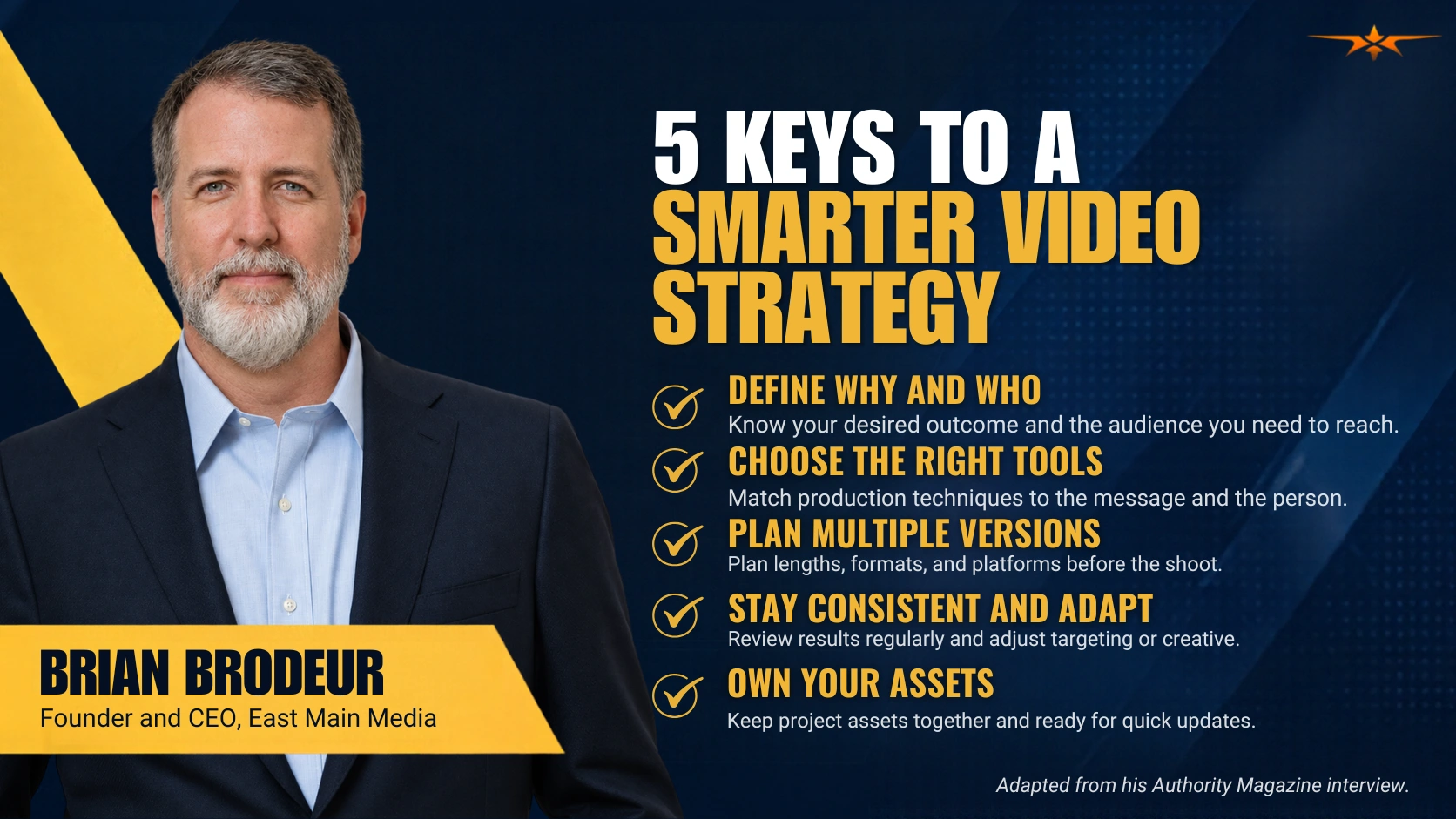
A strong video project should not begin with the camera. It should begin with a clear reason for making the video, a defined audience, and an understanding of what success should look like once the content is released.
Brian Brodeur is founder and CEO of East Main Media, a production company that has spent more than two decades creating strategy-driven video content. His career spans early DVD production through modern multi-platform campaigns, combining technical production experience with marketing strategy and audience understanding.
For Beverly Boy Productions, Brodeur’s interview connects audience strategy with practical decisions about filming, deliverables, campaign review, and asset management.
Define the Audience Before Setting Up the Camera
Brodeur traces his understanding of video strategy to a music instructional DVD project that reached a highly specific audience of musicians and drummers. The experience taught him that success did not require the widest possible audience, but the right audience receiving content designed specifically for them.
That same thinking can shape Beverly Boy’s pre-production process. Before deciding on cameras, locations, interview questions, or visual style, the client and production team can establish who needs to see the video, what they should understand, and what action or perception the project is intended to influence.
Those answers affect nearly every production choice. Tone, music, runtime, speakers, B-roll, graphics, and distribution formats can all change depending on who the audience is and what the video needs to accomplish.
Choose the Right Production Method for the Message
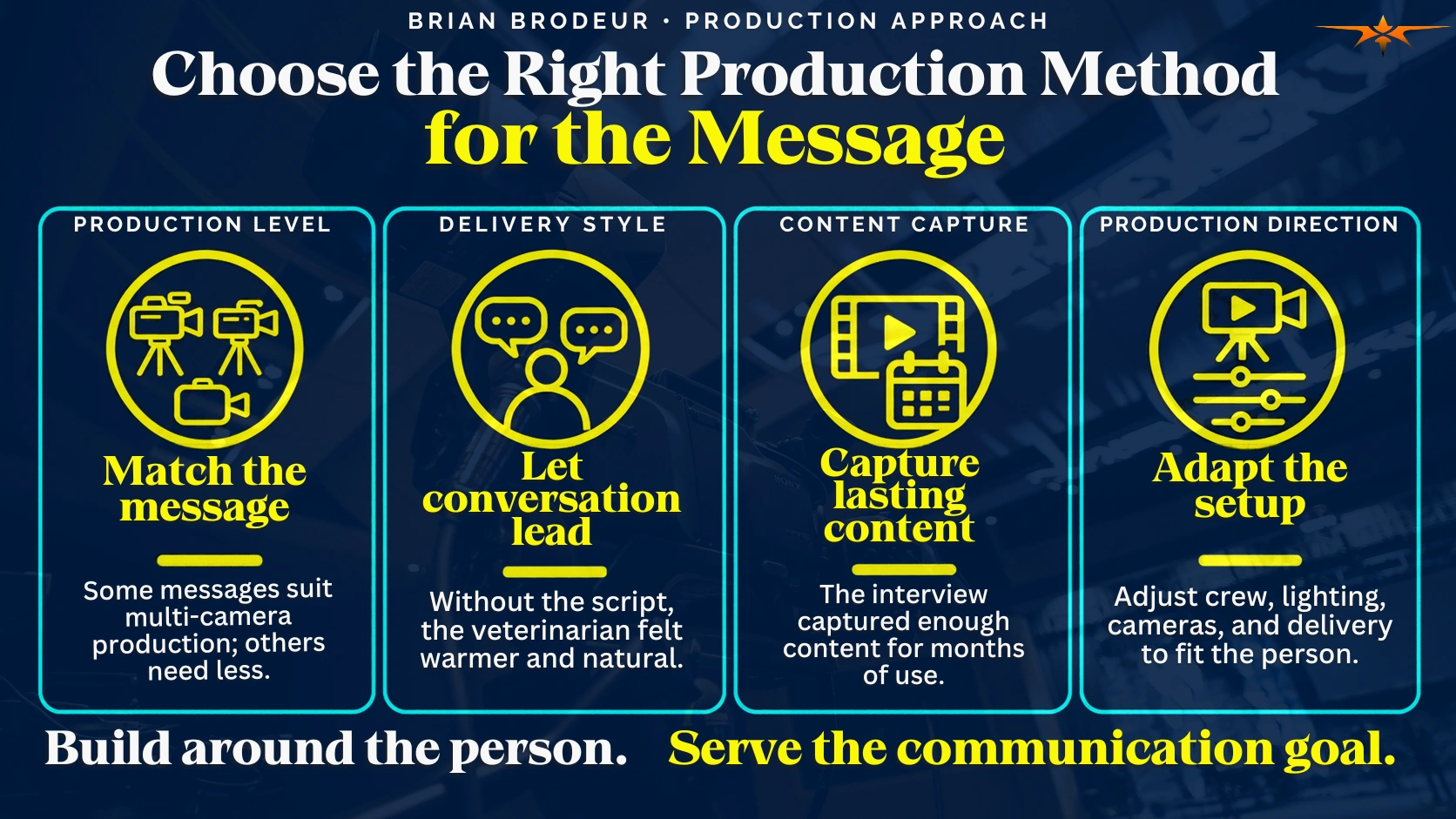
Brodeur warns against assuming that every project needs the same production level. Sometimes a polished multi-camera production is appropriate, while other messages may work better with a simpler, more immediate format.
He gives an example involving a veterinarian who struggled with scripted teleprompter delivery. Once the script was removed and she answered questions conversationally, her performance became warmer and more natural, while the production still captured enough content for months of distribution.
That is where experienced production direction matters. Beverly Boy can adjust interview style, crew size, lighting, teleprompter use, camera configuration, and delivery method around the person and the communication goal instead of forcing every subject into the same setup.
Plan Multiple Deliverables Before the Shoot
Brodeur’s third formal strategy is to plan for multiple versions before filming begins. A single production may need different lengths, aspect ratios, calls to action, or platform-specific edits, and deciding that after the shoot can create unnecessary additional costs.
For Beverly Boy, that means asking about deliverables during pre-production rather than during the final edit. If a client needs a website film, 30-second social cut, vertical Reel, paid campaign version, and shorter clips, the crew can frame interviews and B-roll so those formats are supported from the start.
One well-planned production day can then generate a larger library of usable material. The value comes from capturing the right coverage once instead of returning later because an important format was not considered.
Build Consistency Into the Production Calendar
Brodeur argues that one video is not a campaign and that brands need enough time to see what works. A longer production and publishing rhythm creates repeated audience exposure while also producing enough performance information to make useful changes.
For Beverly Boy, recurring production can be structured around monthly, quarterly, or campaign-based shoot days rather than isolated requests. That makes it easier to maintain consistent visual quality while still adjusting topics, messaging, speakers, and formats as the audience response becomes clearer.
Consistency does not mean repeating the same creative forever. It means creating enough continuity to learn what deserves to change.
Let Performance Data Shape the Next Shoot
Brodeur recommends building campaign review into the calendar from the beginning. Teams should look at which videos and platforms perform well, whether targeting needs to change, and whether the creative itself needs to evolve.
He describes a seasonal campaign where the original music worked well during autumn but performed poorly when reused in spring and summer. Changing the score also changed the pace of the edit, and the revised version performed better.
That creates a useful production cycle for Beverly Boy clients: plan, film, publish, review, and then use the findings to sharpen the next round. Performance data can influence music, pacing, topics, speakers, platforms, and even the production style chosen for future content.
Keep Production Assets Ready for Change
Brodeur’s fifth formal strategy is to maintain control and organization of the production assets. If footage, project files, and edit materials are scattered across different vendors or unavailable when a campaign needs to change, even good performance data may be difficult to act on.
For a Beverly Boy production, organized footage and project management can make future edits easier. A client may later need a pricing update, new call to action, shorter version, revised campaign message, or additional cut using previously captured footage.
Planning for those possibilities gives the content a longer useful life and helps reduce the need to reshoot material that already exists.
Use Technology in Service of the Story
Brodeur expects AI to affect production and delivery, but his broader philosophy is to use technology in service of the creative process rather than allowing new tools to dictate the work. He argues that good ideas, authentic human moments, and messages that resonate with audiences remain the standard regardless of how the content is produced.
That is a useful principle as Beverly Boy evaluates new production tools. For Beverly Boy, AI-assisted workflows should support a clear message, appropriate visuals, and sound choices that give the intended audience a reason to care.
Turn the Strategy Into a Production Plan
Beverly Boy Productions can help turn your communication goals into a production plan covering crew coordination, filming, interviews, B-roll, editing, and delivery.
Planning a video campaign? Contact Beverly Boy to discuss your audience, required versions, and footage needs before filming begins.
Team Beverly Boy’s Takeaway
Beverly Boy’s takeaway from Brodeur’s interview is that clear strategy can help prevent avoidable production work. Clear audience goals, the right production method, planned deliverables, and organized assets help each shoot create more useful material and make future changes easier.

Conclusion
Video production becomes more valuable when every creative and technical choice has a reason behind it. Brodeur’s experience shows that the strongest campaigns connect audience strategy to production planning, then use real performance data to improve what comes next.
This article is based on Brian Brodeur’s Authority Magazine interview with Tavares Beverly. Read the full interview on Medium.