
What Video Teams Can Learn from Kelly Hughes About Delegation, Feedback, and Creative Focus
Creative teams often run into the same problem as founders: the person with the strongest vision can become responsible for too many things at once.
Kelly Hughes is the founder and artist behind Kelly Hughes Designs, a personalized gift brand she launched in 2003. Her background in design, retail buying, merchandising, and product development shaped a business built around her own illustrations and creative direction.
Her Authority Magazine interview focuses on delegation, adaptability, collaboration, customer feedback, and staying focused on what makes the work distinctive. For Beverly Boy, those lessons translate naturally to video production, where creative quality depends on knowing what deserves direct attention and what should be trusted to the wider team.
Delegate Without Giving Up the Vision
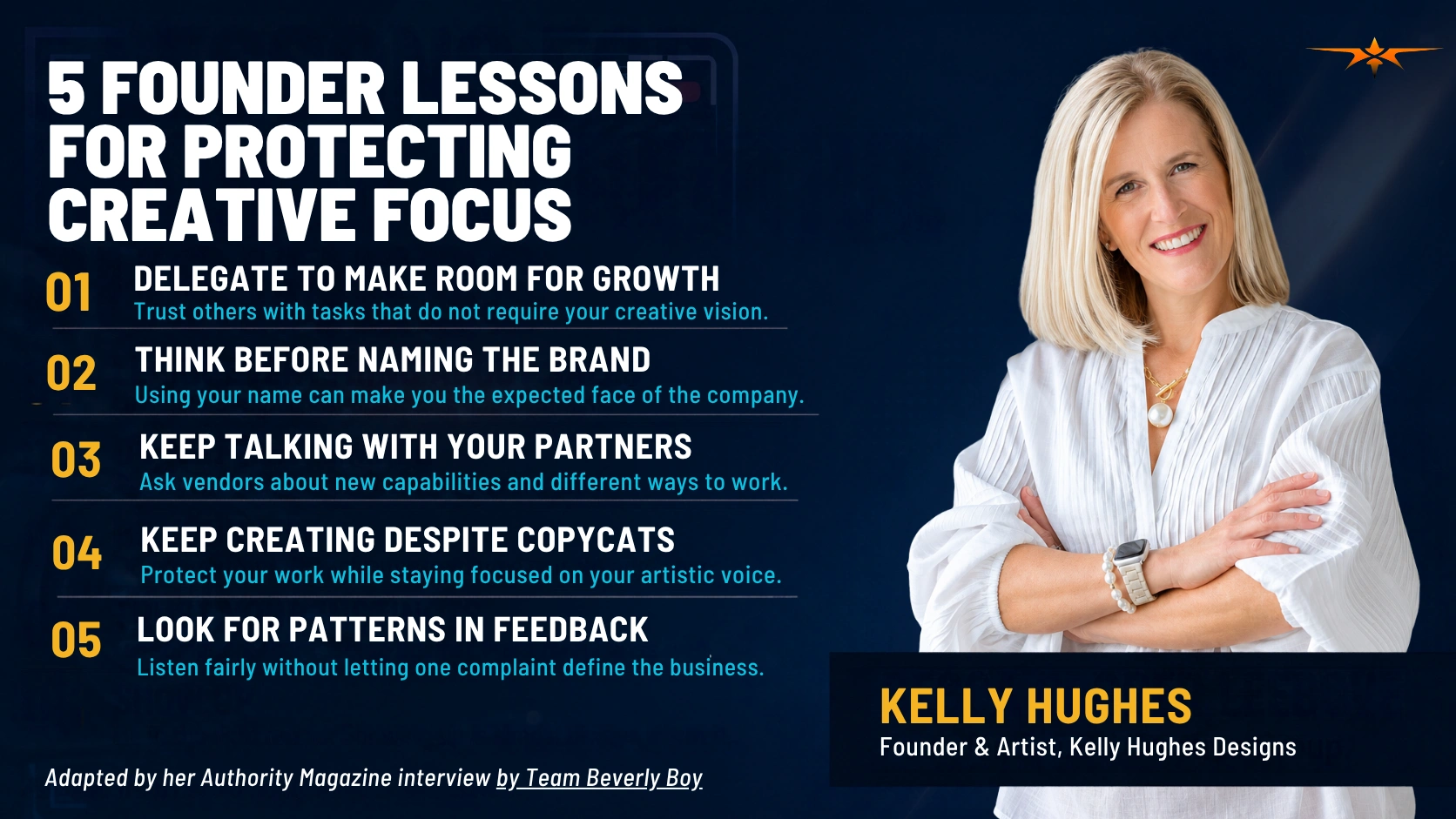
Hughes says giving up control is difficult but necessary for growth. After years of handling nearly every detail herself, she learned to identify the work that truly required her creative vision and find trusted help for the rest.
Video production requires the same distinction. A producer or director may need to own the story direction, client relationship, or final creative decisions without personally controlling every technical or administrative task.
For Beverly Boy, delegation works when specialists have clear ownership while the central objective remains consistent.
Test Before Committing Too Much
One of Hughes’ early mistakes came from ordering a large quantity of holiday cards because the lower unit cost looked attractive. Some designs did not sell, and a printed year made the remaining inventory increasingly outdated.
Her lesson was to test demand in smaller quantities and consider total risk rather than unit cost alone.
The same principle can help video campaigns. Before committing to a large batch of episodes, versions, or locations, a client can test the core idea with a pilot, initial cut, or smaller content set. Early evidence can reveal whether the message and format deserve to scale.
Ask Partners What They See
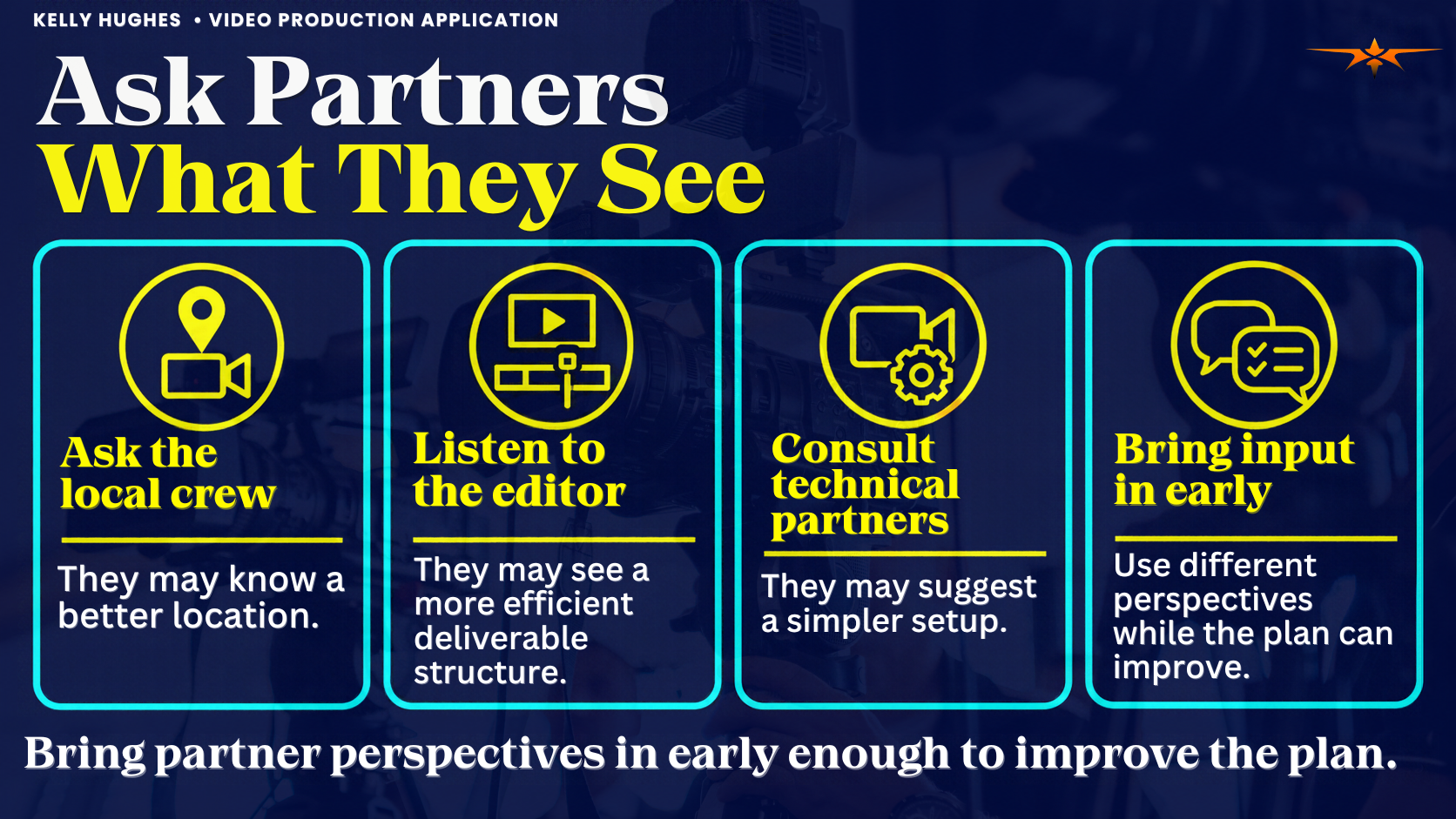
Hughes recommends regular conversations with vendors, manufacturers, and other business partners because they often see opportunities or problems from a different angle.
That applies directly to production. A local crew may know a better location, an editor may see a more efficient deliverable structure, or a technical partner may suggest a simpler setup.
For Beverly Boy, useful collaboration means bringing those perspectives in early enough to improve the plan.
Protect the Creative Identity
Hughes says copycats can be frustrating, but she has learned not to spend so much time watching competitors that she loses focus on her own work. Her response is to keep creating from the perspective and artistic voice that others cannot duplicate.
Video marketing can become generic when companies chase whatever competitors are doing. References can help, but they should not replace the client’s own story.
A stronger production question is: What can this organization credibly say that no one else can say in quite the same way?
That is usually more valuable than copying a visual trend.
Look for Patterns in Feedback
Hughes says criticism can feel personal when the founder’s own name and artwork are tied to the product. Over time, she learned to listen fairly and look for patterns rather than allowing one reaction to outweigh the experiences of many customers.
That distinction matters during video review. One stakeholder may simply prefer different music or pacing. But if several people independently misunderstand the same point, the communication may need work.
For Beverly Boy, feedback becomes more useful when the team separates individual preference from repeated signals.
Adapt Without Chasing Every Trend
Hughes also warns against changing direction every time something new becomes popular. Some of her designs have remained customer favorites for nearly two decades, reminding her that staying true to a strength can matter as much as keeping up with the market.
Video production faces constant pressure from new formats, platforms, tools, and editing styles. Some are useful. Others are temporary.
The question is whether the trend improves the story, reaches the intended audience, or supports the objective. If it does not, novelty alone is not a reason to use it.
Choose the Right Person for the Camera
Hughes also reflects on using her own name in the company and how that created an expectation that she would personally become the face of the brand, even though she is naturally private.
The founder is not automatically the best spokesperson for every video. Depending on the message, an executive, employee, customer, subject-matter expert, or professional presenter may be more effective.
For Beverly Boy, the right on-camera choice should come from credibility, comfort, and story relevance rather than hierarchy.
Team Beverly Boy’s Takeaway
Hughes’ strongest production lesson is that creative control should be selective, not total.
For Beverly Boy, the priority is to protect the decisions that define the story while giving skilled collaborators room to improve the work around it.

Conclusion
Strong creative production depends on knowing what to protect, what to test, what to delegate, and what feedback deserves action.
Hughes’ experience shows that focus improves when teams trust specialists, listen for patterns, and stay grounded in a distinctive point of view.
This article is based on an interview originally published by Authority Magazine. Read the full interview here.
