
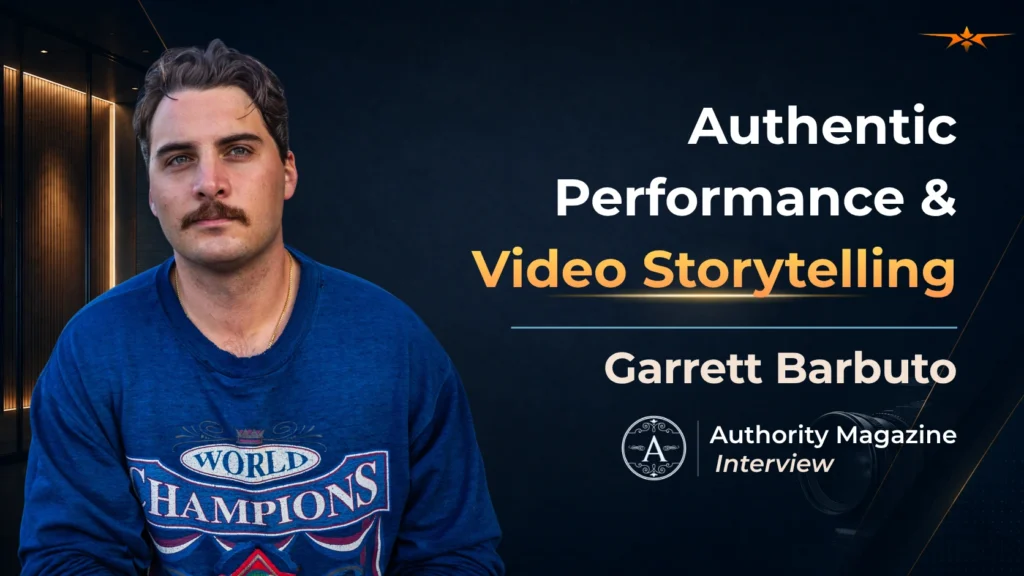
Garrett Barbuto on Authentic Performance and Video Storytelling
Strong performance is rarely just about talent. It comes from practice, feedback, clarity, and knowing what story is worth telling.
Garrett Barbuto is a Calgary-based rock artist originally from South Porcupine, Ontario. After teaching himself guitar at 20, he built experience through live performance with The Hot Pursuit while developing a songwriting style centered on Canadian identity and personal storytelling.
His Authority Magazine interview is about music, but several of his lessons translate naturally to video production, especially when working with performers, executives, interview subjects, and other people who need to communicate authentically on camera.
Practice the Performance, Not Just the Promotion
Barbuto’s second formal lesson is to make live performance his strongest skill, prioritizing musicianship over social media engagement.
The video equivalent is straightforward. A polished set, strong graphics, and an expensive camera cannot compensate for someone who is uncomfortable delivering the message.
For Beverly Boy, preparation should include the person in front of the camera, not only the equipment around them. Short rehearsals, conversational run-throughs, and clear direction can help an executive, spokesperson, or performer become more confident before the final take.
Use Feedback as a Creative Advantage
Barbuto describes meeting veteran musician Jim Baxter after moving to Calgary. Baxter offered to help him improve his guitar playing, and Barbuto says that experience started a habit of actively seeking feedback from other musicians to improve his live performance.
Video teams benefit from the same openness. A DP may notice a visual weakness, an editor may see where the story slows down, or a producer may hear that an interview answer is not as clear as the speaker thinks it is.
For Beverly Boy, feedback works best when it is treated as information about the work rather than criticism of the person.
Define the Goal, Then Let It Evolve
Barbuto advises artists to identify their goals as early as possible while giving themselves enough flexibility to let those goals change.
Video projects need that balance too. Before production, the client and producer should know what the content is meant to accomplish, whether that is recruiting employees, explaining a service, supporting a campaign, documenting an event, or strengthening trust.
The execution can evolve as the project develops. The important part is knowing what success means before creative decisions begin competing with one another.
Tell the Story You Actually Know
Barbuto’s fifth lesson is especially relevant to video storytelling: tell the stories you know instead of trying to sound universally relatable.
He applies that principle to his own songwriting by focusing on uniquely Canadian stories and his perspective as a second-generation Canadian living in Calgary.
Brand videos can become generic for the same reason songs can. Companies often reach for broad statements about innovation, passion, or quality instead of explaining the specific experiences that actually shaped them.
For Beverly Boy, stronger interviews usually come from asking for concrete moments: What happened? Who was involved? What changed? Why did it matter?
Specific stories often become more relatable precisely because they are specific.
Let Vulnerability Create Connection
Barbuto says he connects with audiences through vulnerable and direct storytelling on stage. He discusses failures and flaws rather than avoiding them, while also rehearsing concise phrases that help draw listeners into the story.
That offers a useful lesson for interviews.
Authenticity does not mean asking someone to speak without preparation. A person can rehearse key ideas while still sounding natural and personal.
For Beverly Boy, good interview preparation can help subjects organize their thoughts without turning the answer into a memorized corporate statement.
Build Creative Work Collaboratively
Barbuto describes songwriting as a collaborative process built around small ideas, clear responsibilities, deadlines, and accountability between partners.
Video production depends on the same structure.
The producer, director, DP, client, editor, and other collaborators do not need to arrive with a finished solution individually. They need to understand what each person is responsible for and what the next decision requires.
Creative collaboration becomes easier when ownership is clear.
Focus on Consistent Output
Barbuto says he does not measure creative progress only by whether every song is great. His focus is productivity, because completing work keeps the creative process moving even when the latest result is not his strongest.
Video teams can apply that without sacrificing quality.
Not every first concept, interview answer, or rough cut will be the final one. The purpose of an early version is often to reveal what needs improvement.
For Beverly Boy, progress comes from creating something concrete enough to evaluate, then refining it with better information.
Team Beverly Boy’s Takeaway
Barbuto’s strongest production lesson is that authentic communication is still a practiced skill. Preparation, feedback, collaboration, and specificity help people become more believable, not less natural.
For Beverly Boy, that means helping clients and subjects clarify what they want to say, rehearse enough to feel comfortable, and then create enough space for their real personality and experience to come through.
Conclusion
Good video storytelling does not require everyone to sound universal. It requires people to understand their message, trust the process, and tell the story they actually know.
Barbuto’s experience reinforces a useful creative principle: practice the craft, welcome feedback, work with people you trust, and let specificity create the connection.
This article is based on an interview originally published by Authority Magazine. Read the full interview here.
