

WHAT IS THE DIFFERENCE BETWEEN NATURALISTIC AND THEATRICAL MISE-EN-SCÈNE?
Mise-en-scène is a fundamental film concept encompassing everything visible within a frame, including the arrangement of visual elements, set design, and the atmosphere shaped by props and the actors’ performances. A strong grasp of mise-en-scène helps viewers understand how movies convey emotions, explore themes, and achieve narrative depth. Among the various mise-en-scène approaches, the two most prominent are naturalistic and theatrical styles, each offering distinct cinematic effects and unique audience experiences.
Naturalistic and theatrical mise-en-scène represent two ends of a spectrum through which filmmakers can present visual storytelling. These approaches differ significantly in design choices, mood, and the relationship they create between the film and the audience. By analyzing these styles, viewers and filmmakers alike can gain insight into how visual elements shape the impact and message of a film.
NATURALISTIC MISE-EN-SCÈNE: ACHIEVING REALISM IN CINEMA
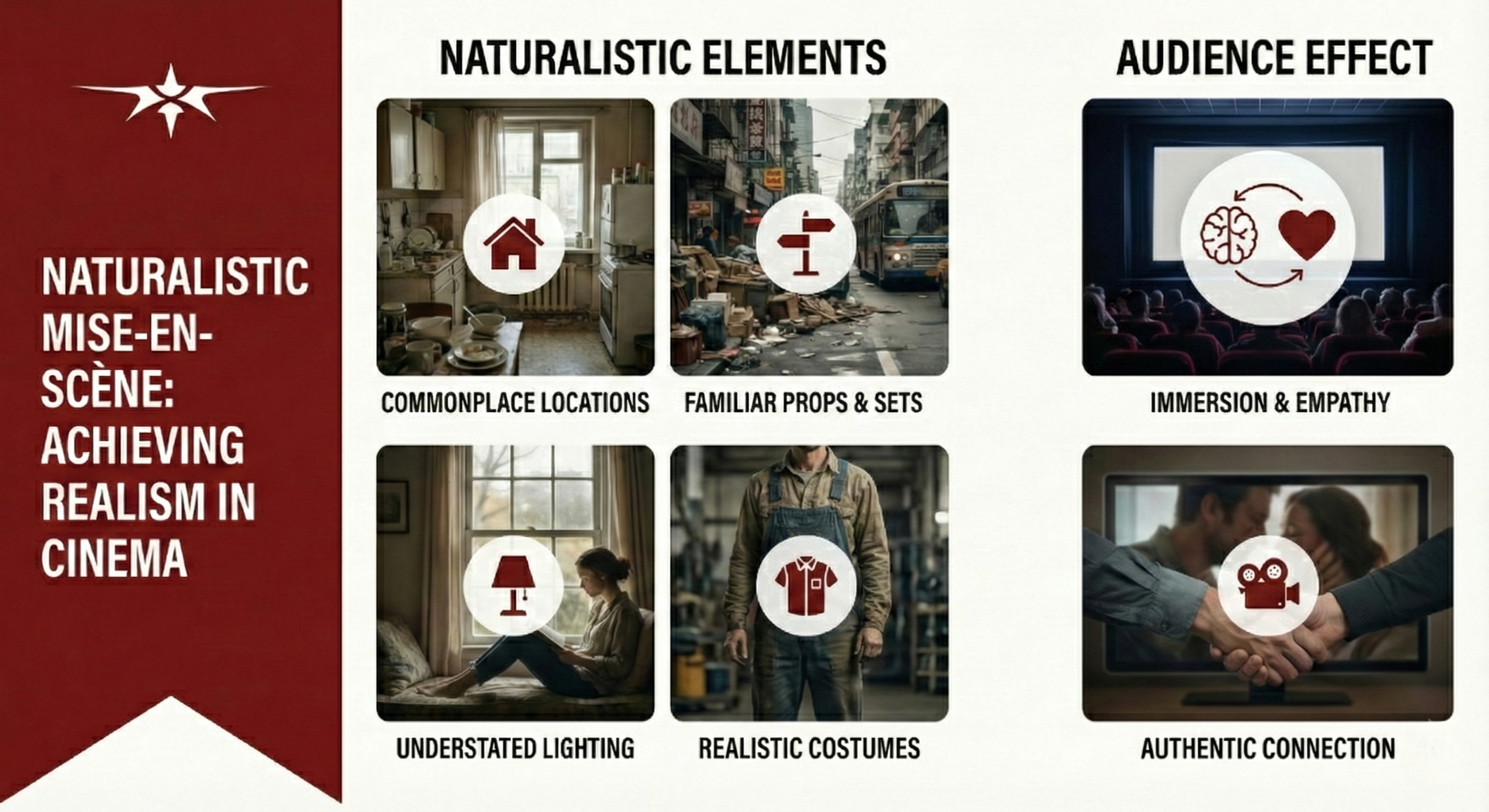
Naturalistic mise-en-scène focuses on believability and authenticity, striving to represent real life as truthfully as possible. This technique brings to the screen commonplace locations such as homes, streets, and workplaces, using familiar props, genuine set designs, and understated lighting. Costumes reflect the characters’ actual social status or occupation and are chosen for their practicality and realism.
The realistic approach in naturalistic mise-en-scène aims to immerse the audience by making the on-screen world feel relatable and true to life. The subtle use of lighting and natural settings encourages viewers to empathize with the characters, resulting in emotionally resonant and convincing storytelling. Filmmakers employ this style to foster authentic connections between the audience and the events on screen.
THEATRICAL VISUAL DESIGN IN FILM: STYLIZED CINEMATIC EXPRESSION
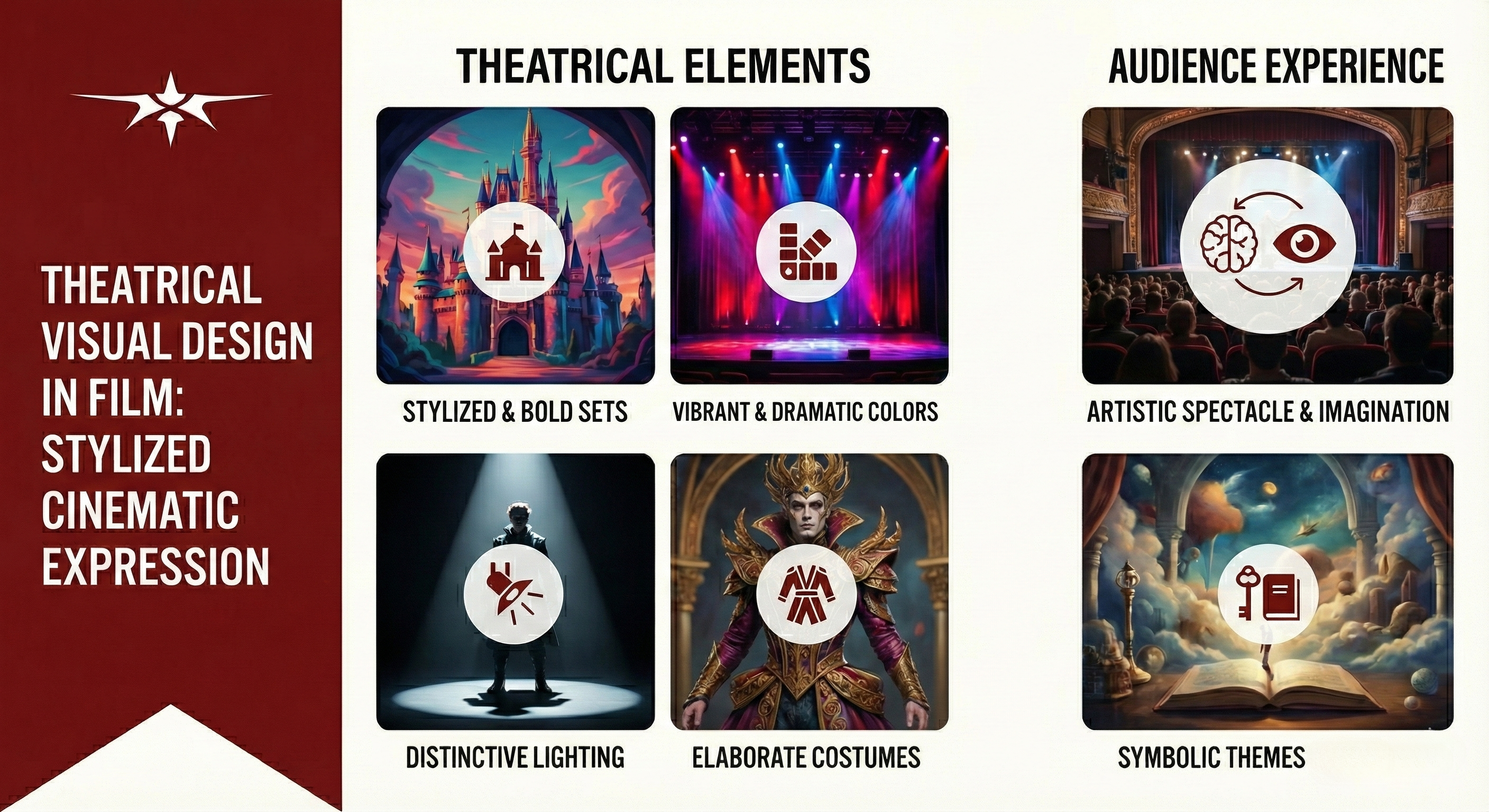
Theatrical mise-en-scène presents an alternative approach, where artifice, stylization, and dramatic visual flair are celebrated. In this style, filmmakers intentionally use bold, unconventional set designs, vibrant colors, and elaborate costumes to heighten artistic expression. Drawing inspiration from stage theater traditions, theatrical mise-en-scène often foregrounds creativity and spectacle rather than strict adherence to realism.
This approach allows directors and designers to play with imaginative visuals, distinctive lighting choices, and heightened emotions. Theatrical mise-en-scène can blur the boundaries between reality and fantasy, sometimes reminding viewers that they are witnessing a constructed work of art. Such stylization invites audiences into unique cinematic worlds, enhancing the impact of symbolic themes and visual storytelling.
COMPARING ELEMENTS OF REALISM AND STYLIZATION IN MISE-EN-SCÈNE
The key distinctions between naturalistic and theatrical mise-en-scène are best understood by examining specific creative components:
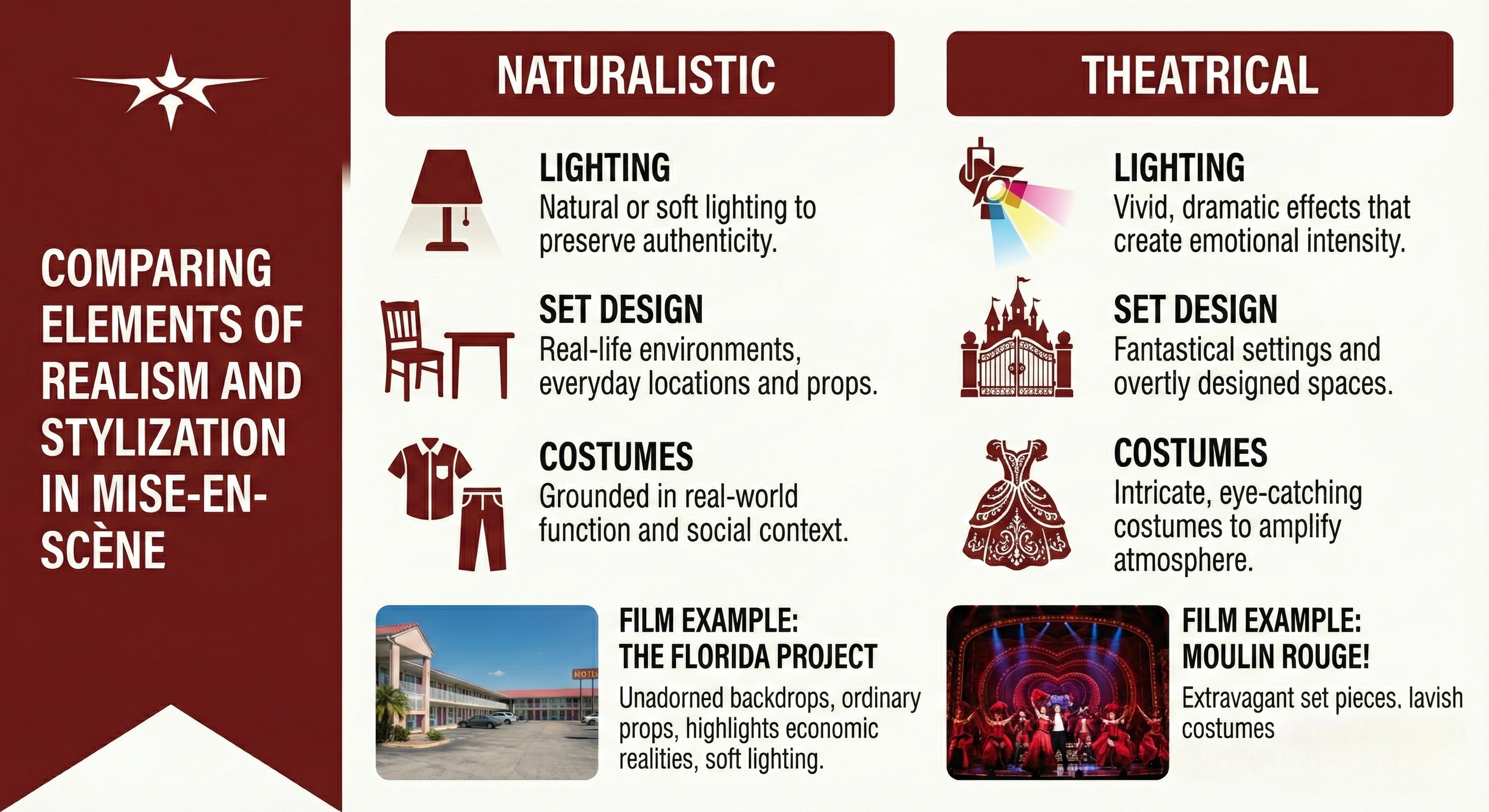
• Lighting: Realistic films frequently use natural or soft lighting to preserve authenticity, while stylized productions feature vivid, dramatic effects that create emotional intensity and emphasize the film’s visual identity.
• Set Design: Real-life environments dominate in naturalistic works, offering everyday locations and props. Theatrical approaches may feature fantastical settings and overtly designed spaces that prioritize dramatic effect.
• Costumes: In naturalistic cinema, clothing choices are grounded in real-world function and social context. Theatrical mise-en-scène relies on intricate, eye-catching costumes to amplify atmosphere and character presence.
NATURALISTIC AND THEATRICAL MISE-EN-SCÈNE: FILM EXAMPLES
To clarify the practical differences, consider the following examples. “The Florida Project” is renowned for its naturalistic mise-en-scène, depicting daily life in a budget motel near Disney World with unadorned backdrops and production design that highlights economic realities. Lighting is soft and unmanipulated, and props are ordinary, strengthening the film’s sense of realism and emotional resonance.
In contrast, “Moulin Rouge!” exemplifies stylized mise-en-scène with its extravagant set pieces, lavish costumes, and visually daring lighting schemes. The directors use imaginative visuals and heightened dramatic elements, crafting a cinematic world where spectacle and symbolism drive emotional engagement.
THE ROLE OF LIGHTING AND SET DESIGN IN CINEMATIC ATMOSPHERE
Lighting and set design are critical in shaping the tone of a film’s mise-en-scène. In naturalistic cinema, lighting often mimics daylight or everyday indoor light, supporting the film’s realistic atmosphere. Real-world environments are carefully recreated or selected to maintain credibility and draw viewers into recognizable spaces.
Conversely, in stylized or theatrical visual design, lighting strategies can be far less subtle. Directors might use intense color contrasts, spotlights, or unusual shadows to make statements about character or theme. Creative set construction can further blur the separation between reality and artistry, helping viewers see the film as an imaginative or symbolic work.
IMPORTANCE OF RECOGNIZING MISE-EN-SCÈNE APPROACHES
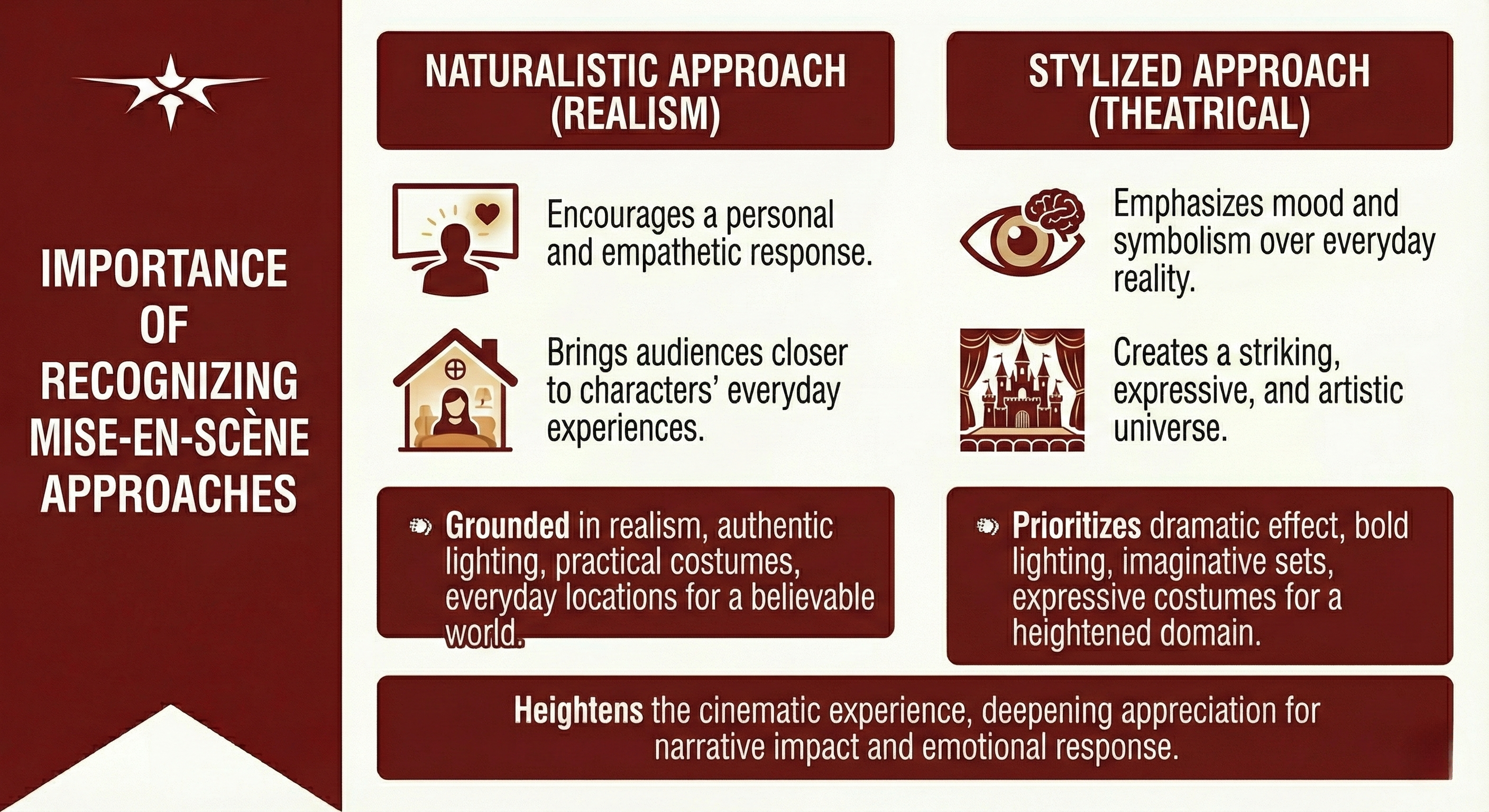
Understanding the distinction between realism in mise-en-scène and stylized cinematic design deepens a viewer’s appreciation for how films transmit meaning and emotion. A naturalistic approach brings audiences closer to the characters’ everyday experiences, encouraging a personal and empathetic response. Stylized mise-en-scène, meanwhile, creates a striking, expressive universe where mood and symbolism are emphasized over everyday reality.
Each approach plays a vital role in filmmaking, allowing directors to adjust storytelling methods according to the intended emotional and thematic impact. Learning to recognize these visual strategies heightens the experience for both filmmakers and audiences.
In summary, the key characteristics are:
• Naturalistic mise-en-scène is grounded in realism, utilizing authentic lighting, practical costume design, and everyday locations to build a believable world.
• Theatrical or stylized mise-en-scène prioritizes dramatic effect, employing bold lighting, imaginative sets, and expressive costumes to immerse the audience in a heightened, artistic domain.
By exploring these visual storytelling methods, both creators and cinephiles can better appreciate how cinematic atmosphere and design influence narrative impact and emotional response.
