
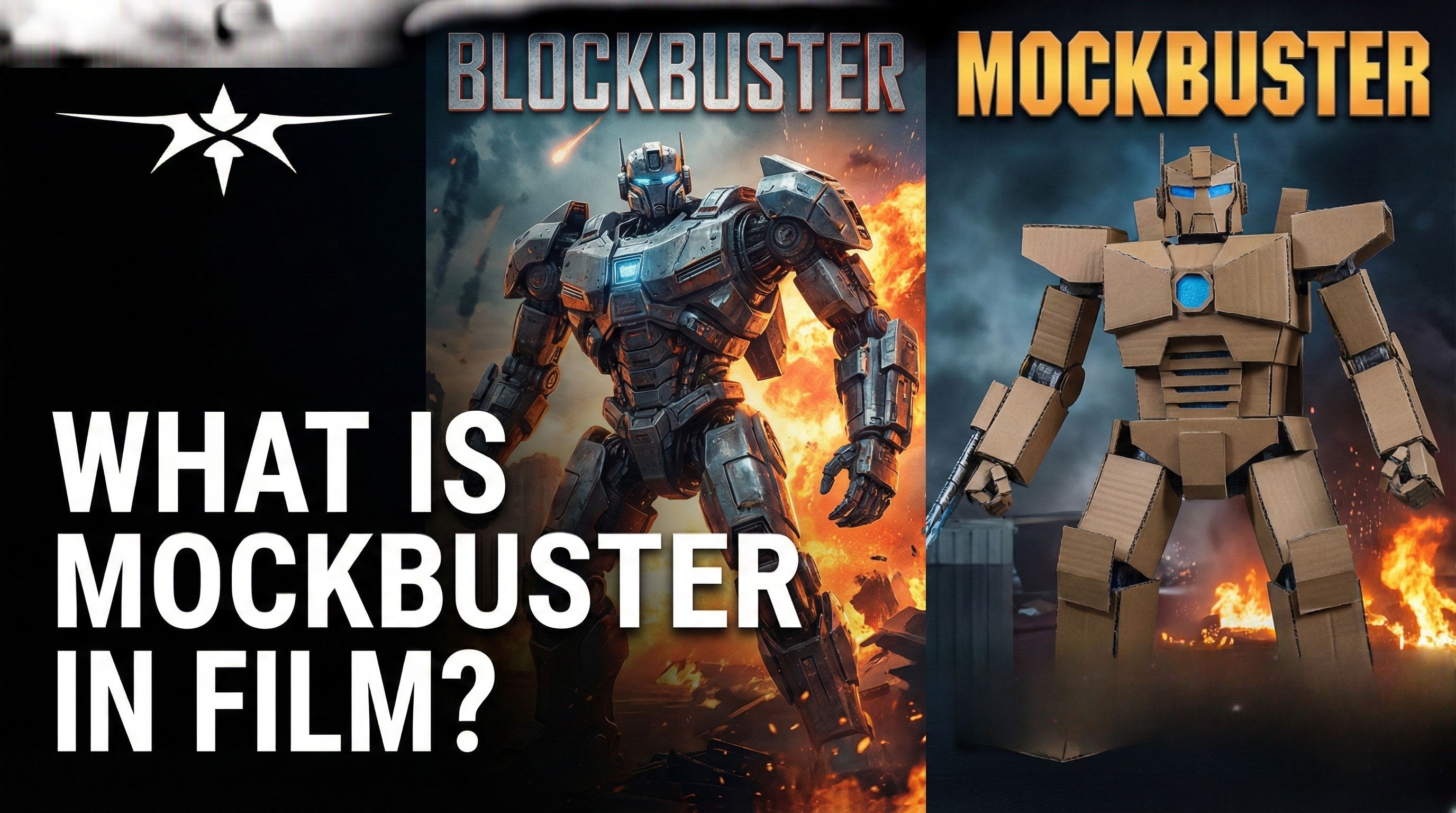
WHAT IS MOCKBUSTER IN FILM?
A mockbuster in film is a low-budget movie produced to take advantage of a major blockbuster’s popularity. Typically released near the same time as the original hit, mockbusters use similar titles, themes, or concepts to attract viewers who might confuse them with big studio productions. Although these films often have limited production quality and smaller budgets, mockbusters have carved out a notable place within the entertainment industry. Their existence sparks ongoing debates about creativity, ethics, and the business side of filmmaking.
MOCKBUSTERS: RECOGNIZING ORIGINS AND NOTABLE EXAMPLES
The rise of mockbusters can be traced to the early 2000s, particularly with studios like The Asylum gaining notoriety for creating films that closely mimic popular blockbusters. You might recognize titles such as “Transmorphers,” which appeared around the same time as “Transformers,” or “Snakes on a Train,” closely following “Snakes on a Plane.” Filmmakers behind these movies often aim for rapid financial gains and quick distribution, leveraging the existing popularity of large franchises. By adopting similar names and plotlines, they tap into audiences who are already interested in highly anticipated releases. This approach can also provide a shortcut to visibility without significant marketing costs.
The practice of making mockbusters isn’t purely about chasing profits; it also highlights how entertainment reacts to audience demand. When a major film generates hype, you can expect a cluster of quickly-produced films targeting the same buzz. Typically, these productions operate on tight budgets, often using resources far more limited than those available to big studios. Even so, mockbusters have become a recognized – and sometimes infamous – part of the cinematic ecosystem. Their continued presence invites discussion about what defines originality in film.
ETHICS AND CREATIVITY IN IMITATION FILMS
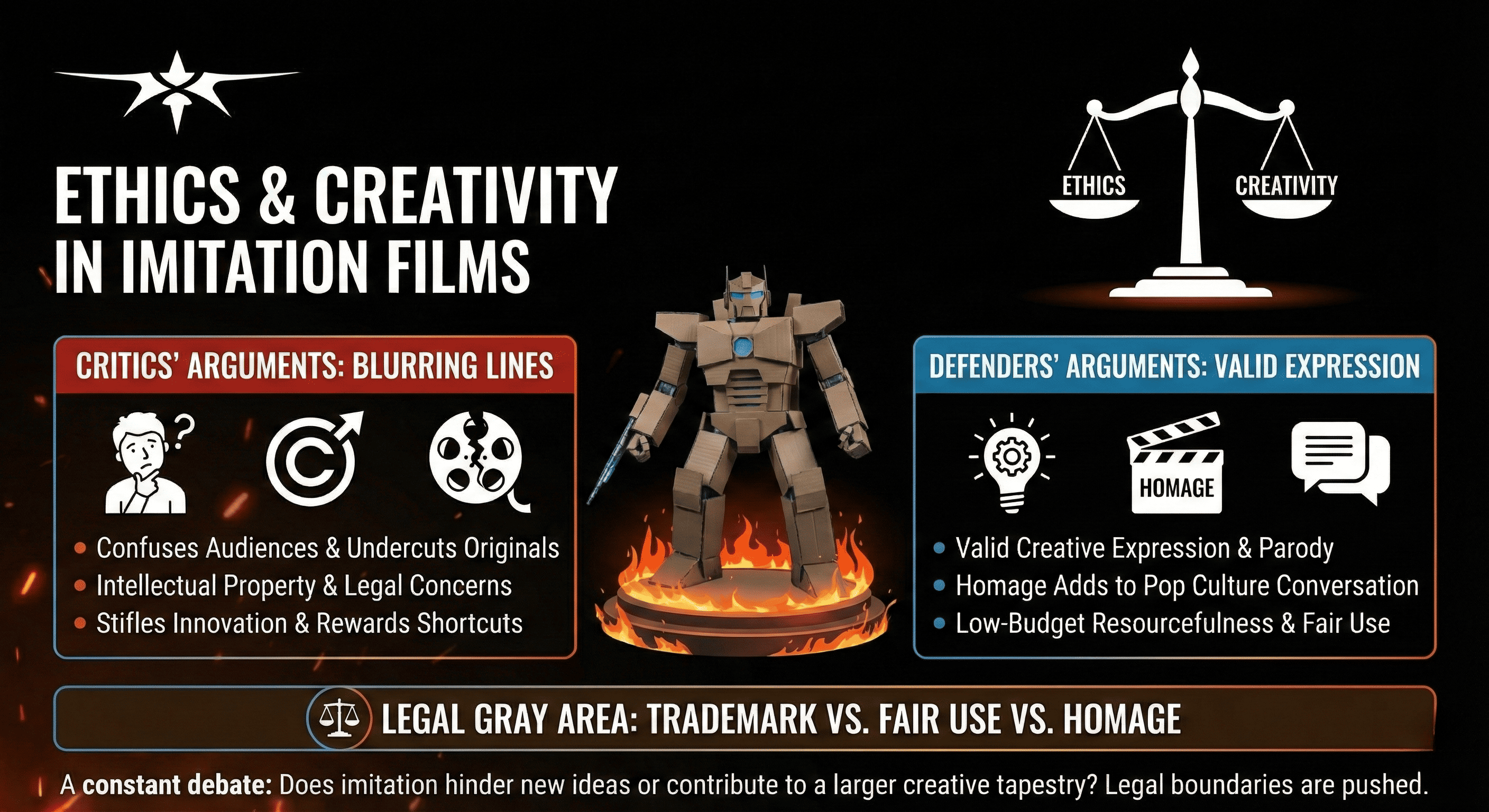
The popularity of mockbusters has sparked ongoing debate about ethics and creativity in filmmaking. Many critics claim that these movies intentionally blur the lines between original and imitation content, sometimes confusing audiences and potentially undercutting the impact of genuine blockbusters. Filmmakers may believe their ideas are being copied, while you as a viewer might find it tricky to separate an authentic studio release from a cleverly marketed mockbuster. This confusion can sometimes affect the broader industry by weakening audience trust and reducing box office earnings for original films. At the same time, there are arguments defending these productions as valid expressions of creativity in their right.
Legal discussions often center on trademark, copyright, and the gray area between inspiration and outright imitation. While mockbusters rarely cross the line into strict illegality, they push the boundaries of what is considered fair use or homage. Some creators argue that every homage adds to an ongoing conversation in pop culture, making familiar stories part of a larger media tapestry. Others ask whether drawing on blockbuster material stifles innovation by rewarding shortcuts rather than new ideas. The debate invites you, as both consumer and critic, to consider what originality truly means in a landscape where inspiration is key to creative growth.
THE NEXT PHASE FOR MOCKBUSTERS
The ongoing evolution of entertainment technology suggests that mockbusters will continue to adapt and change. As films become easier to produce and distribute, especially through digital channels, you will likely see more variety and creativity from independent studios. Fast-paced production and innovative marketing are shaping a landscape where even small teams can generate buzz. Over time, audience tastes may shift further toward content customized for personal and community interests. This dynamic creates both new opportunities and ongoing questions about creativity and authenticity in cinema.
COMPARING MOCKBUSTERS AND MAINSTREAM BLOCKBUSTERS
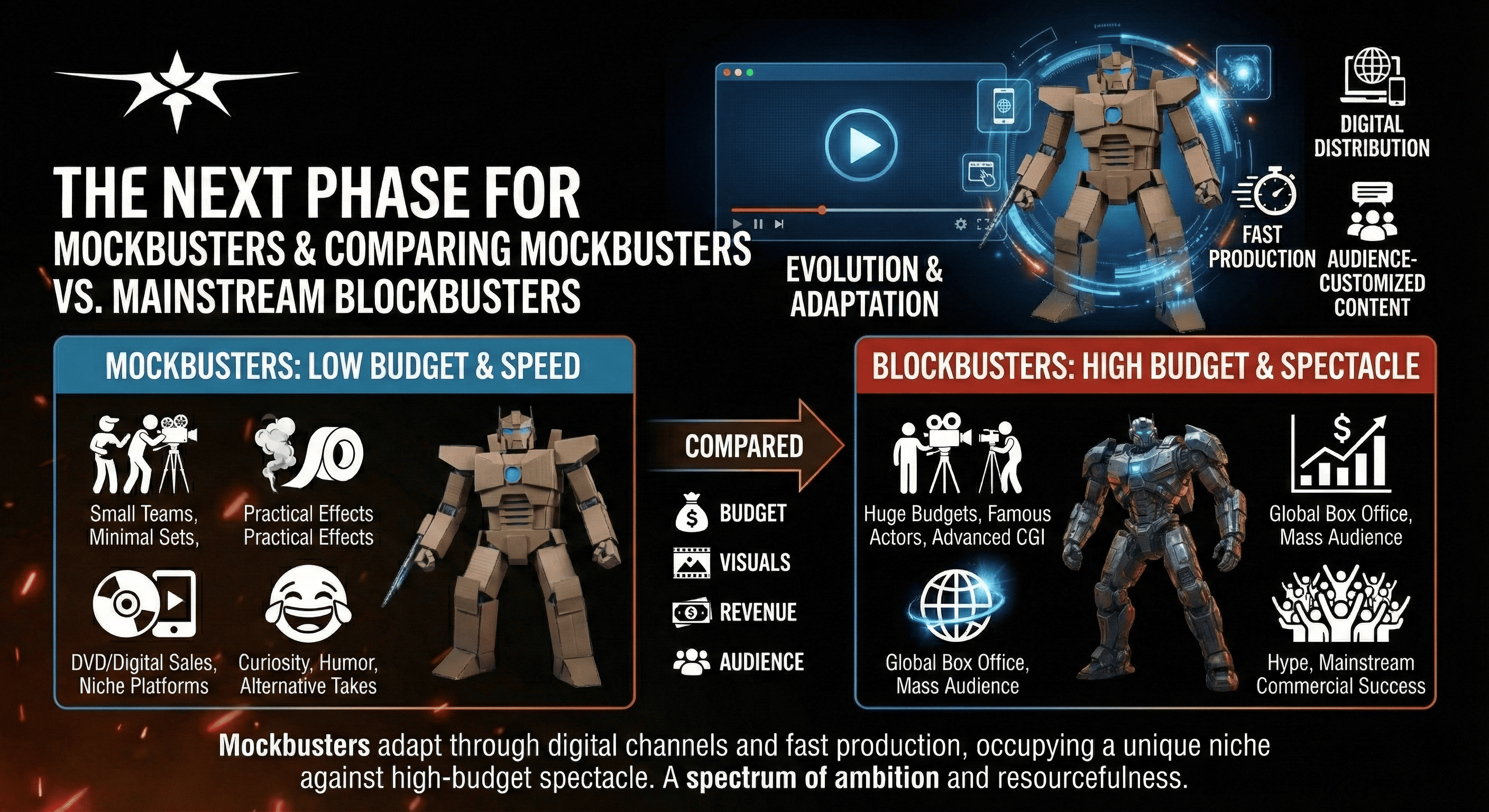
Mockbusters and mainstream blockbusters differ in almost every aspect of production. Blockbusters usually have huge budgets, which allow for famous actors, advanced special effects, and wide-reaching advertising campaigns. In contrast, most mockbusters depend on smaller teams, minimal sets, and practical effects, with little to no access to A-list talent. To compete for attention, these films often use titles and cover art designed to create instant associations with the more well-known releases.
From a business perspective, the two types of movies also rely on different revenue sources. Blockbusters make substantial profits at the global box office, often grossing hundreds of millions. However, mockbusters typically depend on sales from DVDs, digital platforms, and streaming services. Many viewers watch mockbusters out of curiosity, for humor, or to see alternative takes on familiar stories, though these films rarely reach mainstream commercial success. It’s this contrast in scale and approach that helps define the unique niche mockbusters occupy.
For most mockbusters, speed is key; production schedules are compressed to quickly capitalize on buzz. Marketing efforts, though often less visible, target the “browsing” viewer who might stumble upon a familiar-looking movie online or in stores. Some people might even choose a mockbuster thanks to its lower price, or simply because they find imitation entertaining. The way these movies are produced and sold reveals much about the economics of modern film distribution. Ultimately, you see a spectrum of movie-making where ambition and resourcefulness often trump spectacle.
INDUSTRY TRENDS AND THE REACH OF LOOK-ALIKE FILMS
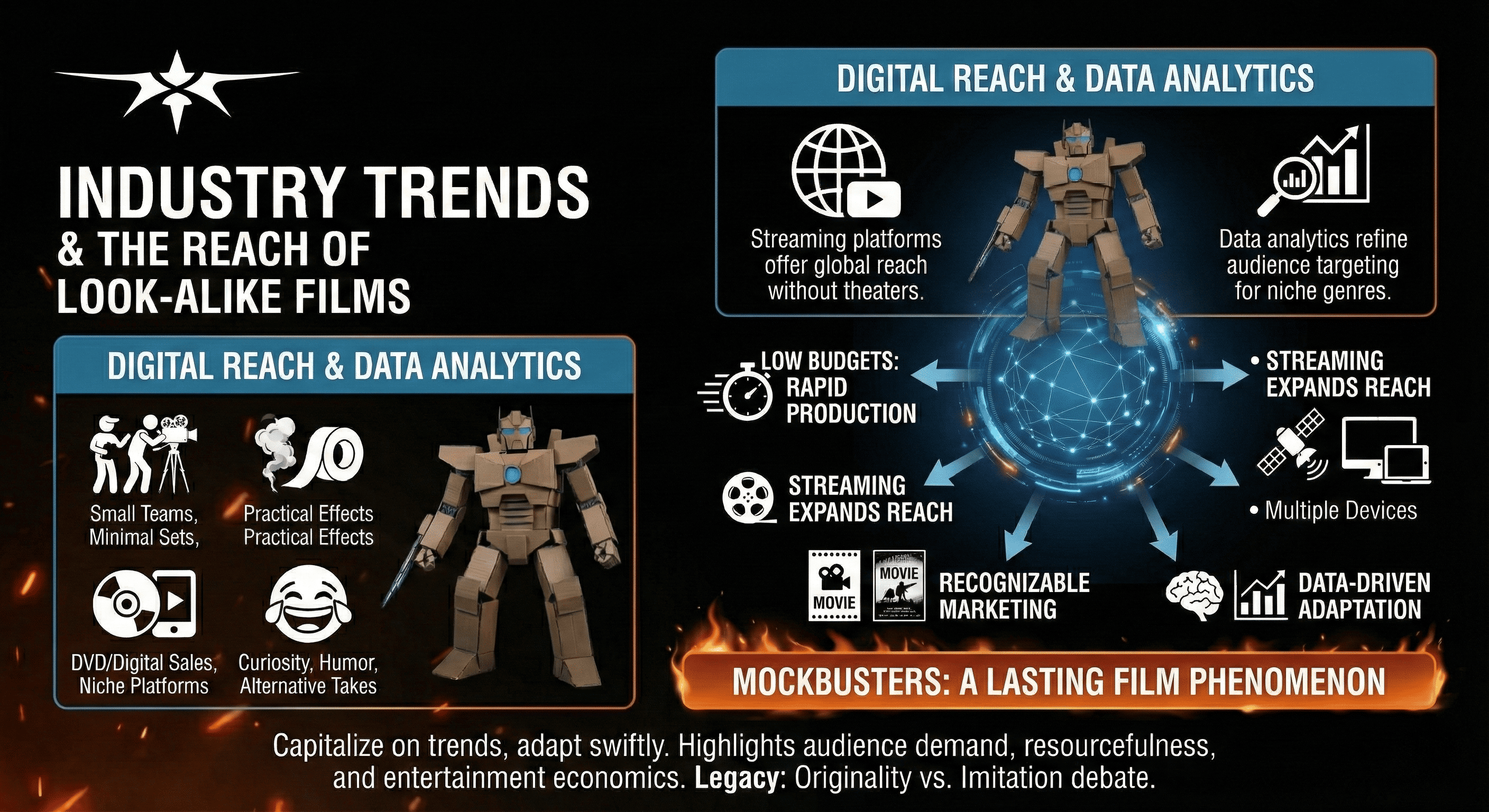
Trends in media distribution have changed how mockbusters find audiences. The rise of streaming platforms has given these low-budget films a broader reach, enabling producers to launch movies to global markets without relying on traditional theaters. Today, you might discover a mockbuster while scrolling through recommendations or exploring niche genre categories. Unlike the old model, where shelf space was limited, digital distribution makes it easier for smaller studios to compete.
Moreover, data analytics have transformed how movie makers target and refine their audiences. Producers study viewer habits and preferences to make films that cater to specific fan interests, which can drive unexpected success for even the most obscure imitations. Creating a film that appeals to a particular group—such as lovers of science fiction or monster movies—can be just as lucrative as aiming for mass-market appeal. The ability to move quickly and take advantage of trending topics further gives these studios a competitive edge. Still, balancing commercialization with ethical storytelling continues to be a persistent challenge.
- Low budgets enable rapid production and release schedules
- Streaming services expand reach to diverse international audiences
- Successful marketing relies on recognizable imagery and titles
- Data-driven decisions help studios adapt to shifting viewer demands
MOCKBUSTERS: A LASTING FILM PHENOMENON
Mockbusters have established themselves as a distinct, sometimes divisive, aspect of the modern film industry. Their ability to capitalize on trends and adapt swiftly keeps them relevant in a fast-changing media world. While questions about originality and ethics continue, these movies highlight how audience demand shapes what gets made. If you look past the surface, mockbusters reveal insights about resourcefulness and the economics of entertainment today. Their legacy encourages ongoing conversations about what innovation, imitation, and storytelling mean in film.
