

WHAT WAS THE PARAMOUNT DECREE AND WHY WAS IT IMPORTANT TO HOLLYWOOD?
The Paramount Decree stands as a pivotal moment in the history of American cinema, fundamentally reshaping Hollywood’s film industry. This landmark antitrust ruling addressed the monopolistic control exercised by major studios over film production, distribution, and exhibition. The decree is still recognized today for its lasting impact on how movies are made, distributed, and viewed, making it a cornerstone in the evolution of Hollywood’s business practices.
ORIGINS AND IMPACT OF THE PARAMOUNT DECREE
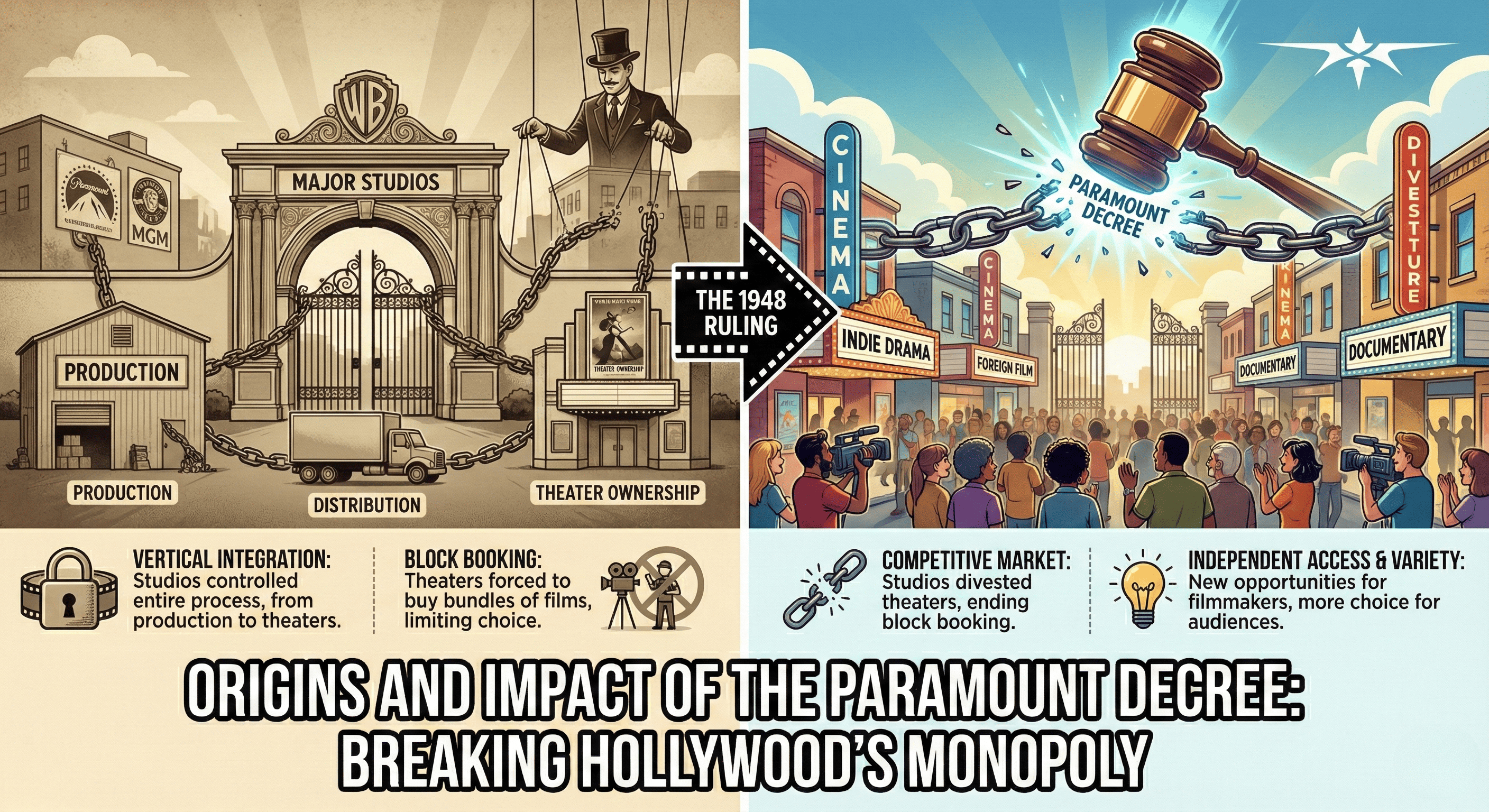
In the late 1930s and early 1940s, the U.S. Department of Justice began investigating major studios like Paramount Pictures, Warner Bros., and MGM. These companies built vertically integrated empires, controlling the entire process from film production to distribution to theater ownership. Such dominance meant that independent filmmakers had little chance to share their work with broad audiences, as studio-owned theater chains showed primarily their own films.
The anti-competitive consequences of this system drew legal scrutiny. In 1948, the U.S. Supreme Court issued the Paramount Decree, requiring studios to divest their theater holdings and halt practices like block booking, wherein theaters were forced to buy bundles of films in groups rather than choosing individual titles. This landmark decision rebalanced the film market and gave way to a more equitable, competitive environment. Independent producers suddenly had access to theaters, breaking the chokehold of the major studios. For the first time, you could see a much broader range of stories on the big screen, reflecting more than just the tastes of a handful of corporate entities.
This decree did more than end monopolistic practices; it ushered in new opportunities by dismantling long-standing barriers in Hollywood. Studios had to focus on making compelling films instead of relying on guaranteed exhibition, raising the stakes for creativity and innovation. Smaller filmmakers found a foothold, and a new era of cinematic experimentation began. As a result, moviegoers gained exposure to genres and themes that would have been sidelined under the old regime.
For you as an audience member, the Paramount Decree meant more choice and variety. It laid the groundwork for the rich diversity that characterizes today’s film industry, ensuring that stories from many backgrounds could find their way to the screen.
HOW THE DECREE TRANSFORMED COMPETITION IN HOLLYWOOD
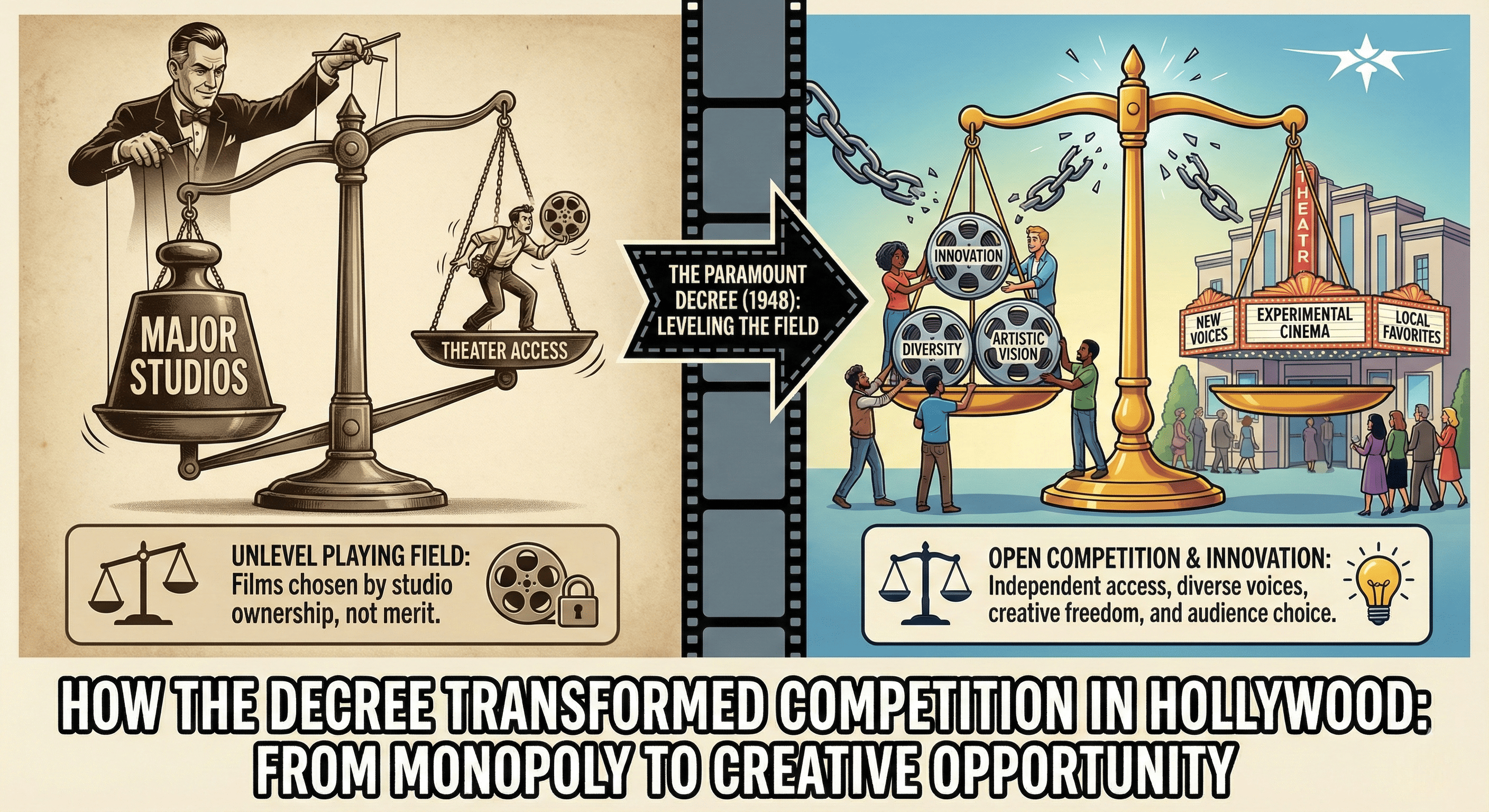
The Paramount Decree’s primary accomplishment was in leveling the playing field within the film business. By forcing major studios to part with their theater chains and stop block booking, it ensured films would be chosen for merit, not for studio ownership.
This change had a ripple effect throughout Hollywood. Independent producers could negotiate directly with theaters, reducing the power of established studios and increasing the likelihood that unique and diverse voices would be heard. Competition brought innovation, as a wider range of filmmakers experimented with new storytelling techniques and cinematic styles. Theaters, no longer beholden to studio mandates, gained the freedom to select films that suited their audiences’ tastes and local demand.
Ultimately, the Paramount Decree reshaped Hollywood into a hub for creative opportunity. The dismantling of vertical integration directly sparked a move toward more open, competitive, and artistically adventurous filmmaking. It encouraged diversity in both the types of films made and the people making them.
THE PARAMOUNT CASE AND THE RISE OF INDEPENDENT FILM
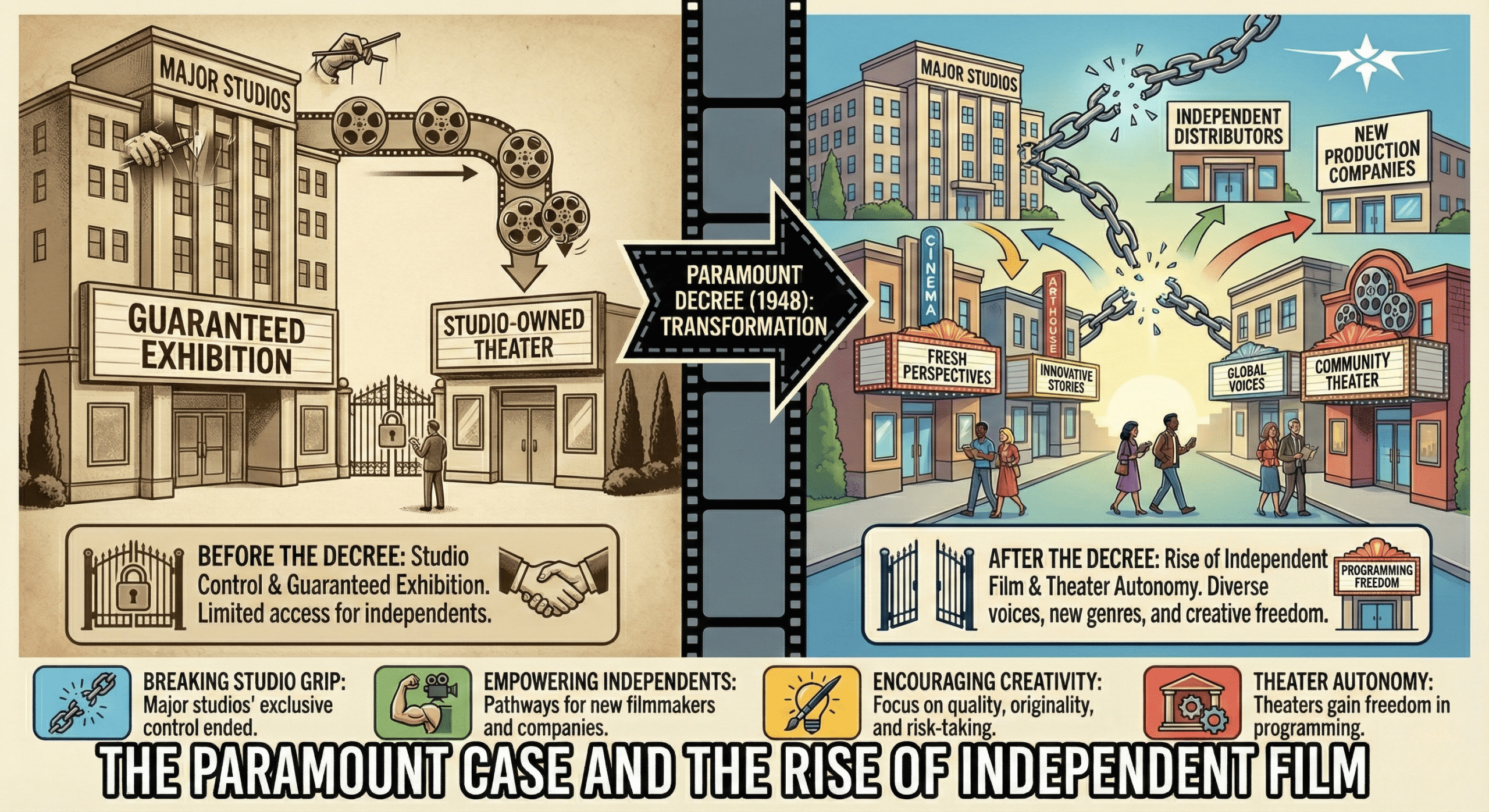
After the decree, the film landscape in the United States experienced a significant transformation. Studios, having lost their guaranteed exhibition outlets, had to collaborate with independent distributors and theater owners. This created pathways for smaller, independent filmmakers and new production companies to compete alongside established giants.
Indie cinema began to flourish, drawing audiences seeking fresh perspectives and innovative approaches to storytelling. Directors who might once have been barred from mainstream cinemas found opportunities to showcase their work, and new genres, styles, and voices emerged. More films were selected based on quality, audience interest, and originality rather than corporate relationships. You could attend your local theater and expect to see greater diversity on screen—something made possible by this legal change.
Key impacts of the Paramount Decree include:
• Breaking the major studios’ exclusive grip over film exhibition
• Empowering independent production and distribution companies
• Encouraging creativity and risk-taking in film content
• Allowing theaters more autonomy in programming
This new structure made Hollywood a destination for artists from around the world, eager to experiment and share their vision with American audiences.
CHANGES TO VERTICAL INTEGRATION IN THE STUDIO SYSTEM
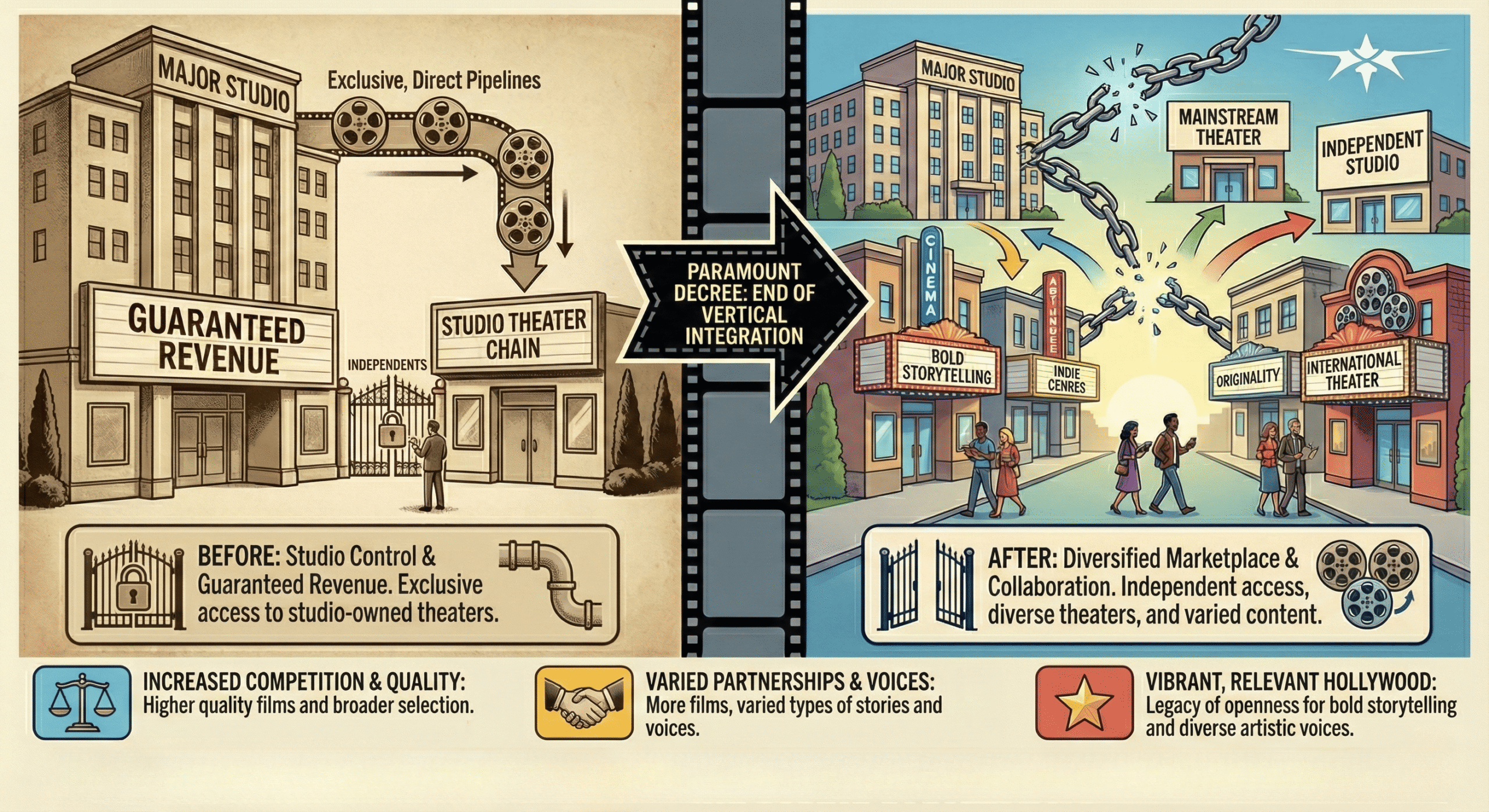
The Paramount Decree effectively ended the control the major studios had over all aspects of the filmmaking process. Before the ruling, studios were involved in every step: creating, distributing, and even deciding which theaters screened their productions. The removal of this vertical integration forced studios to rethink their business models and collaborate with previously excluded partners.
By separating production and exhibition, you saw a boom in relationships between independent studios and theater owners, both large and small. Theaters diversified their programming, catering to broader and more niche interests. Competition among studios increased, driving higher quality and broader selection in film offerings. These changes helped audiences discover new filmmakers and genres that might never have gained visibility under the old system. The ripple effects are seen today in the success of indie films and in the wide variety of content available to viewers.
Studio focus shifted from guaranteed revenue through theater chains to producing content that could stand out in a diversified marketplace. Collaborations grew, with studios and independents working together to reach wider audiences. The proliferation of creative partnerships led not only to more films but to more varied types of stories and voices. You benefit as a moviegoer when films are chosen for their appeal and originality. This legacy has fostered much of the openness that makes Hollywood vibrant and relevant today.
LEGACY THAT ENDURES
The Paramount Decree’s influence still resonates throughout modern filmmaking. It played a crucial role in breaking apart monopolistic practices that once stifled creativity and reinforced a narrow view of American cinema. Today, you experience its legacy every time you encounter a uniquely independent film or a foreign co-production making waves in mainstream theaters. The competitive environment fostered by this ruling continues to encourage bold storytelling and diverse artistic voices. Whether you prefer blockbusters or intimate indies, the decree made sure Hollywood became a place where all types of stories have a chance to reach audiences.
